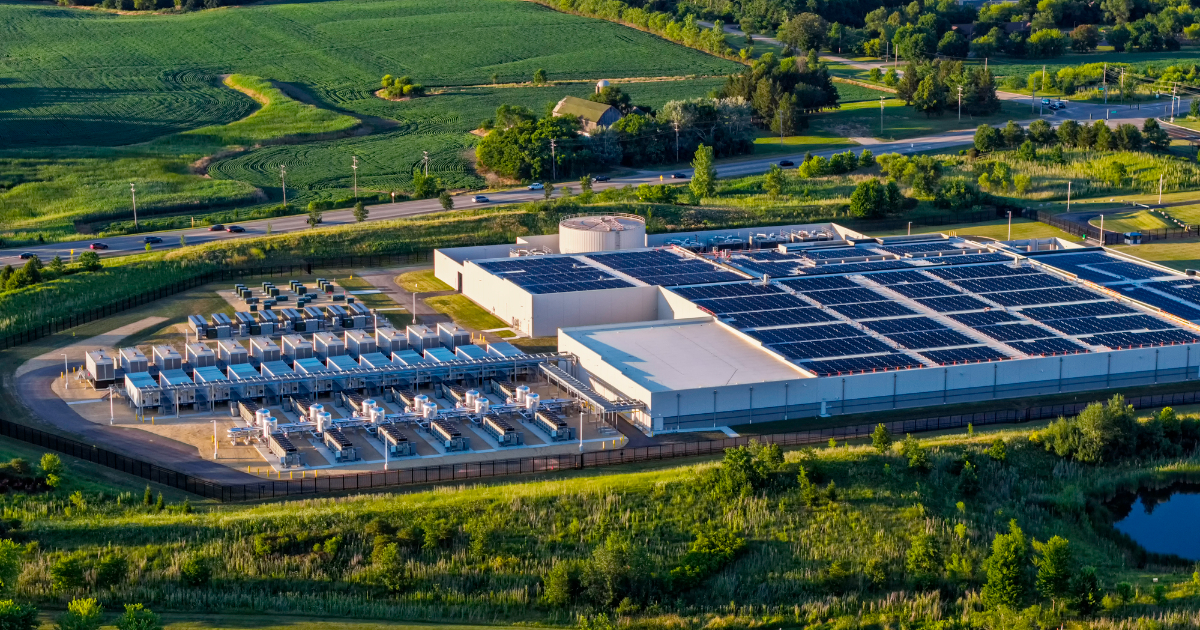
The carbon footprint of AI is no longer a future concern, it is a present metric that IT leaders must treat as seriously as performance or cost. When Microsoft and Google report that their electricity use has climbed because of AI, and when IT already accounts for 2-4% of global emissions, the message is clear: sustainability must become a top-level architectural constraint, not an afterthought. This is not about guilt or greenwashing; it is about practical engineering discipline. The recommendations to use pre-built and smaller models, to run compute where low-carbon electricity is abundant, and to train on renewable energy are not compromises, they are smarter design choices.
This story lands at an interesting moment for the major cloud providers. Microsoft's OpenAI partnership generates $10 billion in a single quarter, a figure that underscores the immense scale of AI deployment already in motion. Meanwhile, AI Search Ads Expand Globally as Google Revenue Climbs 25%, showing that the commercial incentives to push AI harder are only growing. Neither company is slowing down. That makes the sustainability question more urgent, not less. If the biggest players are already seeing energy spikes, the rest of the industry will follow unless deliberate choices are made now.
What does this mean for the teams building with AI today? First, it means rethinking the default assumption that bigger models are always better. A smaller, fine-tuned model running on renewable-powered infrastructure can often deliver the same outcome at a fraction of the energy cost. Second, it means that location-aware compute decisions, choosing data centers powered by low-carbon grids, should be automated into deployment pipelines, not left to manual configuration. These are not exotic practices; they are the kind of architectural discipline that Microsoft's consistent growth signals a new era for data management suggests the industry is ready to adopt.
The open question is whether the market will reward this discipline before regulators require it. Companies that treat carbon efficiency as a design requirement today will have a structural advantage when energy costs rise or when customers start asking for emissions data alongside performance benchmarks. One specific takeaway: start by auditing your current model usage. If you are running a large general-purpose model for a task a smaller one can handle, you are wasting energy and money. The fix is straightforward, and the savings, both financial and environmental, are immediate.