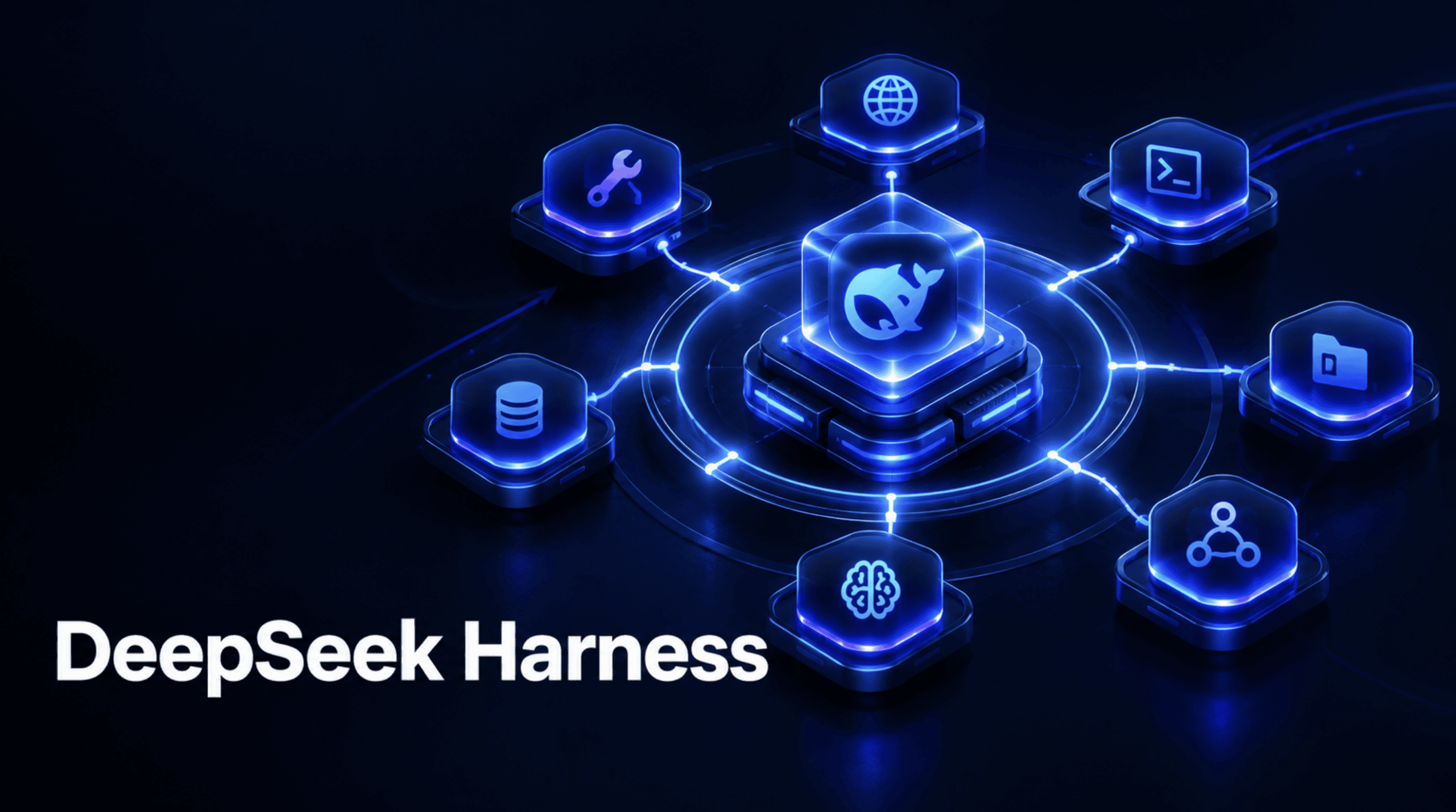
The recent exploration of DeepSeek Harness by KDnuggets team member Shittu Olumide, detailed in their latest post, provides a valuable, ground-level perspective on a rapidly evolving area of AI development. Harness, as we understand it, aims to simplify the process of deploying and managing large language models (LLMs), a task currently riddled with complexity and resource demands. This is particularly relevant given the recent surge in investment into AI-native companies, as highlighted in AI-Native Companies Drive $5.75B Investment Surge, demonstrating the industry’s keen interest in scalable and efficient AI solutions. The challenge isn't just building powerful models; it’s making them accessible and practically deployable for a wider range of users, and tools like Harness are attempting to bridge that gap. We’ve seen similar efforts emerge, but the focus on streamlining the *entire* lifecycle—from model selection to deployment and monitoring—is a crucial differentiator. It suggests a move beyond simply optimizing individual components towards a more holistic approach to AI infrastructure.
Shittu’s insights, while preliminary, underscore the potential for tools like Harness to democratize access to LLMs. The barrier to entry for leveraging these powerful models has traditionally been high, requiring significant technical expertise and computational resources. By abstracting away much of the underlying complexity, Harness could empower data scientists and even business users to experiment with and deploy LLMs without needing a team of specialized engineers. This resonates with the broader trend we’ve observed, particularly as individuals explore career shifts into data-driven roles, as exemplified in Exploring a Career Shift: An MD, a PhD, and a Data-Driven Future. The ability to quickly prototype and deploy AI solutions will be a critical factor in attracting and retaining talent in this space. The focus on ease of use also aligns with the growing demand for AI solutions that can be seamlessly integrated into existing workflows, avoiding the need for wholesale system overhauls.
The broader significance of this development extends beyond simply simplifying LLM deployment. It points towards a fundamental shift in how we think about AI infrastructure. We’re moving away from a model where AI is the exclusive domain of large corporations with massive resources, and towards a future where smaller teams and even individual developers can leverage powerful AI tools to solve real-world problems. Architecting AI-powered mobile UIs, for instance, requires similar principles of scalability and ease of integration—the need to bring complex AI capabilities to the fingertips of users, as discussed in Architecting AI-Powered Mobile UIs: Speed, Delight, and Scalability. Harness, and similar tools, are essential components in realizing this vision. The key will be ensuring these platforms remain adaptable and extensible, allowing users to customize and fine-tune models to meet their specific needs, rather than forcing them into a rigid, one-size-fits-all solution.
Looking ahead, the success of DeepSeek Harness, and indeed the broader category of LLM deployment platforms, will depend on their ability to address several key challenges. These include ensuring data security and privacy, optimizing for cost-efficiency, and providing robust monitoring and debugging capabilities. As the volume and complexity of LLMs continue to grow, the need for tools that can manage this complexity will only become more acute. The question isn't whether these tools will emerge – they already are – but rather which platforms will ultimately establish themselves as the de facto standard for AI deployment, and how they will shape the future of AI accessibility for all.