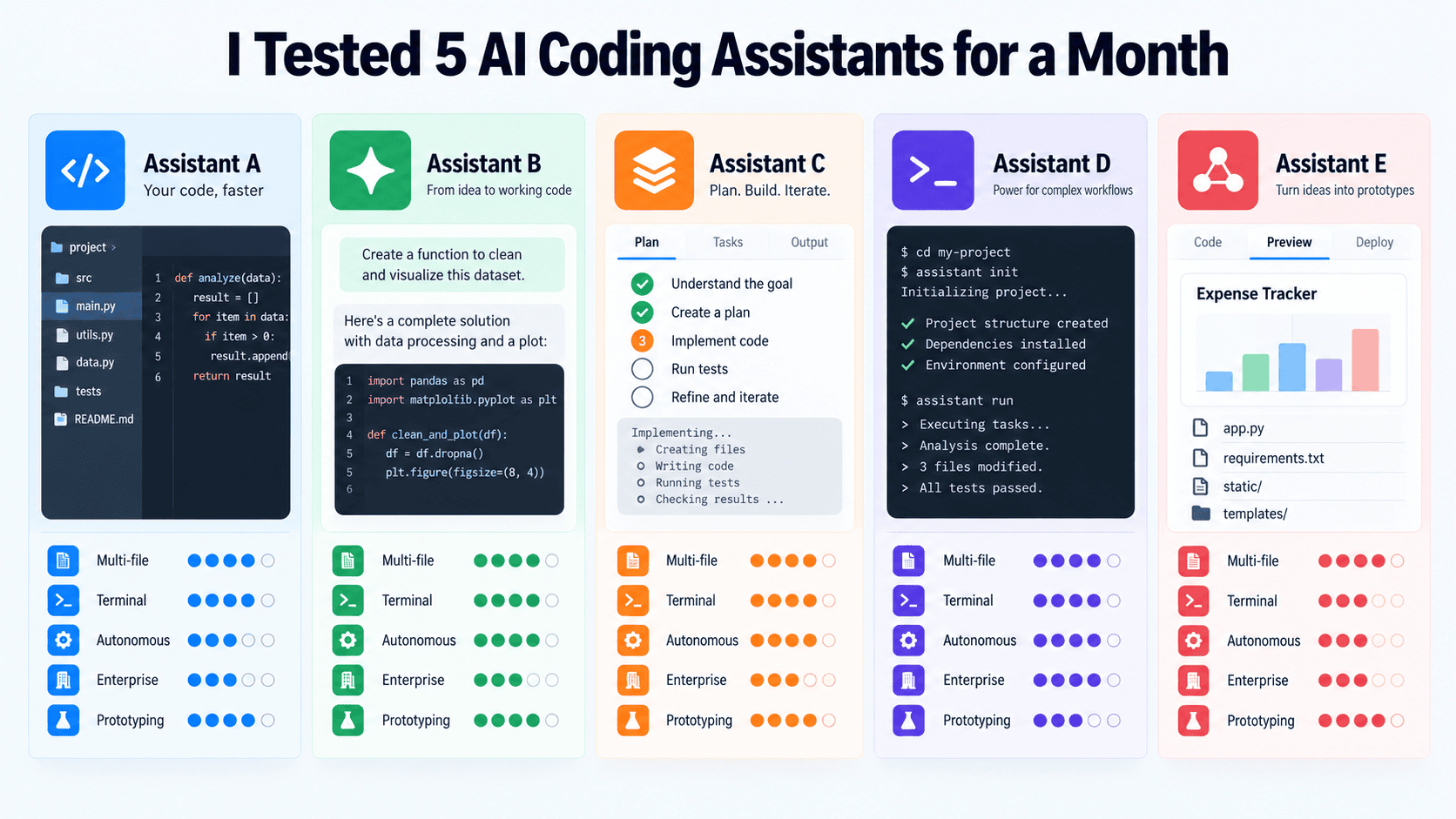
Five AI coding assistants walked into a benchmark, and only a few walked out worth your time. The test was straightforward: compare five tools across real tasks and see which one actually fits a working developer's workflow. Our take is blunt, most of these assistants are still solving the wrong problem. They generate code quickly, but they rarely understand the context of the project you're actually building. That gap between speed and comprehension is where productivity goes to die.
This matters because the spreadsheet world is already showing us what real AI integration looks like. When you can One click to edit text in your spreadsheet cells, you're not just saving a few seconds, you're removing a cognitive barrier between you and your data. The same principle applies to coding. The assistants that performed best in this test weren't the ones that wrote the most lines per minute. They were the ones that asked the right questions, surfaced the relevant files, and didn't hallucinate library calls that don't exist. That's the difference between a tool that impresses in a demo and one you trust with production code.
We also see a parallel in how tools are being rethought from the ground up. From ad spend to asset creation, Melius raises $20M to reimagine marketing tools by building purpose-built AI rather than bolting it onto legacy systems. The same logic applies here. The most effective coding assistants in this comparison treated your editor as part of a broader system, not a standalone text box. They integrated with your terminal, your debugger, your version control. The ones that felt like a glorified autocomplete were the ones that failed on complex tasks. And when you're trying to Stop digging through folders and paste your save path directly, you realize that small workflow frictions add up to real drag over a day of coding.
The specific takeaway is this: pick the assistant that reduces your context-switching, not the one that writes the most boilerplate. The test results showed a clear winner on multi-file refactoring and debugging, tasks that require understanding the whole system, not just the function you're typing. The rest were close enough on simple snippets that the difference barely matters. So watch for the assistant that asks you what you're trying to accomplish before it starts typing. That one is the tool that will still be useful six months from now, when your project has grown past the demo stage and into the messy reality of production code.