The Minimal AI Engineer Toolkit for 2026
Our take
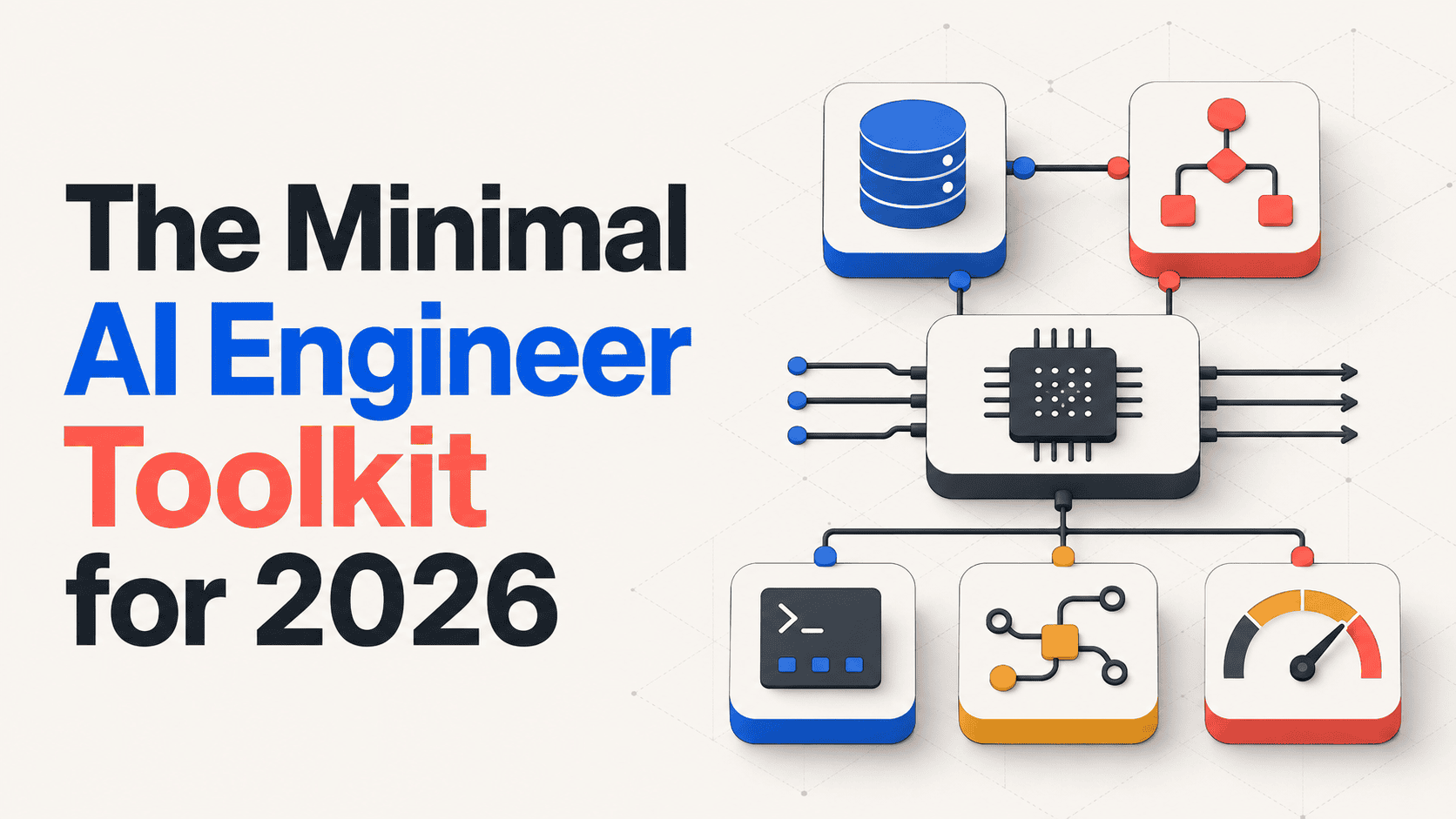
The future of AI engineering is rapidly converging, and the recent piece outlining the "Minimal AI Engineer Toolkit for 2026" provides a valuable snapshot of that trajectory. While the specifics of any toolset are always subject to change, the underlying message – that specialization is giving way to broader, more integrated capabilities – is compelling. The focus on production-grade autonomous systems signals a shift from experimentation to real-world deployment, a crucial milestone for the field. It's also interesting to see the continued relevance of foundational technologies; web crawling, for instance, remains essential for data acquisition, as highlighted in [7 Best Web Crawling Tools and APIs in 2026]. The ability to efficiently gather and process data from the web will continue to be a cornerstone of many AI applications, regardless of the specific tools used. Considering the broader ecosystem, the increasing importance of platform engineering – as detailed in [Platform Engineering Maturity Emerges as a Key Differentiator for Enterprise AI Success] – further reinforces this point. Building robust AI systems requires not just skilled engineers, but also well-defined platforms that streamline development and deployment.
The selection of tools themselves, while not explicitly detailed in the summary, likely reflects an ongoing trend towards automation and abstraction. We anticipate seeing a greater emphasis on low-code/no-code platforms, AI-powered debugging tools, and integrated MLOps solutions. The days of engineers manually configuring every aspect of a machine learning pipeline are fading; instead, the focus will be on orchestrating and managing these systems at scale. This doesn’t diminish the need for skilled engineers, but it does redefine their role. They’ll become architects and integrators, leveraging pre-built components and focusing on higher-level strategic decisions. Even opportunities like [Take an extra $100 off your TechCrunch Disrupt 2026 pass: This week only!] demonstrate the dynamism of the industry and the continued investment in building a thriving AI community.
The broader significance of this development lies in its implications for accessibility and democratization of AI. As tools become more integrated and easier to use, the barrier to entry for building and deploying AI systems will continue to lower. This will empower a wider range of organizations and individuals to leverage AI, fostering innovation across various industries. However, this increased accessibility also presents challenges. Ensuring responsible AI development and deployment becomes even more critical as more actors enter the field. The ethical considerations surrounding AI, such as bias mitigation and data privacy, must be addressed proactively to prevent unintended consequences. This requires not only technical solutions but also robust governance frameworks and industry-wide collaboration.
Looking ahead, the key question to watch is how these “minimal” toolkits will evolve to accommodate the increasing complexity of AI models and the demands of real-world applications. The current focus on autonomous systems suggests a future where AI agents are capable of operating with minimal human intervention, but the development of such systems requires increasingly sophisticated tools for monitoring, control, and explainability. Will we see a shift towards more specialized toolchains tailored to specific AI tasks, or will the trend towards integrated platforms continue? The answer will likely shape the future of AI engineering and determine who can effectively harness the power of AI to solve real-world problems.
Read on the original site
Open the publisher's page for the full experience