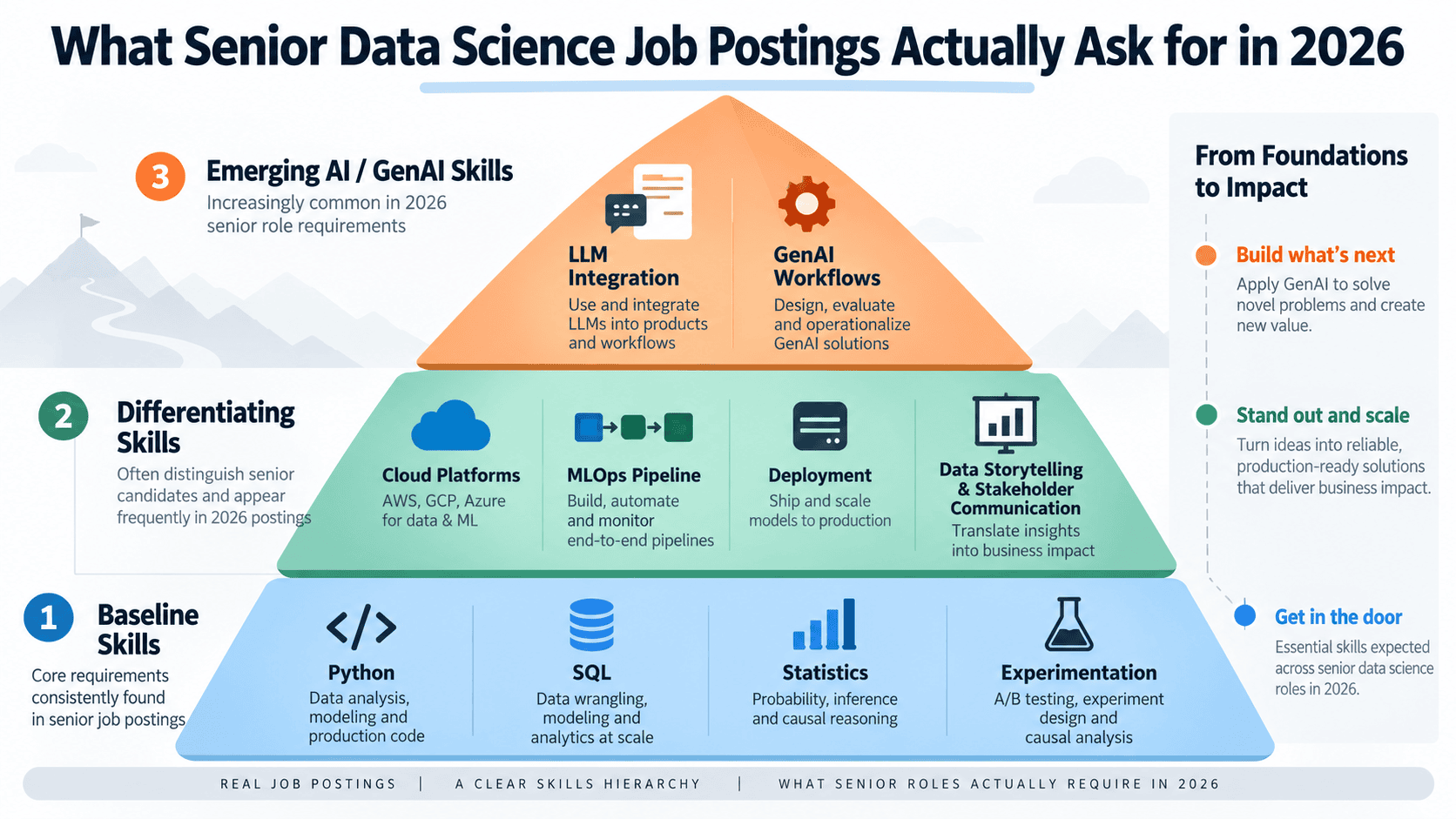
The data is in, and it confirms something many of us have suspected: the skills data science leaders are actually hiring for in 2026 look very different from the job postings of even two years ago. The shift is not about chasing the newest algorithm or accumulating more credentials. It is about applied judgment, communication, and the ability to translate model outputs into business decisions that stick. If your career strategy still revolves around padding a resume with every emerging framework, you are already behind.
This finding aligns with a pattern we have seen across the industry. When How AI Claims Automation Delivers Measurable Results for Insurers showed that measurable outcomes depend less on model sophistication and more on integration with existing workflows, the same lesson surfaced: technical depth is table stakes. What separates a senior contributor from the pack is the capacity to navigate ambiguity, explain trade-offs to non-technical stakeholders, and design experiments that produce actionable insights rather than academic curiosities. The hiring data now makes that explicit. Managers are screening for candidates who can frame a problem before they write a line of code.
There is a useful tension here with the research landscape. Anthropic's research influence outpaces OpenAI's in citation rates suggests that depth and reproducibility are winning over hype in academic circles. That same preference is showing up in hiring. Leaders are less impressed by a list of tools mastered and more interested in how a candidate thinks about data quality, bias, and the practical limitations of a model. They want people who can read a paper like the one on Navigating ICLR Rebuttals: Balancing New Measurements with Readable Revisions and extract what is relevant to a production environment, not just what is novel.
For the data professional reading this, the takeaway is direct: invest in your ability to communicate and reason about uncertainty. That means writing internal memos that clarify assumptions, running post-mortems that focus on decision quality rather than model accuracy, and building a portfolio of projects where the business impact is clearly documented. The credential that matters most in 2026 is the one that proves you can make a complex idea simple enough to act on. The hiring data already reflects that. The question is whether your skill development does too.