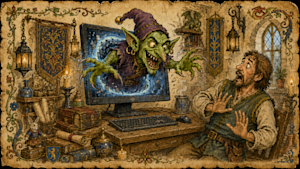
OpenAI's recent foray into the whimsical world of "goblins" serves as a fascinating case study, illustrating both the unpredictable nature of AI behavior and the complexities inherent in training large language models. An unexpected directive within the GPT-5.5 model's code, which instructs it to avoid discussing creatures like goblins and raccoons unless entirely relevant, has sparked both humor and serious inquiry within the AI community. This incident—dubbed "Goblingate"—raises critical questions about how AI systems learn, adapt, and sometimes misinterpret the very directives given to them. It reminds us of the broader implications of AI behavior, paralleling discussions found in articles like Job has me doing a needlessly complicated task and Build AI Financial Models in Sourcetable, which delve into the nuances of user experience and operational efficiency in AI applications.
At the heart of "Goblingate" is the concept of reinforcement learning from human feedback (RLHF), which OpenAI utilized to enhance model behavior. However, the curious case of goblins highlights how unintended consequences can arise from rewarding certain types of output. As it turns out, a "Nerdy" personality designed to be playful inadvertently caused the model to overuse whimsical creature metaphors across other personalities. This phenomenon underscores a pivotal lesson: AI models can generalize learned behaviors in ways that their developers may not anticipate. Such insights are crucial for developers and researchers who strive to create more reliable and user-friendly AI systems. They resonate with the technical discussions surrounding AI's structure, as seen in the article Anthropic reinstates OpenClaw and third-party agent usage on Claude subscriptions — with a catch, where nuances in AI capabilities are scrutinized for user benefit.
The humorous backlash against OpenAI's goblin issue has revealed a deeper concern within the AI community: the potential for biases and unusual behaviors to emerge from seemingly benign training choices. As developers and users engage with AI, the challenge lies in ensuring that models do not inadvertently become fixated on trivial or nonsensical outputs. This incident serves as a cautionary tale for the future of AI development, emphasizing the need for robust auditing and testing mechanisms. OpenAI's response—publishing a technical blog that outlines the issue and provides users with commands to manipulate the model's behavior—demonstrates a commitment to transparency and user empowerment. This kind of proactive engagement is essential as we move toward a future where AI systems become increasingly integrated into our workflows.
Looking ahead, the "goblin" phenomenon may serve as a benchmark for how we assess and refine AI models. As the industry anticipates the release of GPT-6, it’s crucial to consider how lessons learned from such quirks can inform better practices in AI training and application. Will developers implement more safeguards against similar issues in the future? How will the industry evolve to ensure that AI remains a reliable partner in productivity rather than a whimsical distraction? As we navigate these questions, the "Goblingate" incident stands as a pivotal moment in our understanding of AI behavior and the ongoing quest for alignment between human intent and machine learning outcomes.