AI agents
AI agents at Beyond Market Intelligence is a file of 255 stories. The newest of them: “Five ways AI agents are streamlining complex workflows today”, “How AI agents triaged 85% of Astro's GitHub issues for Cloudflare”, and “Secure Your AI Agents with Kernel-Level API Control”. AI agents are no longer a concept for tomorrow. Astro's maintainers were drowning in GitHub issues, so they let AI agents take over triage. Acme AI is the next-generation, AI-powered spreadsheet platform built to replace Excel and redefine how analysts, data scientists, and enterprise teams work… The list below is every AI agents story on Beyond Market Intelligence, newest first.
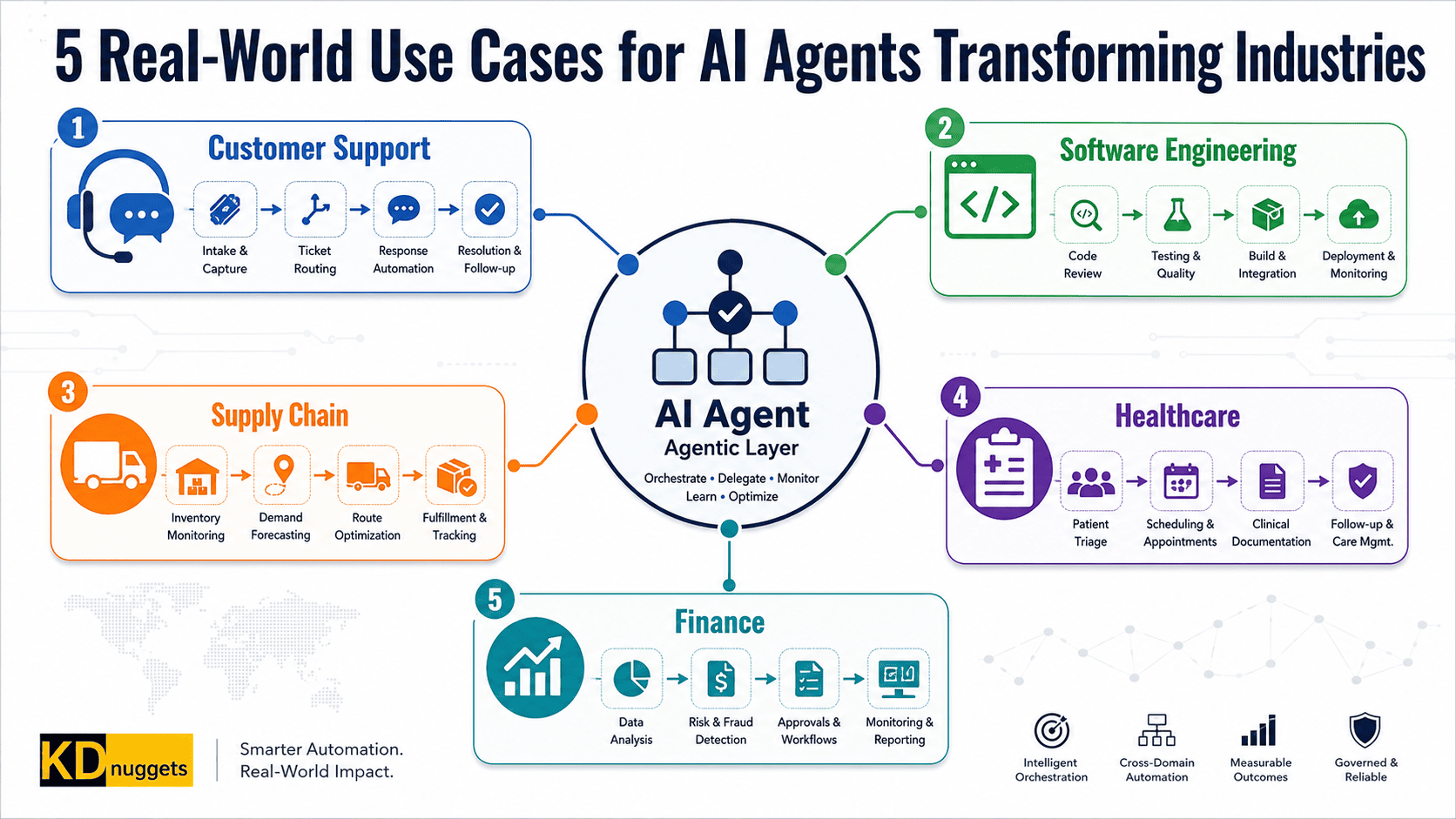
Five ways AI agents are streamlining complex workflows today
AI agents are no longer a concept for tomorrow. They are answering support tickets, writing code, managing supply chains, and flagging fraud today. The shift from static tools to autonomous action is real, and the examples here show how quickly that changes what a team can accomplish. If you want to see where this is headed, our guide to bridging retrieval and action offers a practical look at connecting the dots. The work is happening now, and it is worth your attention.
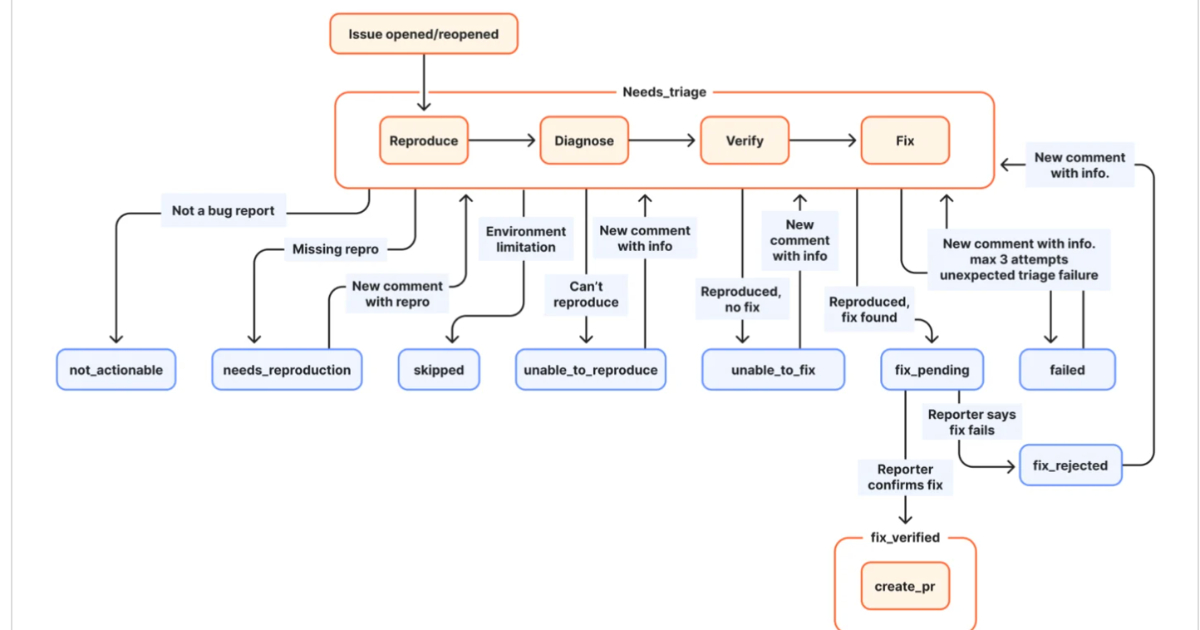
How AI agents triaged 85% of Astro's GitHub issues for Cloudflare
Astro's maintainers were drowning in GitHub issues, so they let AI agents take over triage. The result: an 85% cut in that workload, giving developers time back to focus on the work that matters. This isn't about removing humans; it's about making their role more meaningful. Cloudflare's approach, built on Workers with a human-in-the-loop, shows how agentic workflows can handle the noise. It's a practical win for open source, and it pairs well with our guide on distributed training algorithms.
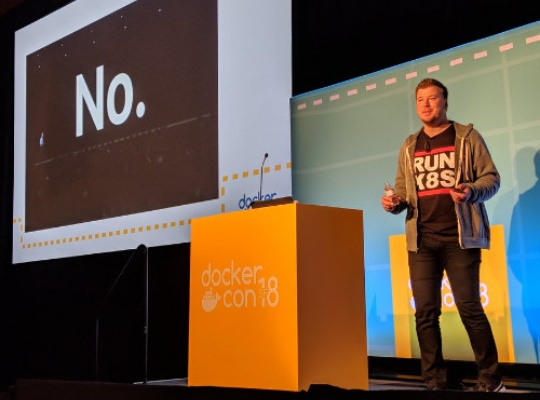
Secure Your AI Agents with Kernel-Level API Control
Your AI agents are generating code that no one owns, and that's a risk you can't ignore. Dan Finneran shows how eBPF can step in, intercepting API traffic at the kernel level to filter prompts, swap models, and enforce limits without touching your application code. It's a practical, transparent way to secure production systems. For more on questioning AI's output, our piece on verifying your AI's understanding offers a timely follow-up.
When AI Spending Runs Ahead of Your Controls, Three Platforms Won't Help
Enterprise AI teams are done betting on a single orchestration platform. The median enterprise now runs three at once, not by accident, but because no one fully trusts one vendor. Security concerns and a desire for their own permissioning controls drive this hybrid approach. Microsoft leads today, but Anthropic dominates future consideration. Yet visibility remains a problem: one in five still can't stop a runaway agent's spending in real time. That gap between ambition and control is where the real work begins.

Turn a single Slack message into an AI agent team that works for you.
Typing a message to spin up an entire team of AI agents, each with its own avatar, skills, and memory, sounds like the kind of thing that usually takes weeks of engineering. NanoClaw's new Slack integration makes it a single prompt. More importantly, it keeps the infrastructure on your hardware, so your data stays yours. This is how persistent, self-hosted digital coworkers become practical. If you're wrestling with how LLMs handle structure, our piece on paragraph navigation is worth a look.

Empower your trades with AI agents, guided by your oversight.
Binance now lets AI agents trade, but the leash is firmly in your hands. The platform's Agent OS pairs with tools like ChatGPT, Claude Code, and Cursor, handing over real financial actions to autonomous systems. That's a bold step forward, yet it raises a pressing question: who's accountable when a model misreads the market? The responsibility sits with the user, not the algorithm. It's a familiar tension.

Explore how open-source AI agents make modular data workflows more accessible.
DeepSeek just released a developer preview of DeepSeek Harness, an open-source runtime built for autonomous AI agents. Its micro-kernel design with modular plugins points toward a more unbundled approach to agent infrastructure. The append-only event log is a smart addition for tracking execution activity. Whether it gains traction will likely hinge on plugin ecosystem stability and API maintenance. If you're weighing how modular agent tools fit your stack, this is worth exploring.

TrueForge gives developers more control over AI agents without the cost burden
TrueForge enters a crowded field with a straightforward pitch: more control, lower cost. TrueFoundry's open-source harness, released under the MIT License, reports task completion costs 30% to 75% below Anthropic's managed offering, depending on the model used. That's a concrete claim, and it's backed by a sensible design that trims context waste and treats sandboxes as optional tools. For enterprises tired of choosing between vendor lock-in and operational overhead, TrueForge offers a practical middle path.
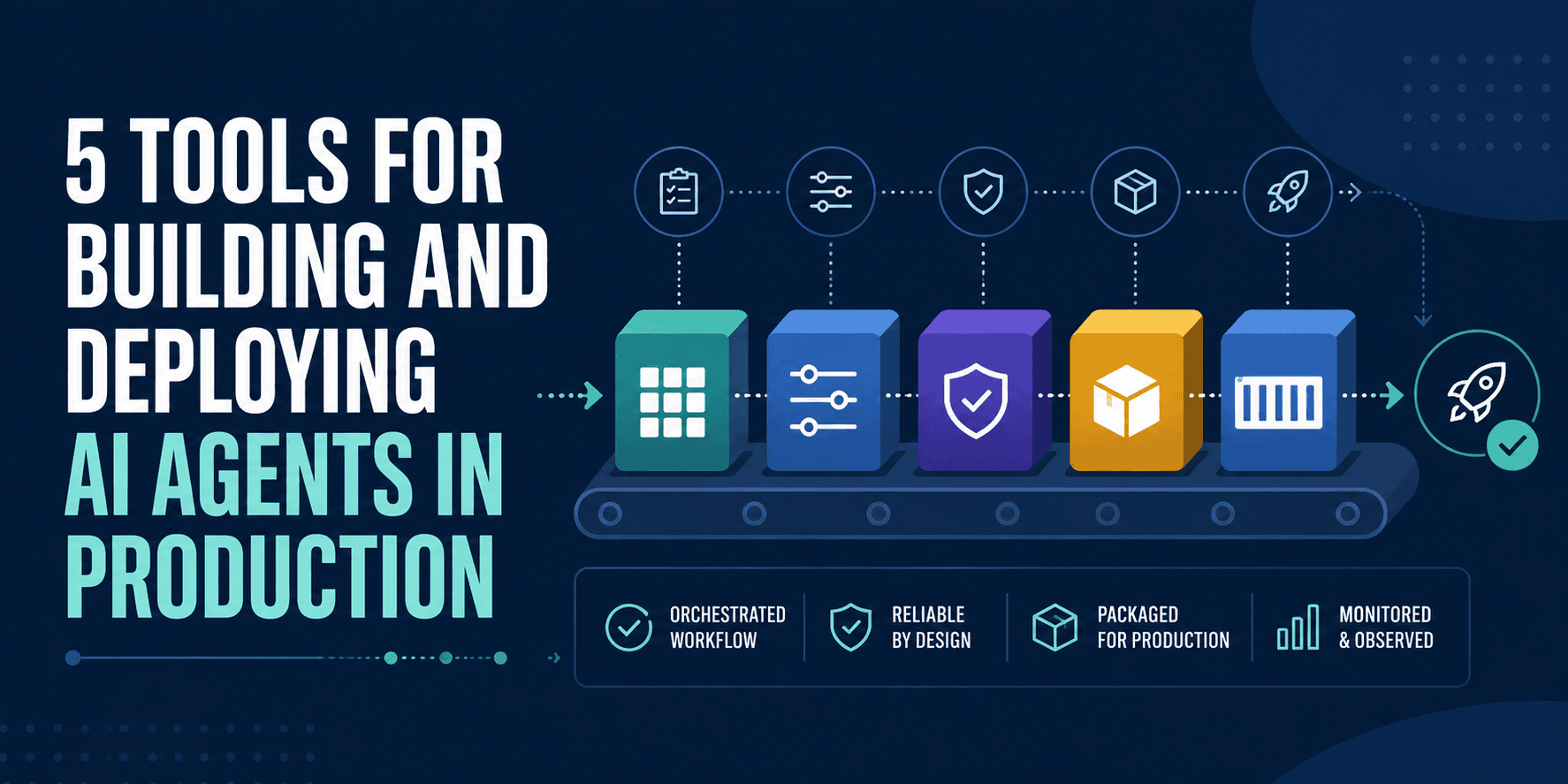
From Agent Logic to Scale: Five Essential Tools for Production AI
Building an AI agent is one thing; running it reliably in production is another. This guide breaks down five tools, each tackling a specific layer of the stack, from shaping the agent's core logic to scaling it under real-world pressure. It's a practical, no-nonsense walkthrough for teams ready to move beyond experimentation. If you're still questioning how much trust to place in these systems, our piece on talking to an AI clone offers a timely counterpoint worth exploring.

Persistent compute gives AI agents the stamina for complex workflows.
Amazon Bedrock AgentCore now gives AI agents persistent compute through runtime instances, a practical upgrade for teams wrestling with long-running workflows. This isn't about flashy demos; it's about infrastructure that finally keeps up with multi-agent coordination without constant hand-holding. We see this as a step toward less friction in complex data tasks, which pairs well with our own exploration of AI's limits, like in "Talking to My AI Clone Taught Me to Question the Tech.

Berd open source gives teams a local workspace for AI agents
Block is open-sourcing Berd, a desktop workspace built to give teams one consistent surface for working with AI agents. It runs locally, stores conversation history on your device, and works across models and harnesses, Goose, Claude Code, Codex, or whichever you configure. Berd is available now under an Apache 2.0 license for macOS, Windows, and Linux. If you're managing fragmented agent workflows, it's worth exploring how a unified, inspectable environment can simplify the work.

Stop overpaying for AI queries with smarter model routing
Enterprises are discovering that one model for every task is a costly mismatch, simple queries often trigger the most expensive model, driving up both spend and latency. Snowflake's Cortex AI Gateway now sidesteps that with dynamic model routing, automatically matching each task to the cheapest capable model. The company reports token costs dropping by up to 3x in internal tests. That's a practical win, though the real differentiator is governance: routing that stays inside your security boundary.
Why enterprises double down on AI automation after being burned
Enterprises that have watched an AI agent pass its evals and then fail in front of customers aren't retreating from automation, they're moving faster toward removing humans from deployment decisions. That's the counterintuitive core of the latest VB Pulse research. Confidence in automated evaluation is climbing, yet the share of companies burned by test-passing failures remains stubbornly near half. The lesson isn't that agents are unreliable; it's that a passing score marks the start of monitoring, not the end of it.

Empower AI agents with precise controls for safer data actions.
Cloudflare's WriteGuard, now in private beta, takes a meaningful step toward safer AI agents by giving MCP servers fine-grained control over which tools can modify data or trigger actions. That shift from broad access to precise permissions feels like the right kind of guardrail for a rapidly evolving space. It's a practical move, not a flashy one, and that's what makes it worth your attention. For a broader look at how MCP is shaping workflows, our visual guide offers a solid starting point.

Building Trust into AI: Secure Architecture for Enterprise Agents
Taking an AI agent from prototype to production is where the real test begins. This piece tackles the often-messy transition head-on, focusing on the responsible AI, security, and governance layers that keep enterprise deployments safe. It's a grounded look at building trust into the architecture itself, not bolting it on later. For those wrestling with similar scaling challenges, it pairs well with our broader coverage on agentic workflows. We appreciate the clarity here, as it makes a complex subject feel genuinely approachable.

When GitHub stumbles, Cursor Origin offers a stable path forward.
If you're weighing whether to trust a new code host with your team's source code, Monday offered a pointed reason to pay attention. Cursor launched Origin, its own code hosting platform, and within hours GitHub suffered a global degradation that crippled pull requests, APIs, and Copilot for nearly seven hours. The timing was coincidental, but the message wasn't: the agent era demands a forge built for how code is actually reviewed today. Origin's pitch is worth exploring, starting with its low-risk, GitHub-as-source-of-truth design.

Grok Bot brings persistent AI agents to work across your digital tools
SpaceXAI's Grok Bot is a bold step toward making autonomous agents a practical reality. By running persistent AI systems on dedicated cloud computers, it lets these bots handle websites, apps, and inboxes without constant hand-holding. That's the kind of shift that turns busywork into background noise. We're encouraged by how this pushes beyond static tools into active problem-solving. If you're curious about how such agents move from retrieving information to taking action, our guide, "Bridging Retrieval and Action," pairs nicely with this launch.

Webwright shows AI agents succeed by writing code, not clicking buttons.
For years, web agents have clicked their way through tasks, often losing the thread on long ones. Microsoft Research's Webwright takes a sharper path: hand the model a terminal and let it write code. On long-horizon work, the same GPT-5.4 model leaps from 33.5% to 60.1% success. That's a compelling argument for building tools over traces. It also pairs well with our look at how LLMs navigate token space, connecting structure to action. The result isn't just a finished job; it's a reusable command-line tool.
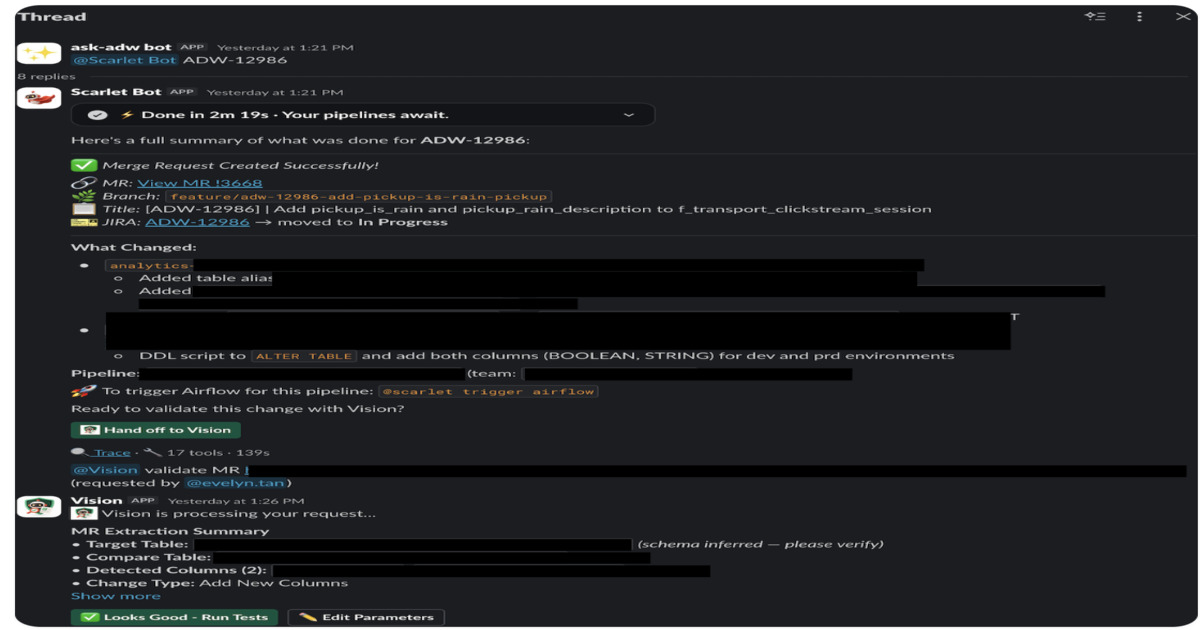
How Grab Uses AI Agents to Automate Analytics and Empower Teams
Grab's analytics team cut mechanical work from 44% to 30% in just four months, and the lesson is clear: AI agents thrive when you pair autonomy with human oversight. Their approach, combining certified data and context management, lets self-service analytics handle metric and SQL requests that once demanded analyst time. That's not just efficiency; it's a smarter division of labor. If you're questioning how much to trust these systems, our piece on verifying AI's understanding offers a practical starting point.

Agentic fitness functions bring nuanced judgment to evolutionary architecture.
Deterministic rules can guard hard metrics, but they go silent when architectural intent is on the line. That's where Hemant Kumar Mahato, Łukasz Sieczkowski, and Vijayasenthilkumar Kuppusamy turn our attention. Their piece on agentic fitness functions pairs AI agents with versioned rubrics to assess judgment-heavy concerns like boundary fidelity and stale ADR assumptions. It's a practical, forward-looking approach to governance. For readers still weighing AI's judgment, our earlier piece, "Talking to My AI Clone Taught Me to Question the Tech," offers a fitting counterpoint.
How DoorDash builds agentic AI from legacy prediction models
Sudeep Das walks us through DoorDash's move from one-shot predictions to a platform built for context-aware recommendations. It's a shift from static models to something more adaptive, using language-native memory and semantic IDs to keep pace with real consumer behavior. The grounded search piece matters too, as it ties relevance directly to conversion. For anyone wrestling with how to scale AI beyond isolated tasks, this is a practical look at what agentic systems actually require.

Designing the dispatcher that makes agentic RAG workflows smarter
The dispatcher in an agentic RAG system isn't just a router; it's the judgment call that decides when to loop back for another retrieval and when to trust what's already in context. This piece from our series on enterprise document intelligence finally puts the patterns together, and it's a refreshingly clear look at why that decision is the real engine of reliability. If you're still wrestling with when your workflow should stop, this is the guide you've been waiting for.

Five Papers That Define the Future of AI Agents
AI agents are moving fast, and the right papers can cut through the noise. If you're short on time, these five selections offer a focused look at how agents actually work, from reasoning loops to tool use. They're not about hype; they're about practical mechanics. Read them, and you'll have a clearer mental model than most. For a more personal angle on agent behavior, our piece "Talking to My AI Clone Taught Me to Question the Tech" pairs well with this reading list.
Discover how AI agents can execute routine tasks faster with Nemotron Lightning.
Long-running AI agents often spend most of their time on routine execution rather than difficult reasoning. After making a plan, they might handle hundreds of tool calls, file reads, or validations. Using a frontier reasoning model for every step becomes slow and expensive. NVIDIA's Nemotron 3.5 Lightning targets this directly, offering a more efficient path for those repetitive actions. It's a practical reminder that smarter execution matters as much as smarter planning.