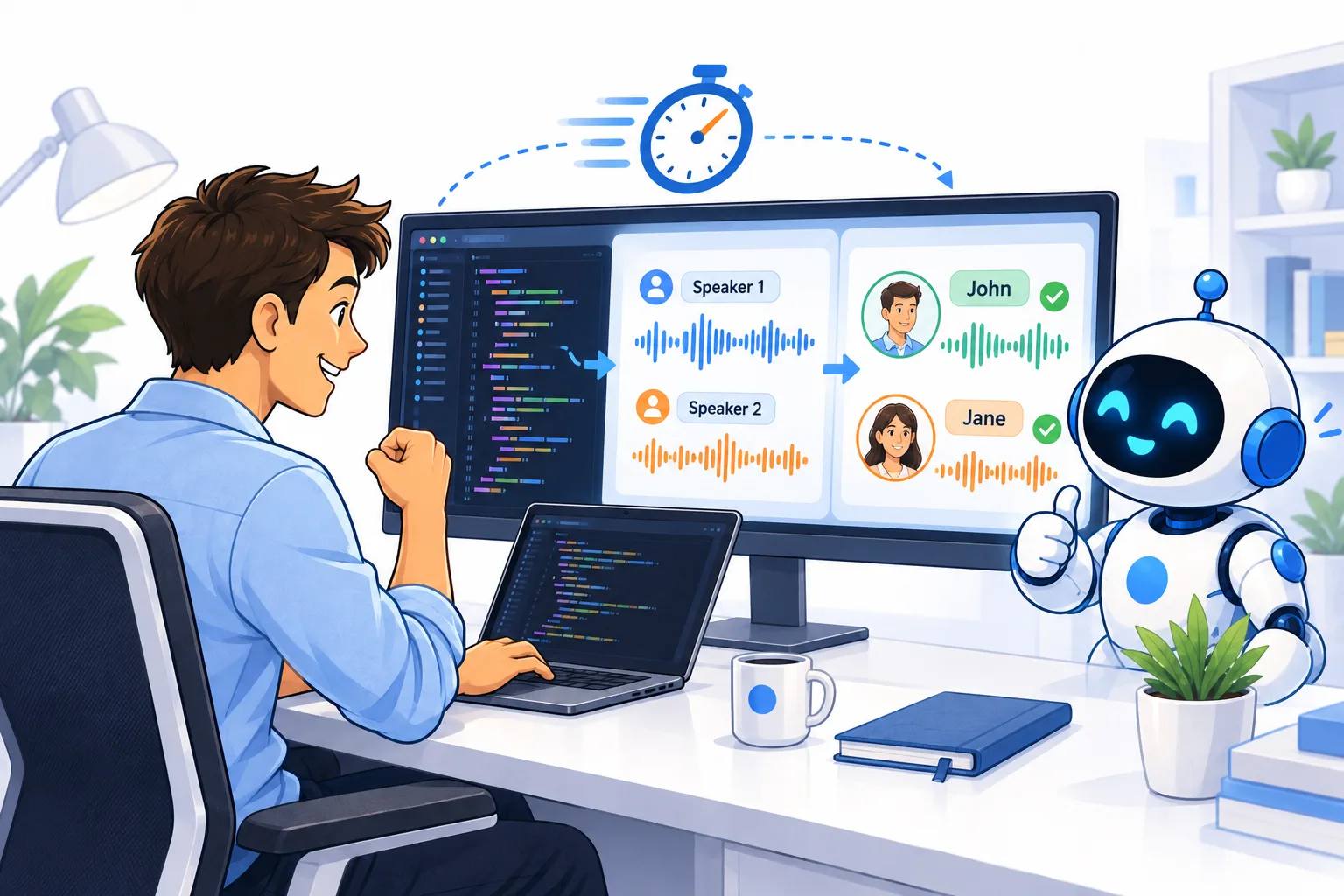
The recent article on Towards Data Science detailing the creation of an internal speaker recognition tool using Claude Code or Codex highlights a fascinating convergence of accessible AI and practical application. It’s a compelling demonstration of how large language models, often associated with generative text and conversational interfaces, can be leveraged for more specialized, code-focused tasks. The ability to rapidly prototype and build tools like this, particularly within organizations, represents a significant shift in the development landscape. We’ve previously explored the broader implications of AI innovation at events like TechCrunch Disrupt, as seen in [See Hello Robot’s Stretch 4 in Action at TechCrunch Disrupt], and the ongoing discussions around responsible AI development, exemplified by [Explore AI Safety Insights from Disrupt 2026's Leading Experts]. This speaker recognition tool project sits squarely within that evolving context, showcasing how AI can move beyond theoretical discussions and into tangible solutions.
The key takeaway isn’t just the technical feasibility of building a speaker recognition app—though that itself is notable—but the accessibility it affords. Traditionally, such a project would require significant expertise in machine learning, audio processing, and specialized libraries. Leveraging Claude Code or Codex lowers the barrier to entry, empowering developers with less specialized knowledge to contribute to internal tooling. This democratization of AI development aligns with our vision of empowering users with accessible and innovative solutions. The efficiency gains are considerable: imagine rapidly creating tools for internal meeting transcription, security verification, or personalized audio experiences, all without a deep dive into the intricacies of model training. And as Anthropic continues to refine its models, as evidenced by [Anthropic's Opus 5.5 Delivers Fable Performance at a Lower Cost], we can anticipate further improvements in the speed and accuracy of code generation, making these kinds of projects even more viable.
However, it’s crucial to acknowledge the nuances and potential limitations. While these tools excel at generating code snippets and assisting with development, they are not replacements for skilled engineers. Thorough testing, debugging, and integration with existing systems remain essential. Furthermore, the performance of the speaker recognition tool will depend heavily on the quality and quantity of training data. Building a robust and accurate system requires careful consideration of factors like speaker variability, background noise, and computational resources. The article’s focus on internal tools is also significant; deployment in public-facing applications would necessitate a much more rigorous evaluation of privacy, security, and ethical considerations. The ease of creation shouldn't overshadow the need for responsible implementation.
Ultimately, the rise of AI-assisted coding tools like Claude Code and Codex signifies a profound transformation in how software is developed. The ability to rapidly prototype and iterate on ideas, coupled with the increased accessibility of AI technology, opens up exciting possibilities for innovation across various domains. The speaker recognition tool is just one example of what’s possible. As these tools continue to evolve and become more integrated into development workflows, we can anticipate a surge in the creation of specialized, internal solutions—tailored to meet the unique needs of individual organizations. The question now is: what other previously complex or time-consuming tasks can be streamlined and automated through the power of AI-assisted coding?