efficiency
Beyond Market Intelligence keeps efficiency in one place: 61 stories so far. The section currently leads with “Explore How Adaptive Training Environments Help AI Agents Learn from Weaknesses”, “Smarter AI Memory Saves 20x Cost Without Sacrificing Performance”, and “Factory robots retrain in minutes, not weeks, for delicate assembly tasks”. Google researchers have opened up EnvHarness, a framework that adapts agent-training environments to target an agent's specific weaknesses, without touching the agent, environment, or evaluation system. Pasting an entire chat history costs 20 to 31 times more than a smarter memory system, yet delivers no better results. Acme AI is the next-generation, AI-powered spreadsheet platform built to replace Excel and redefine how analysts, data scientists, and enterprise teams work… The list below is every efficiency story on Beyond Market Intelligence, newest first.

Explore How Adaptive Training Environments Help AI Agents Learn from Weaknesses
Google researchers have opened up EnvHarness, a framework that adapts agent-training environments to target an agent's specific weaknesses, without touching the agent, environment, or evaluation system. This is a smart shift in focus. Instead of building bigger models, we can build smarter training loops that help agents learn where they struggle. The result is better learning, not just more of it. For those exploring how to build more capable agents, AWS's open-source tools for smarter AI development offer another compelling path forward.
Smarter AI Memory Saves 20x Cost Without Sacrificing Performance
Pasting an entire chat history costs 20 to 31 times more than a smarter memory system, yet delivers no better results. That's the finding from testing four ways to give an AI assistant memory. The obvious approach, dumping everything in, was the worst value. For anyone building AI tools, this is the kind of practical insight that saves real money. It echoes the collaborative thinking behind our coverage of vote-based federated selection, where institutions choose features without sharing raw data.

Factory robots retrain in minutes, not weeks, for delicate assembly tasks
Factory robots can now retrain for delicate assembly tasks in minutes, not weeks. Industrial Next is solving a real problem: automating complex work that has long required human hands. This isn't about replacing people, it's about empowering manufacturers to move faster. If you're curious about how technology reshapes established industries, you might also enjoy learning how Apple reframes the smart home with its newest connected display.

Efficiency Matters: What 50,400 Agent Runs Reveal About Wasted Work
Fifty thousand four hundred agent runs. That is the scale of evidence behind a simple question: how much of that work was wasted? Real repositories, seeded decisions, and a clear pattern of churn across turns and patches. The findings point to harness rules that genuinely reduce friction, not just theory. Efficiency is not about speed alone. It is about knowing which actions matter. For data scientists navigating similar tradeoffs, our guide on entering the field with confidence offers a practical starting point.
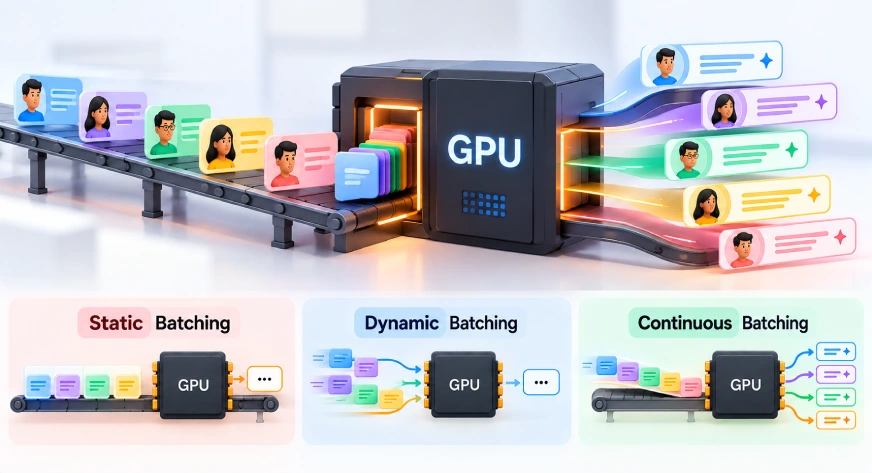
Smarter resource use: how batching transforms LLM performance
Four people heading to the same destination in separate taxis make four identical trips. Put them on a single bus, and everyone arrives together using far less fuel. That is the logic behind batching in large language models. Instead of processing one request at a time, the system groups them, sharing memory and compute across the batch. It is a smarter use of resources that makes AI faster and more efficient. For deeper coverage, explore how hierarchical routing cuts memory while preserving long-context accuracy.
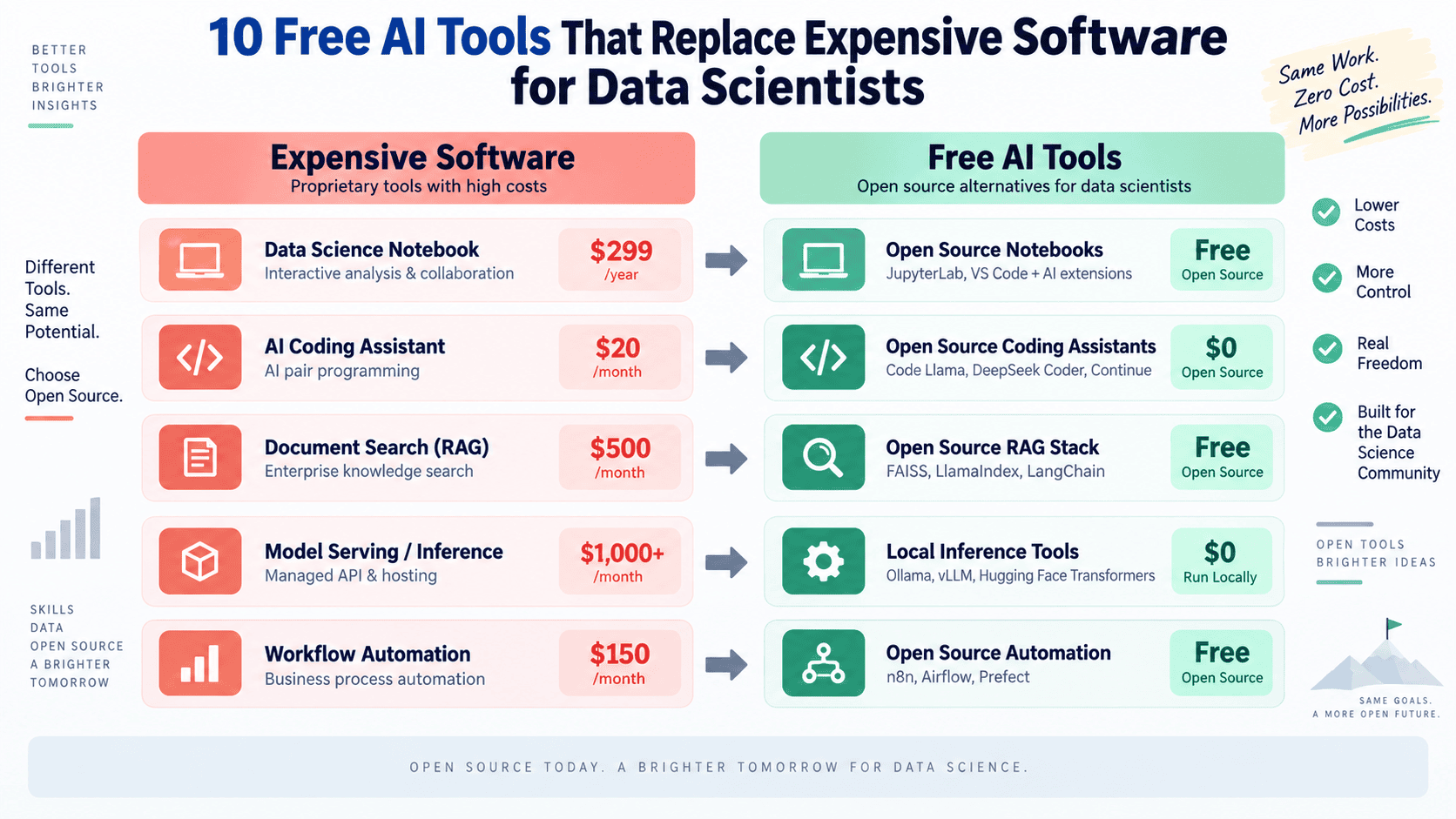
Build a complete data science stack for free with these open-source AI tools
Building a production-grade data science stack doesn't have to strain your budget. Open-source AI tools now match, and sometimes exceed, the capabilities of their paid counterparts, giving you a complete toolkit for free. This is about empowerment, not compromise. If you've been exploring how smarter workflows can transform your practice, our piece on semi-supervised learning as an underrated path offers a fitting next step.

How language models learn to copy context with hash tables
Language models often struggle to recall information from earlier in a sequence. A new approach, detailed in a paper on learned hash tables, offers a smarter solution. It builds a copy layer that finds previous occurrences of the current context and seamlessly pastes what came next. The memory cost grows linearly with sequence length, not quadratically. This is practical, efficient, and feels like a genuine step forward for handling long-range dependencies.
Stop digging through folders and paste your save path directly
Navigating endless folder trees just to save a file is a frustration we know well. That paste-directly-into-the-save-path workflow? It makes sense. Yet when you type a directory path above the file name box, many spreadsheets reset to the default folder instead of honoring your input. That's not a user error, it's a design gap. Why force anyone to click through every subfolder twice? For a simpler approach to data workflows, see our guide on rebuilding smarter when nested formulas slow your data to a crawl.

Trim 2,500 API Calls From One Apartment Search and Keep the Matches
2,500 API calls trimmed from a single apartment search, and the matches didn't suffer. The author traced every listing check with Weights & Biases Weave, then cut unnecessary model work one change at a time, scoring each version against the same answers. This is the kind of practical efficiency that makes AI agents actually useful. For deeper context on why simpler techniques often win, see our related piece on PCA outperforming autoencoders in a real benchmark.

Jev delivers typed probabilities, not text, for faster data decisions
Spreadsheets have always been a compromise between power and usability, but that trade-off is starting to feel optional. Daniel Curtis reports on a new AI-native approach that treats the grid as an interface for natural language reasoning rather than a manual calculation engine. The technology doesn't just automate formulas, it reframes what a spreadsheet can *be*, letting users ask questions in plain language and get structured answers back.
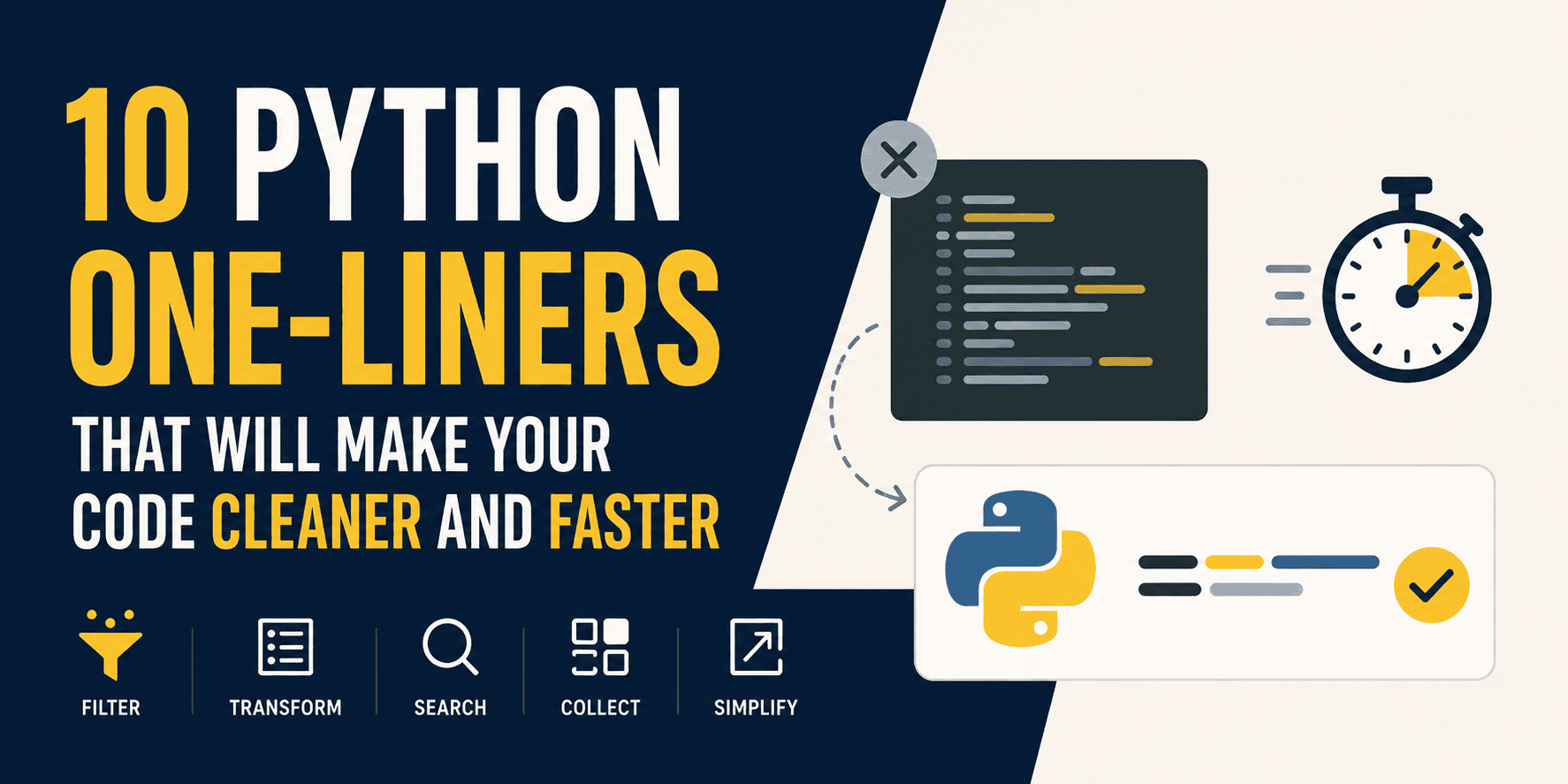
One line of code, seconds of time saved. That's the power of AI
One line of code, seconds of time saved. That's the promise of AI, and it's refreshingly direct. You type once, get the result, and move on, no follow-up lines, no corrections, no wasted motion. This isn't about flashy automation; it's about giving you back small pockets of time that add up. For a deeper look at how AI speeds up decisions, see our coverage of Jev, which delivers typed probabilities instead of text.
Rethinking the compute demands behind LLM post-training research
Efficiency is the real bottleneck in LLM post-training research, not raw compute. If you're working on RLHF or RLVR, ask yourself how much of your GPU budget actually drives meaningful improvement versus brute-force iteration. Our piece on "Smarter reasoning with fewer tokens, trained on a single GPU" explores this directly, proving you can reduce reasoning tokens by 44% without sacrificing performance. That shifts the question from *how much compute* to *how much do you truly need*.
Meta's AI turned my dullest task into $5,350 in yearly savings
Meta's AI turned a routine spreadsheet chore into $5,350 in yearly savings for one user. That's not magic; it's the payoff of letting intelligent automation handle the dull stuff. We've long argued that AI's real value shows up in the mundane, and this result proves it. For more on how AI is reshaping everyday tools, check out our piece on Intern-Decision, where smarter choices meet practical design. Explore what's possible when your data works harder.

Explore a smarter AI model that lifts complex work without the premium price
OpenAI's GPT-6.1 Sol takes on complex professional work without the premium price tag. It delivers real gains in code writing, debugging, document understanding, and multi-step business workflows. That's a meaningful upgrade for teams who need capability without cost barriers. We've also covered how Codex is expanding into cloud dev environments, so this release fits a broader push toward accessible, practical AI tools. If you're ready to lighten heavy tasks, this model is worth exploring.

Meet Intern-Decision: Smarter choices, 30 FPS, and multimodal by design
The Intern-Decision model family lands with a clear message: smarter choices shouldn't require a supercomputer. At 0.8B, 2B, and 4B parameters, the 4B model edges out Jev 1.13.0, and on an RTX 4090, it hits roughly 30 FPS for decision calls. That speed opens real room for interactive applications. What stands out is the calibration work. The team built a benchmark around classic probability problems, like the Monty-Hall dilemma, and found their model tracks the golden distribution more closely than the competition.
Unlock Team Momentum by Removing the AI Data Bottleneck
Data silos are quietly stalling even the most ambitious teams. When information is locked away, momentum dies. We see the same friction surfacing across industries, from inflated broker fees to the hidden costs of AI in hospitals. The fix isn't more tools; it's removing the bottleneck at the source. For a deeper look at how misplaced AI spending creates new problems, revisit our piece on rising hospital costs. For now, explore how clearing the data path can transform your team's workflow.

Perplexity Transforms Search with CobbleDB, Achieving 5x Faster Queries
Perplexity has quietly rebuilt its search backbone, moving from Amazon DynamoDB to CobbleDB, its own key-value store written in Rust. The result is a fivefold speed boost and lower costs on large document batches, all while handling serious production traffic. That is the kind of infrastructure bet most teams talk about but rarely pull off. For deeper looks at similar moves, Cloudflare's blog migration to EmDash shows how internal tools can reshape performance.
Speed Isn't Everything When AI Does the Work You Used to Own
One near miss, and four months of running agents left a writer asking a sharper question than any bug report: what are you supposed to do while the AI writes the code? The speed is real, but so is the quiet erosion of judgment. This isn't a warning against automation; it's a call to stay present in the loop. If you're navigating similar shifts, our guide to distributed training offers a practical foothold for keeping your skills sharp.
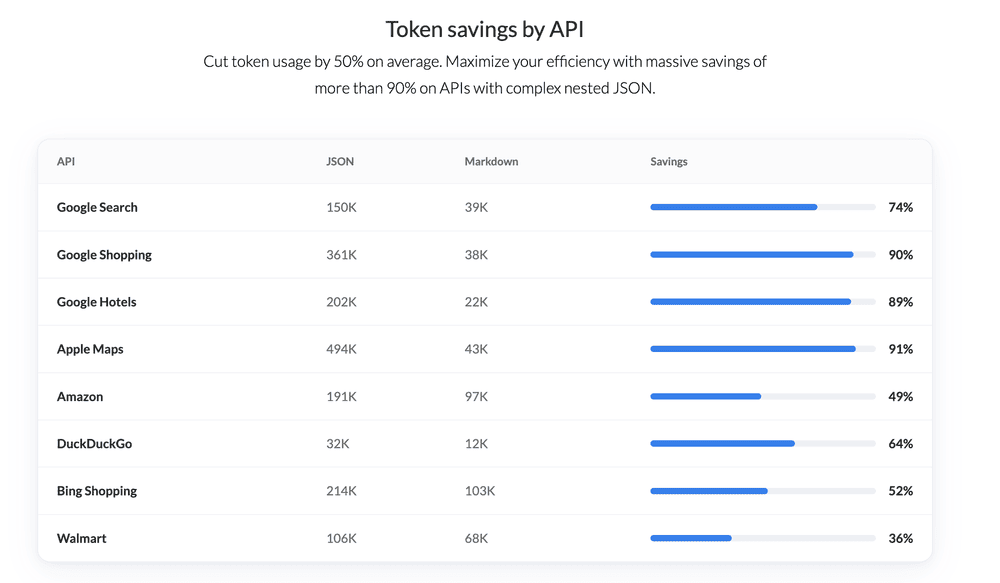
Reduce Search Result Tokens by 74% with Smarter Data Structuring
A single search result can quietly consume thousands of tokens, and that weight adds up fast when you're paying for every call. SerpApi's Markdown output tackles this directly, trimming usage by up to 74% by stripping away the noise and keeping only what matters. That's a meaningful reduction in context-window overhead and agent costs. It's the kind of practical efficiency that pairs well with the broader optimization thinking in our guide to distributed training.
Turn scattered referral data into one clear monthly view.
Merging multiple tables that share an X axis but carry different Y axes is a familiar wall for anyone wrestling with monthly referral data. The manual route works, but it's tedious and prone to error, especially when you're juggling several sources. What you're describing isn't just about efficiency; it's about reclaiming time for analysis over assembly. Tools like pivot tables or a simple script can handle this transformation cleanly. For those exploring broader data-shaping ideas, our piece on TanStack Charts touches on flexible visualization approaches.
Stop Struggling with Spreadsheets and Discover a Simpler Way to Track Contributions
Struggling with a spreadsheet when no one around can help is a familiar kind of frustration. Wedge's tally of TIE Interceptors and Fighters shouldn't require a computer science degree to pull together. SUMIFS is the right instinct, but the empty-cell condition trips up many capable users. The good news is that a straightforward approach using SUMPRODUCT can handle the date range and name matching without overhauling years of data.
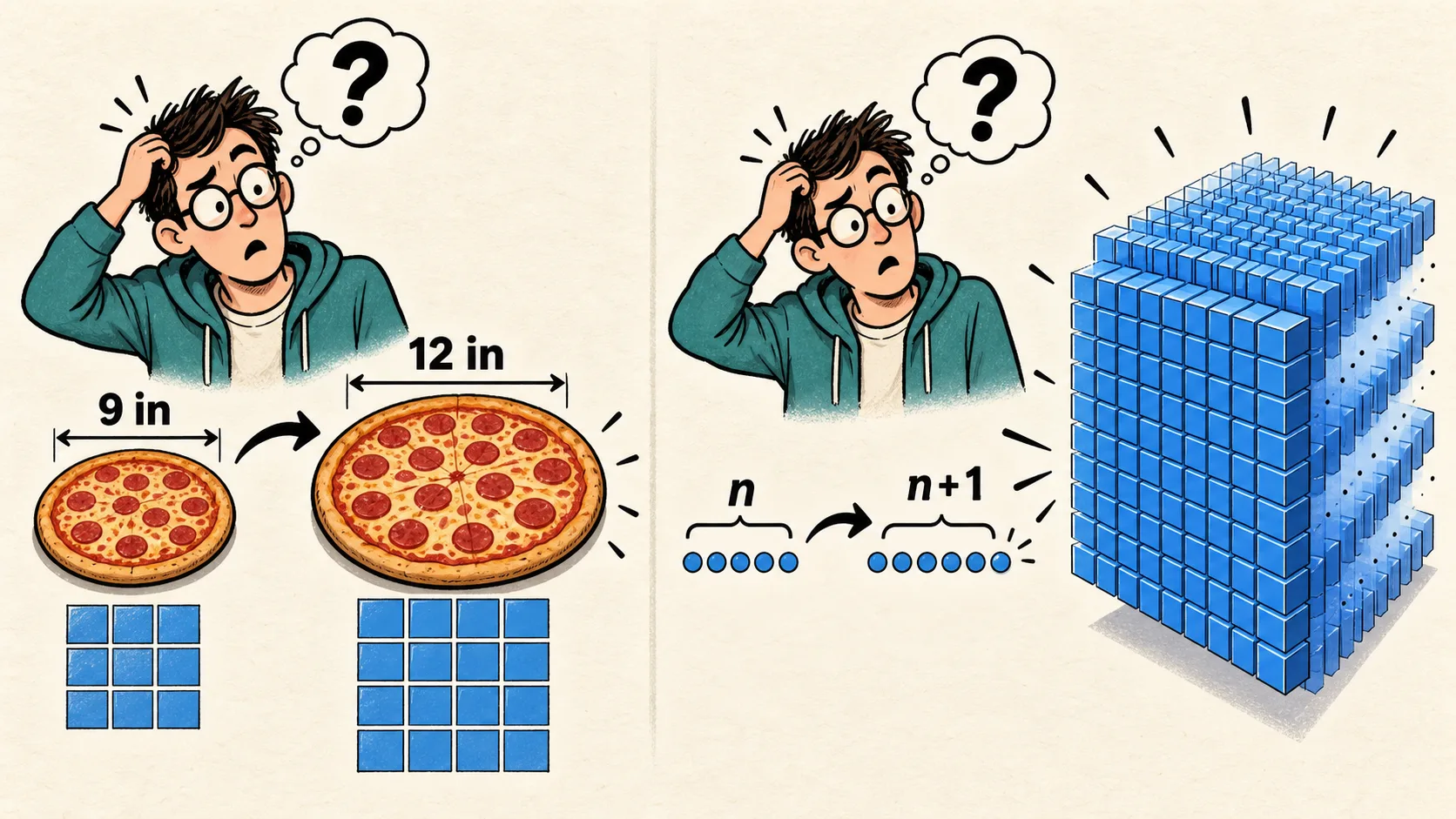
AI Memory: Lessons Learned from a Large, Uneaten Pizza
A large pizza ordered and left uneaten is more than a waste of good food. It is a perfect metaphor for how machine learning models handle memory. The post, "The N Squared Pizza Problem," draws a sharp parallel between that oversized order and the inefficiencies lurking in AI memory management. We appreciate the clever framing because it makes a complex topic feel immediate and relatable.

Active Compute Fabric cuts GPU idle time, reshaping AI infrastructure.
Cornelis just raised $205 million, and the message is clear: Nvidia's grip on AI infrastructure isn't untouchable. The company's Active Compute Fabric targets a quiet but costly problem, the wasted GPU cycles spent waiting on data. That's where efficiency lives, and that's where Cornelis is aiming. It's a smart, grounded challenge to the status quo, one that speaks to a future where hardware works smarter, not just faster. For more on how systems handle real-world demands, our piece on adaptive recommendation systems offers useful context.

Volkswagen doubles efficiency norms with an AI-inspired approach to design
Volkswagen's new halo EV nearly doubles the efficiency of the most economical production car on the road, the Lucid Air. That is not a small gap; it is a statement. By borrowing a clever idea from Slate, the automaker proves that radical efficiency does not require sacrificing practicality. We find that approach refreshingly grounded. It is one thing to chase specs, another to make them usable. For a deeper look at how data-driven decisions shape modern innovation, our piece on AI-native companies offers useful context.