generative AI for data analysis
generative AI for data analysis at Beyond Market Intelligence is a file of 212 stories. The newest of them: “AI speeds your data pipelines but can't replace their documentation”, “Confidence in AI ownership drops sharply when leaders are asked directly.”, and “Verify at machine speed to meet deception scaled by AI.”. Vibe coding offers remarkable speed for generating isolated implementations, but prompts’ inherent temporality creates challenges for enterprise data platforms. Recent Ivanti research reveals a concerning disconnect: while 85% of IT teams confidently assert every AI agent has a designated owner, a stark 42% admit that ownership remains unclear. Acme AI is the next-generation, AI-powered spreadsheet platform built to replace Excel and redefine how analysts, data scientists, and enterprise teams work… The list below is every generative AI for data analysis story on Beyond Market Intelligence, newest first.

AI speeds your data pipelines but can't replace their documentation
Vibe coding offers remarkable speed for generating isolated implementations, but prompts’ inherent temporality creates challenges for enterprise data platforms. These platforms, often fragmented across diverse teams and technologies, risk accumulating inconsistent logic and hidden dependencies as operational context resides in scattered conversations rather than the system itself. Spec-driven development (SDD) addresses this by converting prompts and knowledge into executable, versioned specifications—persistent operational memory for both humans and AI.

Confidence in AI ownership drops sharply when leaders are asked directly.
Recent Ivanti research reveals a concerning disconnect: while 85% of IT teams confidently assert every AI agent has a designated owner, a stark 42% admit that ownership remains unclear. This gap, a staggering 43 points, highlights a critical vulnerability as organizational leaders are nearly twice as likely to conceal AI usage, often citing a "secret advantage.

Verify at machine speed to meet deception scaled by AI.
Attackers are rapidly scaling deception with AI, creating a new reality where generating convincing phishing lures and impersonations is cheaper and faster than traditional defenses can react. Defenders must shift focus: the core challenge isn't just detection, but establishing and maintaining *truth* at machine speed. This requires a defensive control plane—a system that preserves evidence, makes data accessible, adds business context, and governs action—allowing teams to move from fragmented signals to trusted, defensible decisions. Learn more about Cisco Data Fabric powered by the Splunk Platform.
Explore the top data analytics courses shaping smarter skills in 2026
Finding the best data analytics course in 2026 requires navigating a diverse landscape of tools, roles, and learning objectives. This guide reviews ten leading courses, ranging from foundational certificates to immersive, project-based programs and even free official training for platforms like Tableau and Power BI. We’ve prioritized options that empower users to transform their data skills and achieve tangible results. For a broader perspective on incorporating user insights, explore our related article, "The Benefits Of Cognitive Inclusion In UX Research."
Designing for cognitive inclusion improves UX for everyone
Recent exploratory user research reveals the transformative power of cognitive inclusion in UX design. Our study, "The Benefits of Cognitive Inclusion in UX Research," highlights unique insights and actionable recommendations directly from participants with cognitive disabilities. These findings underscore the critical need for inclusive design practices, leading to more accessible and user-friendly experiences for everyone. Discover how prioritizing cognitive diversity can significantly improve usability and expand reach.

New benchmark reveals GPT-5.5 outperforms Claude on complex professional tasks
A significant shift has occurred in AI evaluation with the launch of Agents’ Last Exam (ALE), a rigorous new benchmark designed to assess AI’s ability to handle economically valuable, long-horizon professional workflows. OpenAI’s GPT-5.5, operating through the Codex harness, currently leads the ALE Leaderboard with a 24.0% pass rate, surpassing Anthropic’s Claude Fable 5.
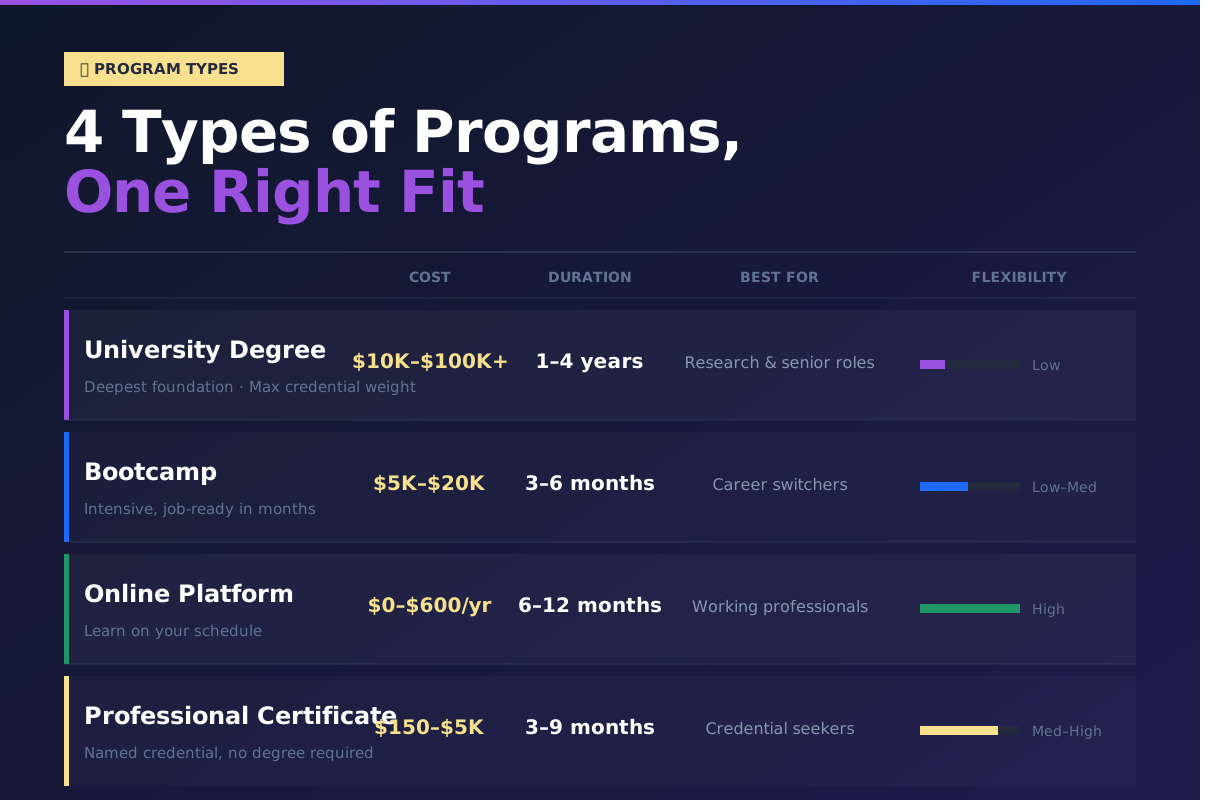
Navigating Data Science Education from Degrees to Self-Guided Paths
In 2026, navigating data science education feels like sprinting through a maze of degrees, bootcamps, and online courses, each claiming the quickest route to a career. The market ranges from free YouTube tutorials to multi‑hundred‑thousand‑dollar master’s programs, yet many comparison lists flatten these options without clarifying which path best fits your goals. This guide ranks programs by curriculum depth, industry relevance, and return on investment, helping you choose a course that truly transforms your data skills and accelerates your career.

Navigate the LLM Learning Landscape: Find the Right Course for You.
The landscape of Large Language Model (LLM) learning can feel overwhelming. You'll discover a vast range of options, from brief prompt engineering tutorials to extensive engineering programs. Finding the right course to match your experience and goals requires careful navigation. Explore our guide to understand what each type of LLM course prepares you for, empowering you to confidently choose the path that best transforms your data skills and unlocks your future-focused potential.
Three Paths Through Machine Learning Based on Your Real Goal
In 2026, selecting the best machine learning course requires clarity on your goals—whether you aim to understand ML concepts, apply them practically, or engineer systems for production. Many lists fall short, offering either overly theoretical content or tool-centric bootcamps that miss critical math foundations. This guide breaks down the most effective courses tailored to your objectives, ensuring you find a path that empowers your learning journey.
Focus Your Deep Learning Search on Training, Not Just Using AI
Navigating the landscape of deep learning courses can be challenging, especially with the mix of AI literacy, pre-trained model usage, and hands-on neural network training. This guide focuses solely on the third category, offering you the best deep learning courses for 2026 that equip you with the skills to build and train your own models. If you're eager to deepen your understanding and practical expertise, this curated list is your gateway to transformative learning.
Explore how AI models solve physics equations from data and code.
Explore the implementation of Physics Informed Neural Networks (PINNs) in Python, as I tackle two key problems: the damped harmonic oscillator and the 1D viscous Burgers' equation. This project not only addresses forward and inverse problems for parameter estimation but also includes a thorough investigation of extrapolation behavior, evaluating model performance outside the training domain. The GitHub repository features source code, sample outputs, and a written exam report. For additional insights on neural networks, check out "Best Text to Text Translation Model?" for further exploration.
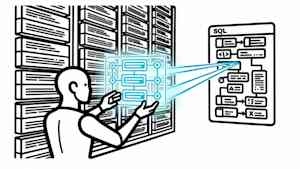
Give your AI agents the data context they need to find the right answer
SQL query logs are crucial for AI agents to avoid misinterpreting data joins, as demonstrated by Miro's experience with over 10,000 tables in Snowflake, where inaccuracies arose more than 65% of the time. The challenge was rooted in the lack of contextual understanding. DataHub is addressing this with its upcoming Context Intelligence layer, which leverages SQL query history to create a semantic index, guiding agents toward validated data connections. This innovative approach empowers organizations to transform their data management practices, making AI-driven insights more reliable.

DeepSeek's price cut challenges the economics of enterprise AI models
DeepSeek’s recent announcement of a permanent 75% price cut on its V4 Pro model marks a significant disruption in Silicon Valley’s AI landscape, challenging capital-intensive business models. By offering a solution that is 7x cheaper on inputs and 17x cheaper on outputs compared to leading competitors, DeepSeek not only enhances affordability but also promotes efficiency through innovative hardware-software architecture.

Agentic AI delivers real results when data plumbing comes first.
Merck and Mastercard are witnessing significant advancements in agentic AI by prioritizing foundational infrastructure. Merck is leveraging AI to cut drug discovery cycles by a third and accelerate compliant marketing material delivery by up to 80%. VP Sean Finnerty emphasizes that these successes stem from robust digital plumbing established before AI deployment. Similarly, Mastercard focuses on optimizing transaction workflows, navigating complexities with AI while balancing efficiency and customer trust. For further insights on AI's evolving impact, explore our related article, "Google just broke SEO.
AI coding benchmarks mask real performance gaps you need to see
Datacurve's newly released benchmark, DeepSWE, disrupts the AI coding landscape by revealing significant performance disparities among top models. Crowning OpenAI's GPT-5.5 as the clear leader, the evaluation underscores the limitations of existing benchmarks like SWE-Bench Pro, which may mislead enterprise buyers about model capabilities. With findings that suggest a troubling 32% error rate in verifier reliability, DeepSWE raises critical questions about how the industry measures AI performance.

When AI agents act on incomplete context, your incident review has no template.
As enterprises increasingly adopt AI agents, a concerning gap in chaos engineering practices is emerging. Many organizations are unaware that agent actions, while technically correct, can trigger cascading failures due to incomplete context. This disconnect leads to confusion over accountability between teams. With 79% of organizations deploying AI agents and predictions of widespread integration by 2028, it’s crucial to recognize these agents as chaos injectors. To navigate this landscape effectively, companies must audit their agent actions and link them to chaos engineering frameworks.
From local limits to scalable insights, explore your next data platform.
In the pursuit of modernizing your data analysis workflows, selecting the right platform for executing code is crucial. As you transition from legacy tools to Python, the challenge of managing large datasets becomes apparent. It’s essential to find a solution that accommodates your needs without being hindered by traditional IT constraints. Tools like Posit Workbench and Databricks could be a good fit. If you’re grappling with similar issues, consider exploring our article, "Advice?

A tiny memory fix that stops AI agents from forgetting
In the evolving landscape of AI, the introduction of delta-mem offers a groundbreaking solution to the long memory challenge faced by agents. Traditional methods, like expanding context windows or relying on retrieval-augmented generation (RAG), often lead to inefficiencies and increased costs. Delta-mem compresses historical interactions into a compact matrix, enhancing memory retention without bloating model size. This innovative technique empowers AI agents to carry forward relevant information seamlessly, streamlining workflows and reducing latency.

When authentication passes but security fails, trust the session token
In today’s enterprise landscape, a successful multi-factor authentication (MFA) check only verifies who logged in, leaving a critical blind spot: post-authentication actions. Even with every login deemed legitimate, attackers can exploit valid session tokens to move laterally through systems, escalating privileges undetected. Alex Philips, CIO at NOV, highlights this architectural gap, emphasizing the need for immediate session token revocation to prevent lateral movement. As identity theft tactics evolve, enterprises must re-evaluate their security strategies.

Explore How AI Analysis Can Mask Real Causal Patterns
In "LLM Themes Are Not Observations," practitioners are cautioned about the potential pitfalls of relying on generated variables in causal analysis. This insightful post emphasizes the importance of distinguishing between themes identified by large language models and actual observational data, which can lead to misinterpretations and flawed conclusions. By understanding this distinction, users can enhance their analytical approach. For those looking to streamline their data management processes, you may also find value in our article, "How I can 'automatize' this database in a simple way."

Trillion-parameter AI inference runs seven times faster on Cerebras chips
Cerebras Systems has made a significant leap in the AI inference market, announcing that its chips can run the trillion-parameter Kimi K2.6 model nearly 7 times faster than any GPU cloud provider, achieving 981 output tokens per second. This milestone, independently verified by Artificial Analysis, showcases Cerebras' wafer-scale architecture's unique advantages, eliminating traditional bottlenecks. As the company positions itself at the forefront of AI technology, it invites enterprises to explore the transformative potential of its solutions.

Find the SQL course that actually matches your skill level
In 2026, finding the right SQL course can be a daunting task, especially with so many options available. Most lists either skim the surface or offer a one-size-fits-all approach, ignoring the distinct needs of different users. Whether you're a complete beginner, a working analyst, or an engineer developing production systems, your SQL training should align with your specific goals. In our comprehensive ranking and comparison, we break down the best SQL courses tailored for various skill levels and use cases.

How a poisoned extension exposed thousands of GitHub repositories
GitHub has confirmed that approximately 3,800 internal repositories were compromised through a poisoned VS Code extension installed on an employee's device, as part of a broader attack by the threat group TeamPCP, also known as UNC6780. The attackers are advertising the stolen repositories for sale, with claims consistent with GitHub's investigation. This incident highlights vulnerabilities in supply chain security and the need for organizations to reassess their defenses.
Generative AI courses expire fast. Learn how to pick ones that last.
As generative AI technology evolves rapidly, finding the best courses in 2026 presents unique challenges for engineers. With content aging faster than most technical subjects, distinguishing effective learning opportunities from outdated information becomes essential. A LangChain tutorial from 2023 may already cover deprecated practices, while a 2024 prompt engineering course might overlook crucial modern concepts like agents or retrieval-augmented generation (RAG). To navigate this landscape, explore our insights on selecting relevant courses that empower your skill development in this dynamic field.