generative AI for data analysis
generative AI for data analysis at Beyond Market Intelligence is a file of 212 stories. The newest of them: “Discover how Gemini 3.5 Flash makes powerful AI more accessible and affordable.”, “The search box is evolving: discover what Google's redesign means for you”, and “When your AI needs a manager, Fin builds one to lead the work.”. At the recent I/O developer conference, Google unveiled Gemini 3.5 Flash, a groundbreaking AI model that promises to significantly reduce enterprise AI costs by over $1 billion annually. Acme AI is the next-generation, AI-powered spreadsheet platform built to replace Excel and redefine how analysts, data scientists, and enterprise teams work… The list below is every generative AI for data analysis story on Beyond Market Intelligence, newest first.

Discover how Gemini 3.5 Flash makes powerful AI more accessible and affordable.
At the recent I/O developer conference, Google unveiled Gemini 3.5 Flash, a groundbreaking AI model that promises to significantly reduce enterprise AI costs by over $1 billion annually. This innovative model defies the conventional belief that higher quality must come at a greater expense and slower performance. By optimizing speed and efficiency, 3.5 Flash empowers organizations to manage their AI workloads more effectively. For a comprehensive look at AI advancements, check out our article on "Apple announces Apple Intelligence powered accessibility feature updates."

The search box is evolving: discover what Google's redesign means for you
Google's recent redesign of its iconic search box marks a pivotal shift in how users will interact with information online. For the first time in 25 years, the search box transcends its traditional role, evolving into an AI-driven interface that accommodates text, images, and more. This transformation invites users to engage in open-ended conversations rather than mere keyword searches, reflecting a future where AI enhances our quest for knowledge. As this new functionality rolls out, it signals a significant evolution in user experience.

When your AI needs a manager, Fin builds one to lead the work.
Fin, formerly known as Intercom, has launched Fin Operator, a groundbreaking AI agent dedicated to managing another AI agent. Announced at a live event in San Francisco, this innovative tool is designed for back-office teams, simplifying the complexities of configuring and monitoring Fin, the company’s customer-facing AI. Rather than replacing human support agents, Fin Operator empowers support operations professionals by automating tasks like data analysis and knowledge management. This development marks a significant evolution in customer service technology, underscoring the shift towards AI-driven operational solutions.
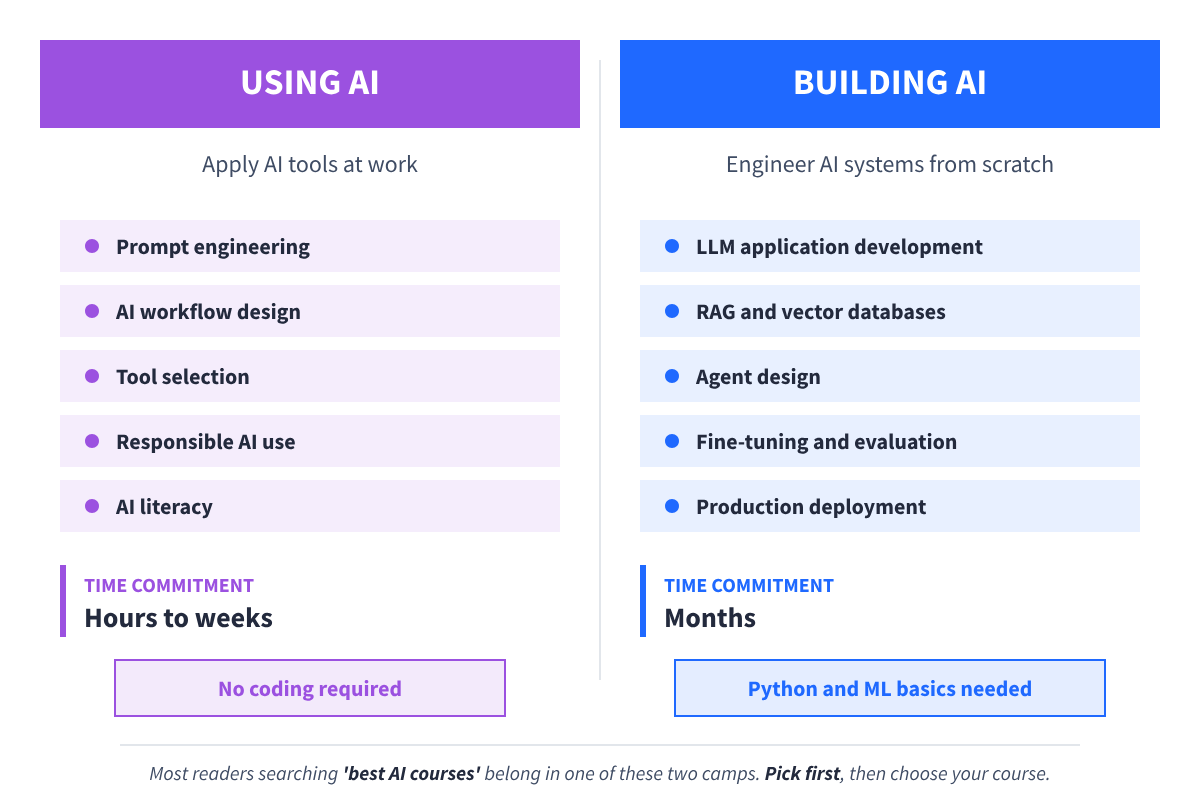
Discover the right AI course path to match your goals and skill level
As the demand for AI expertise continues to grow, choosing the right course can significantly impact your learning journey. In 2026, you’ll encounter two distinct paths: one focused on mastering AI tools and another dedicated to building AI systems from scratch. Selecting the wrong option could lead to months of frustration. This guide compares ten of the best AI courses available, helping you find the perfect fit for your goals.

A $100 billion debut signals a new era for AI infrastructure.
Cerebras Systems made a stunning debut on the Nasdaq, with its stock nearly doubling to $350 per share, propelling the AI chipmaker to a market capitalization of $100 billion. This monumental IPO not only marks one of the largest tech offerings since Uber but also highlights a pivotal moment in AI infrastructure, validating the company's decade-long commitment to innovative chip design. As Cerebras plans to invest its newfound capital into expanding cloud infrastructure, it positions itself at the forefront of the rapidly evolving AI landscape.

How Interface Transparency Builds Trust in Agentic AI
In "Practical Interface Patterns For AI Transparency (Part 2)," we delve into why traditional loading patterns, such as spinners, can fall short in agentic AI experiences. By adopting interface patterns that transparently reveal the system's processes, status, and decision-making, we can significantly enhance user trust and engagement. This invites you to explore innovative approaches that prioritize transparency, ultimately empowering users in their interactions. For a deeper understanding of AI evaluation, check out our article, "Building an Evaluation Harness for Production AI Agents."

Explore accessible AI video analysis at a fraction of traditional costs.
Perceptron Inc. has launched its flagship video analysis AI model, Mk1, offering advanced capabilities at a fraction of the cost of competitors like Anthropic and OpenAI. Priced at just $0.15 per million input tokens, Mk1 empowers enterprises to harness real-time video insights for security, marketing, and research applications. With a focus on understanding object dynamics and physical interactions, this model sets a new standard for accessible, efficient AI solutions. Explore how Perceptron Mk1 can transform your workflows and elevate your data management strategies.

Three security blind spots in Claude expose what your data stack misses
In light of recent findings from four security research teams, it’s essential to address the vulnerabilities associated with Anthropic’s Claude Code and Claude in Chrome. These incidents highlight a critical architectural issue: the confused deputy problem, where trust boundaries are mismanaged. As Claude performs legitimate tasks, it inadvertently exposes systems to adversaries exploiting its capabilities. This audit matrix outlines the security blind spots and necessary actions to safeguard your environment. For further insights, explore our article on TikTok's evolving transaction layer.
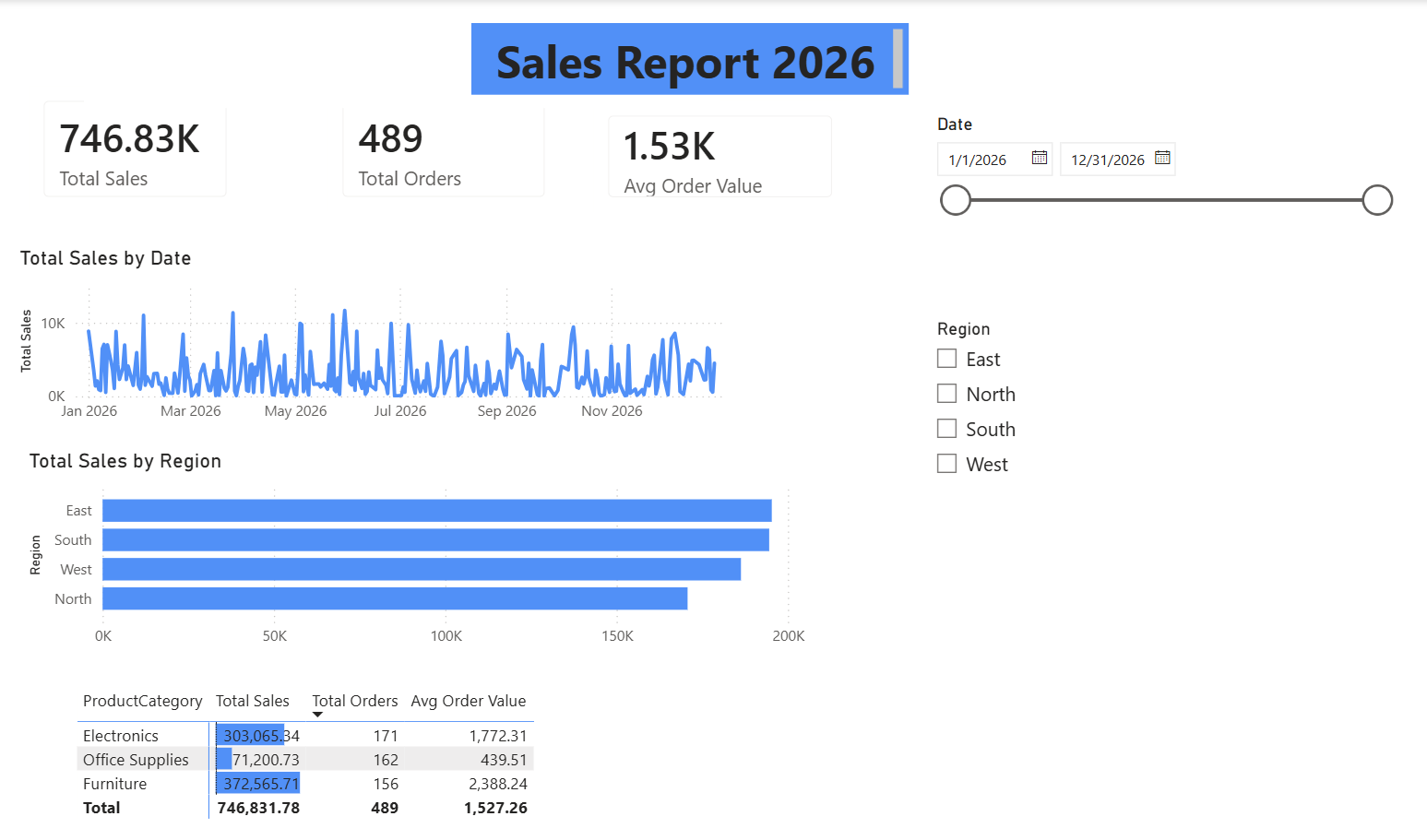
From raw data to interactive dashboard: build your first Power BI report
Welcome to our Power BI tutorial, where you’ll transform a raw data file into a polished, published report. This guide will walk you through the entire process, from initial data queries to deploying your finished dashboard in the cloud. You’ll learn to create an interactive dashboard that not only visualizes your data effectively but also includes essential features like alerts and automatic refresh settings. By the end, you’ll have the skills to empower your data storytelling and enhance your decision-making. Let's dive in and explore!

Stop Overthinking Python Courses and Start Learning
If you're exploring Python courses, you might feel overwhelmed by the sheer number of options available. With countless "best of" lists offering differing opinions, it's easy to fall into choice paralysis, which often prevents beginners from taking that crucial first step. This guide is designed to simplify your decision-making process by comparing nine standout Python courses in 2026.

Stop Overpaying for GPUs Your AI Workloads Rarely Use
In the wake of the GPU scramble, enterprises now face a stark reality: while $401 billion is being spent on AI infrastructure, GPU utilization remains alarmingly low at just 5%. This underutilization stems from a procurement loop that traps idle resources, demanding a critical shift toward maximizing existing assets rather than simply acquiring more.

Market research meets its match with 60,000 AI digital twins
In an era where rapid responses are crucial, traditional market research cycles of up to 12 weeks can hinder timely decision-making. Brox, a pioneering startup, introduces a groundbreaking solution: 60,000 digital twins of real individuals, enabling companies to survey diverse demographics instantly. By creating a "parallel universe" of behavioral replicas, Brox empowers organizations to conduct unlimited experiments in hours rather than months, offering deep insights into consumer preferences.

Explore how a single command can turn any open-source repo into an AI agent backdoor.
Researchers at the University of Hong Kong have unveiled CLI-Anything, a groundbreaking tool that transforms any open-source repository into an AI agent interface with a single command. While it enables seamless integration for tools like Claude Code and GitHub Copilot CLI, it also exposes critical vulnerabilities within the software supply chain. The lack of detection capabilities for malicious instructions embedded in AI skills signifies a structural gap in current security measures.

Beyond RAG: Agentic AI demands a new hybrid knowledge layer
The era of retrieval-augmented generation (RAG) is evolving, as agentic AI demands a more sophisticated approach to data management. Traditional vector databases are struggling to meet these needs, prompting a shift towards innovative solutions. Pinecone's new Nexus platform introduces a knowledge engine that compiles context before queries, streamlining agent interactions with structured knowledge artifacts. This change reduces inefficiencies and enhances task completion. As enterprises embrace these advancements, the focus will increasingly shift from mere retrieval speed to governed, reliable knowledge pipelines that drive meaningful outcomes.

Microsoft's Agent 365 launch signals urgency for AI governance now
Microsoft has officially launched Agent 365, its management platform for AI agents, signaling a critical shift in addressing the governance challenges posed by "shadow AI." This innovative tool allows enterprise IT and security teams to oversee and secure AI agents across various environments, including third-party cloud platforms and local devices. As organizations grapple with the risks of autonomous software operating without oversight, Agent 365 provides a centralized control plane to navigate this new landscape.
Unlocking emotional context with AI-powered question answering
If you're exploring effective question-answering solutions without the need for training data, the Transformers library offers several pre-trained models. However, it seems the pipeline you referenced has transitioned away from the "question-answering" feature, now focusing on tasks like document-question-answering and text classification. To address this, consider utilizing the "text-classification" or "table-question-answering" features if they align with your goals. Alternatively, explore other frameworks like Hugging Face's model hub for additional options that can handle text-based question answering effectively.
Master the core statistics that turn complex data into clear insights
In this candid reflection, the author shares their experience with Google’s Data Science Research interview, highlighting the two critical rounds: Statistical Knowledge and Data Analytics. The statistical portion challenged their understanding of distributions, expectations, and confidence intervals, ultimately revealing that what seemed complex had a straightforward answer. The second round involved diagnosing a flawed model, where expectations of a case study shifted unexpectedly to a technical equation task. The key takeaway?

xAI ships Grok 4.3 and a voice cloning suite at a competitive price
xAI has launched Grok 4.3, a new large language model that enhances performance while maintaining an aggressively low pricing structure. This release comes amid ongoing legal battles involving founder Elon Musk and OpenAI co-founder Sam Altman. Grok 4.3 introduces advanced reasoning capabilities and a powerful voice cloning suite, designed to optimize user workflows. With significant improvements in specialized tasks, Grok 4.3 positions itself as a strong contender in the AI landscape, offering both affordability and functionality for developers and enterprises alike.

How AI pretraining can make public transit data more useful
Hello r/MachineLearning! I'm diving deep into AI and ML within the US transit industry, inspired by Andrej Karpathy's autoresearch framework. I applied this innovative approach to a 33M-token public transit dataset, aiming to assess its effectiveness for specialized data. Despite challenges, I achieved a 14% improvement while validating the methodology. I'm eager to hear your insights on potential pitfalls, intriguing aspects, and recommendations for further exploration. Join me as we explore the intersection of autoresearch and transit data—your input is invaluable!

AI spreads across AWS as cloud exclusivity gives way to openness
Amazon Web Services (AWS) has marked a pivotal moment in the cloud landscape with its latest announcements, unveiling a suite of tools that integrate OpenAI's powerful models into its Bedrock platform. This move coincides with the recent restructuring of OpenAI's partnership with Microsoft, setting the stage for a new era of collaboration across cloud providers.

Why enterprises hoard unused GPUs and how AI can break the cycle
Enterprises are grappling with a profound GPU waste problem, running fleets at a mere 5% utilization despite soaring costs. The fear of losing valuable capacity in a tight market prevents teams from releasing idle GPUs, perpetuating a cycle of inefficiency. As highlighted in Cast AI's 2026 State of Kubernetes Optimization Report, the situation is exacerbated by procurement practices that prioritize short-term allocation over long-term utility.
Open source YAML dashboards designed for AI-native analytics
Introducing an open-source dashboard-as-code tool designed for the modern data landscape. This code-first framework utilizes simple YAML and JSX files to build and deploy dynamic dashboards, enabling real-time generation of charts, tabs, and values. What sets it apart is its seamless integration with AI agents, creating a robust environment for AI-native analysis and business intelligence. Today marks its public release, and your feedback—whether constructive or critical—is invaluable. Explore the repository and join the conversation: https://github.com/bruin-data/dac.
Explore how topological analysis transforms noisy point cloud data workflows.
Hello everyone, I’m seeking a suitable 3D point cloud or CAD/mesh dataset for a research project focused on comparing Topological Data Analysis (TDA) with traditional preprocessing methods. The study will evaluate classification accuracy after applying various perturbations, such as Gaussian noise and random point deletion. Ideally, I need a dataset featuring classes with distinct topological structures, such as spheres versus toroidal shapes, and ample samples (600+) for robust analysis.

Sharpen Your Python Skills with 400 Targeted Practice Exercises
Elevate your Python skills with "400+ Python Practice Exercises by Topic (2026)." This comprehensive resource features 136 free exercises and 298 premium ones, all designed to enhance your coding proficiency. Organized by topic and difficulty, these exercises can be solved directly in your browser, making practice both convenient and engaging. Additionally, the guide provides strategies for effective practice and highlights top external platforms for coding challenges. Embrace the opportunity to transform your Python journey through targeted, hands-on experience.