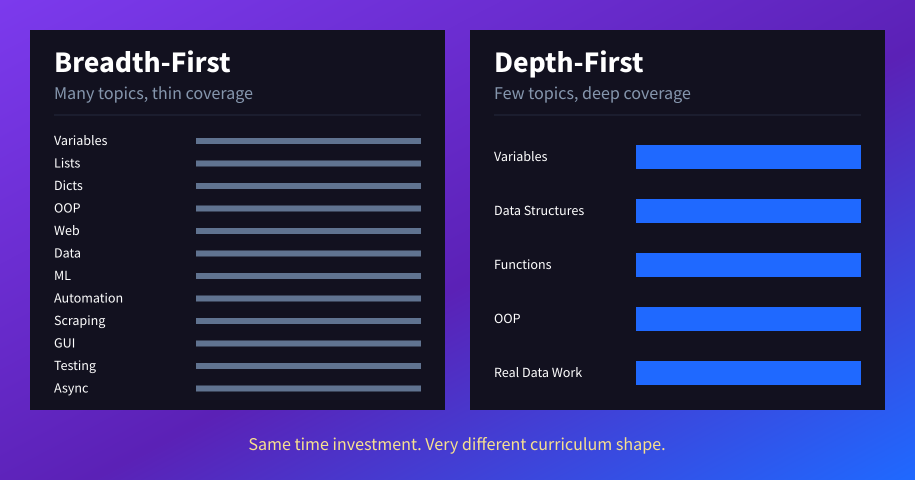
If you're researching Python courses, you may already feel stuck. There are hundreds of options, every "best of" list disagrees with the last one, and most people spend more time choosing a course than they ever spend learning Python. Choice paralysis is the single biggest reason beginners never start. This guide compares 9 Python courses across cost, format, prerequisites, time commitment, and depth of coverage. We’ve organized them by goal and learning style rather than arbitrary rankings, with options for absolute beginners, hands-on learners, free university-backed picks, and career-changers. Each entry includes a quick-decision meta block with real costs, realistic timelines, what you’ll learn, and whether the course is depth-first or breadth-first. By the end, you’ll have a framework to cut through the noise and focus on what matters: building skills.
The problem isn’t just the volume of choices—it’s the lack of clarity about what each course *actually* delivers. Many platforms market themselves as “comprehensive,” but their depth-first or breadth-first approaches can lead to gaps in practical knowledge. For instance, a course promising “career readiness” might prioritize theory over real-world projects, leaving learners unprepared for job interviews or workplace tasks. This disconnect underscores the importance of aligning a course’s structure with your specific goals. Are you a hobbyist aiming to automate tasks, or a professional transitioning into data science? The right course depends on this distinction.
Embedding related insights from our publication adds context. How to find missing data explores spreadsheet challenges that mirror the broader issue of fragmented learning—just as missing data can derail a workflow, unclear course objectives can derail progress. Similarly, Unable to Remove Floating Copilot Button highlights the frustration of tools that complicate rather than simplify tasks, a sentiment many learners might feel when navigating overly complex curricula. These examples remind us that effective education—like effective software—should prioritize user outcomes over technical showmanship.
The real value here lies in the guide’s focus on *actionable* filters: cost, time, and learning style. For example, free university-backed courses might suit self-directed learners, while paid programs with hands-on projects could accelerate skill acquisition for those with deadlines. This pragmatic lens demystifies the process, turning overwhelming options into manageable decisions. It also subtly critiques the broader tech education landscape, where marketing often overshadows substance. By emphasizing *what* you’ll learn over vague claims of “industry relevance,” the guide aligns with a growing demand for transparency in skill development.
Looking ahead, the conversation around Python education will likely evolve alongside AI’s role in coding. As tools like Copilot (mentioned in Unable to Remove Floating Copilot Button) become ubiquitous, courses must adapt to teach *how* to leverage such tools effectively. The question isn’t just “What should I learn?” but “How will I learn to learn?” in an era where AI augments—but doesn’t replace—human expertise. For now, this guide is a timely reminder that clarity, not hype, is the key to progress.