large language models
Beyond Market Intelligence keeps large language models in one place: 112 stories so far. The section currently leads with “From Prompt to Purpose: The Shift Toward Specifying Work”, “AI reviews exposed: when depth meets surface in peer feedback”, and “Bring Structure to Local LLMs with a Practical Implementation Guide”. Prompt engineering taught us how to ask better questions. The review process felt misaligned with its own purpose. Acme AI is the next-generation, AI-powered spreadsheet platform built to replace Excel and redefine how analysts, data scientists, and enterprise teams work… The list below is every large language models story on Beyond Market Intelligence, newest first.
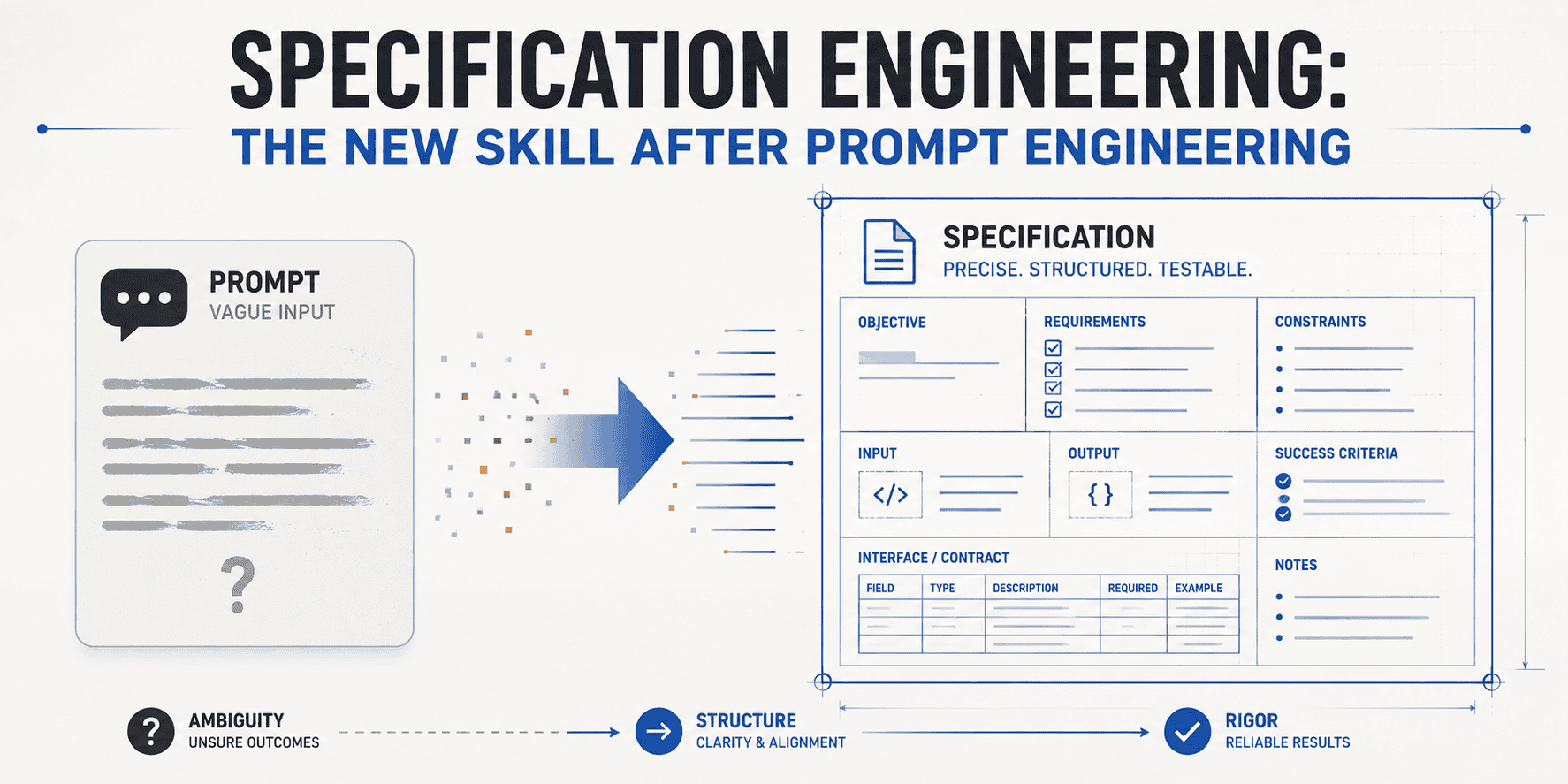
From Prompt to Purpose: The Shift Toward Specifying Work
Prompt engineering taught us how to ask better questions. Specification engineering teaches us how to define better work. That's the natural next step, and it's one worth exploring if you've ever felt the limits of a clever prompt. We're moving from conversational nudges to precise, actionable blueprints. For a deeper look at how AI can misunderstand even clear instructions, our piece on verifying your AI's understanding offers a practical checkpoint. This skill is about taking control, and that's a shift we can get behind.
AI reviews exposed: when depth meets surface in peer feedback
The review process felt misaligned with its own purpose. One reviewer even broke double blindness during discussion, revealing LLM-generated specifics they never mentioned initially, nor did they engage with rebuttals. That undermines trust. Low clarity scores stung because reviewers struggled with established notation, a problem an LLM could have resolved if prompted. This isn't about replacing judgment; it's about using the tool to close knowledge gaps.

Bring Structure to Local LLMs with a Practical Implementation Guide
Structured output turns a local LLM from a clever autocomplete into a dependable tool for real workflows. It's not about caging the model; it's about giving it guardrails so answers arrive clean and usable. The implementation is straightforward once you map your schema, and when things break, you debug with validation errors instead of guesswork. That practical edge makes it worth the setup. For another angle on AI's limits, "Verify Your AI's Understanding: A Simple Check for Tax Season" pairs nicely with this.

Smaller models, bigger returns: why 3B outperforms 70B for your task.
A 3B model can outperform a 70B one on your specific task. That isn't a compromise; it's a strategic choice. For focused pipelines, massive models are often overkill, and their cost is hard to justify. The Hugging Face transformers library and smolLM3 make this accessible, letting you deploy a lean, capable model without the overhead. If you're tired of paying for compute you don't need, this approach is worth exploring.
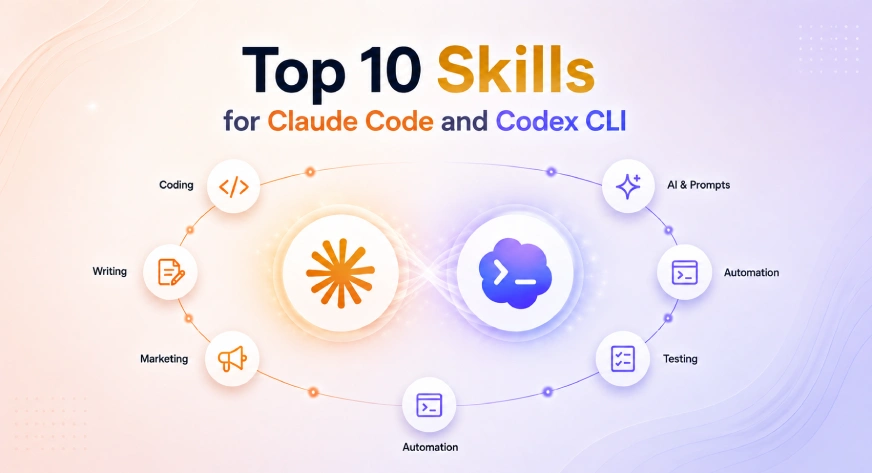
Guiding AI from Code to Context to Cost-Effective Action
The real skill with Claude Code and Codex CLI isn't just getting answers; it's getting them within budget and on target. It's about guiding these tools with clear context and shaping their output into something you can actually use. This list cuts through the noise, focusing on practical moves rather than endless possibilities. For a deeper look at how context shapes AI behavior, our piece on how agents learn by editing context pairs well here. Start with the essentials and build from there.
Three Lessons from 400,000 Sessions on What Actually Works
For years, we treated Claude Code workflows as personal preference. Pick your mode, set your memory, move on. That thinking was comfortable, but it was also wrong. Anthropic analyzed roughly 400,000 sessions from over 235,000 users, scoring them against hard evidence of success: passing tests, landed commits, and confirmed user satisfaction. The result? Best practices are not a matter of taste. They are measurable, and they can be learned. This is what the data actually shows, and it is worth your attention.

When your document says "see Section 7.2," AI can now follow the link.
A "see Section 7.2" answer is a dead end, not a destination. When a retrieval system points elsewhere instead of answering directly, the pipeline breaks trust. This piece tackles that exact failure with a loop-based fix: fetch the linked context, then return the real answer. It's a practical, human-centered solution for a frustrating problem. We appreciate the focus on user outcomes over technical spectacle. For more on how LLMs handle structure, explore *Exploring Paragraph Structure: How LLMs Navigate Token Space*.
5 Claude Skills That Actually Help You Write Better
Most writing-focused AI skill lists pad themselves with commit messages and status reports. This one does not. It ranks repositories by GitHub stars, but only those built specifically for writing or editing. That distinction matters. It filters for genuine utility, not accidental relevance. If you are exploring how AI can sharpen your prose, this is a practical, no-nonsense starting point. And if you want to question the tech further, our piece on talking to an AI clone offers a useful counterpoint.

Open-weight AI nears frontier power but safety measures lag behind
Z.ai's open-weight GLM-5.2 is closing the capability gap with frontier systems, yet SaferAI's new report makes one thing clear: safety isn't keeping pace. That's a concern we should take seriously, not dismiss. Powerful open models offer real promise, but without key mitigations, they risk racing ahead of the governance meant to guide them. It's a familiar tension, one we explored in "AI Models Complete Turing's Codebreaking Legacy." For now, the question isn't just what these models can do, but who ensures they do it responsibly.

Explore how a third pretraining axis transforms end-to-end data generation.
Most language models are trained along two axes: data and compute. Gladstone and colleagues argue for a third: the modeling objective itself. Their work on explorative modeling suggests that how we frame the learning task is as important as the data we feed it. This isn't a tweak; it's a different approach to end-to-end generation. For a deeper look at how such models navigate structure, our guide on paragraph structure in token space is a useful next stop.
Explore Visual Reasoning: A New Benchmark for AI Models.
Visual reasoning has always been the quiet barrier between pattern-matching and true understanding. When we saw the benchmark challenge posed by /u/moschles, it felt less like a test and more like a mirror. We're not just asking AI to identify objects; we're asking it to explain why a circle isn't a square. That distinction matters. For anyone who has wrestled with the limits of current models, this exploration offers a practical lens.

Three Layers That Define Every RAG System You Build
Every RAG system stands on three engineering layers, each stacked on a single LLM call: the prompt that makes the call, the context that fills the model's window, and the loop that decides when the next call fires and when it stops. Knowing which layer you are on is half the battle in building and debugging. This breakdown keeps things practical and grounded. For deeper exploration of where AI understanding gets murky, our piece on verifying your AI's understanding offers a timely companion.

Master reasoning budgets to make your AI work smarter, not harder
Controlling how much an LLM thinks before it answers is quietly becoming one of the most practical levers in AI. This post breaks down reasoning effort and token budgets with the kind of clarity that makes you wonder why it took so long to ask. It's not about hype; it's about giving users a dial they can actually turn. If you're tired of guessing why some responses feel overthought or rushed, this is worth your attention.

When AI Feels Too Good, It's Time to Reassess Your Habits
Hank Green's candid admission about his AI usage being "not healthy" lands with rare honesty. He didn't hide behind productivity or innovation; he named the dopamine loop directly. That kind of self-awareness matters, especially when we're all so eager to embrace what AI can do. It's worth pausing to ask what we're trading for that efficiency. For a deeper look at how these tools shape our thinking, our piece on talking to an AI clone offers a thoughtful parallel.

Smarter Context, Not More Context, Unlocks Smarter Coding Agents
Most coding agents drown in the very context meant to help them. They gather more files, add more data, and hope the model sorts it out. It doesn't work. Irrelevant code competes for attention, and when the window fills, agents compress their own memory mid-task. That's not forgetting; that's degraded context. Treat prompt construction like a compiler, deciding what to keep, reduce, or discard. It's a practical, human-centered fix.
Explore practical AI tools that simplify data analysis and model understanding
This week's roundup starts with a practical truth: building and deploying your first autonomous agent is no longer a distant ambition. We also break down the machine learning algorithms that still earn their keep, offer a beginner's path to working with Claude, and highlight the best AI tools for data analysis in 2026. For those ready to go deeper, our guide to distributed algorithms pairs well with these beginner fundamentals.
Explore how LanceDB unifies text, images, and documents for smarter AI workflows.
Large language models excel at text, but they stumble when information hides across documents or inside images. That's where LanceDB steps in. This guide breaks down how the vector database stores embeddings and powers similarity search for AI workloads, with a practical Python demo to get you started. It's a clear, accessible look at a tool that simplifies multimodal data handling. For more on how AI handles context, check out our piece on agentic learning.

Observability without compromise: keep your AI agent data in your cloud.
AI agents are generating telemetry faster than most enterprises can afford to store it, and that tension is reshaping one of software's most competitive markets. groundcover's $100 million raise signals a bet that the old architecture, where vendors charge by data volume, no longer fits an AI-driven world. Its BYOC model keeps data in your cloud, priced by hosts, not ingestion. Whether that thesis holds is unclear. But it's a practical challenge to incumbents, and a compelling reason to rethink how observability should work.
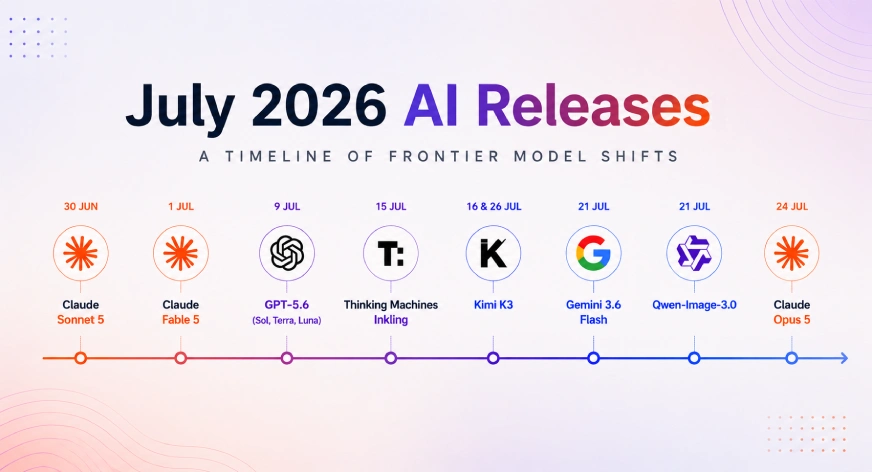
Fourteen Frontier Models Landed in July. Here Is What That Means.
July 2026 didn't just push the frontier forward; it redrew the map. Thirty-one days, four major lab flagships, two debuts from well-funded newcomers, and the largest open-weight model ever released. That's not a busy month, that's a signal. The pace tells us the field is maturing, but also that access is widening. If you're exploring how these shifts reshape your own workflows, our guide to agentic context learning offers a practical lens on where learning happens next. This timeline is worth your attention.
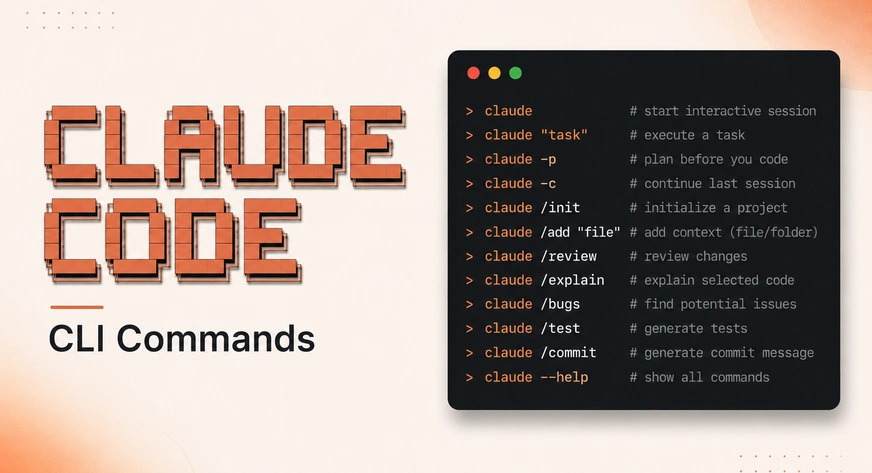
Unlock Hidden Commands to Transform Your CLI Workflow
Months of daily use, and the real power of Claude Code only surfaced by accident. This author kept restarting sessions, re-explaining the same project structure, simply because `claude --help` hides the full picture. It's a familiar frustration, and their discovery of a deeper CLI reference is a practical win for anyone tired of repetitive setup. Digging past the surface reveals a smoother workflow. For more on questioning AI's limits, our piece on talking to an AI clone offers a fitting follow-up.

From Scattered Knowledge to an AI-Ready Company Brain
Building a context layer sounds straightforward until you try to move beyond a demo. This piece cuts through the hype to show what it actually takes to turn scattered company knowledge into something an LLM can reliably use. The polished demo is only about five percent of the real work. The rest is messy, unglamorous, and essential. If you are weighing whether your team is ready for this, it is a sobering and useful read.

Microsoft signals its own AI future beyond partner models
Microsoft is openly stepping into the ring with OpenAI and Anthropic, pitching its own homegrown AI models and a Mythos competitor to Wall Street on Wednesday. It's a bold signal that the company intends to keep growing on its own terms. That kind of confidence is worth watching, especially as users weigh which tools truly serve them. If you're questioning how much to trust this AI push, our piece on talking to an AI clone offers a thoughtful counterpoint worth exploring.

Netflix's blueprint for scaling LLM inference across diverse hardware
Netflix's move to detail its in-house LLM serving platform is a practical look at the messy, real-world work of scaling AI. Supporting different model sizes, juggling hardware constraints, and keeping pace with fast-moving engines like Triton and vLLM isn't glamorous, but it's essential. The company's willingness to share these production lessons offers a grounded counterpoint to the usual hype. If you're wrestling with similar trade-offs, Netflix's account is worth your time, and our related article on distributed training algorithms pairs well with it.

Discover how personality makes AI assistants more effective collaborators
Cognition's acquisition of Poke signals something practical: how an AI assistant talks is becoming as decisive as the model underneath. Poke's conversational style will now shape Devin, the coding agent, because interaction design is where productivity either stalls or accelerates. We think that is the right bet. Users do not need louder claims about intelligence; they need tools that feel intuitive enough to trust. If you are curious how such models navigate structure, our related piece on paragraph structure offers a deeper look.