real-time data collaboration
85 stories filed under real-time data collaboration on Beyond Market Intelligence. The newest of them: “From raw data to interactive dashboard: build your first Power BI report”, “How enterprises can turn AI experiments into real-world impact”, and “Building Local-First Web Apps Without the Hype”. Welcome to our Power BI tutorial, where you’ll transform a raw data file into a polished, published report. As enterprises shift from AI experimentation to large-scale deployment, the need for a robust infrastructure becomes paramount. Acme AI is the next-generation, AI-powered spreadsheet platform built to replace Excel and redefine how analysts, data scientists, and enterprise teams work… The list below is every real-time data collaboration story on Beyond Market Intelligence, newest first.
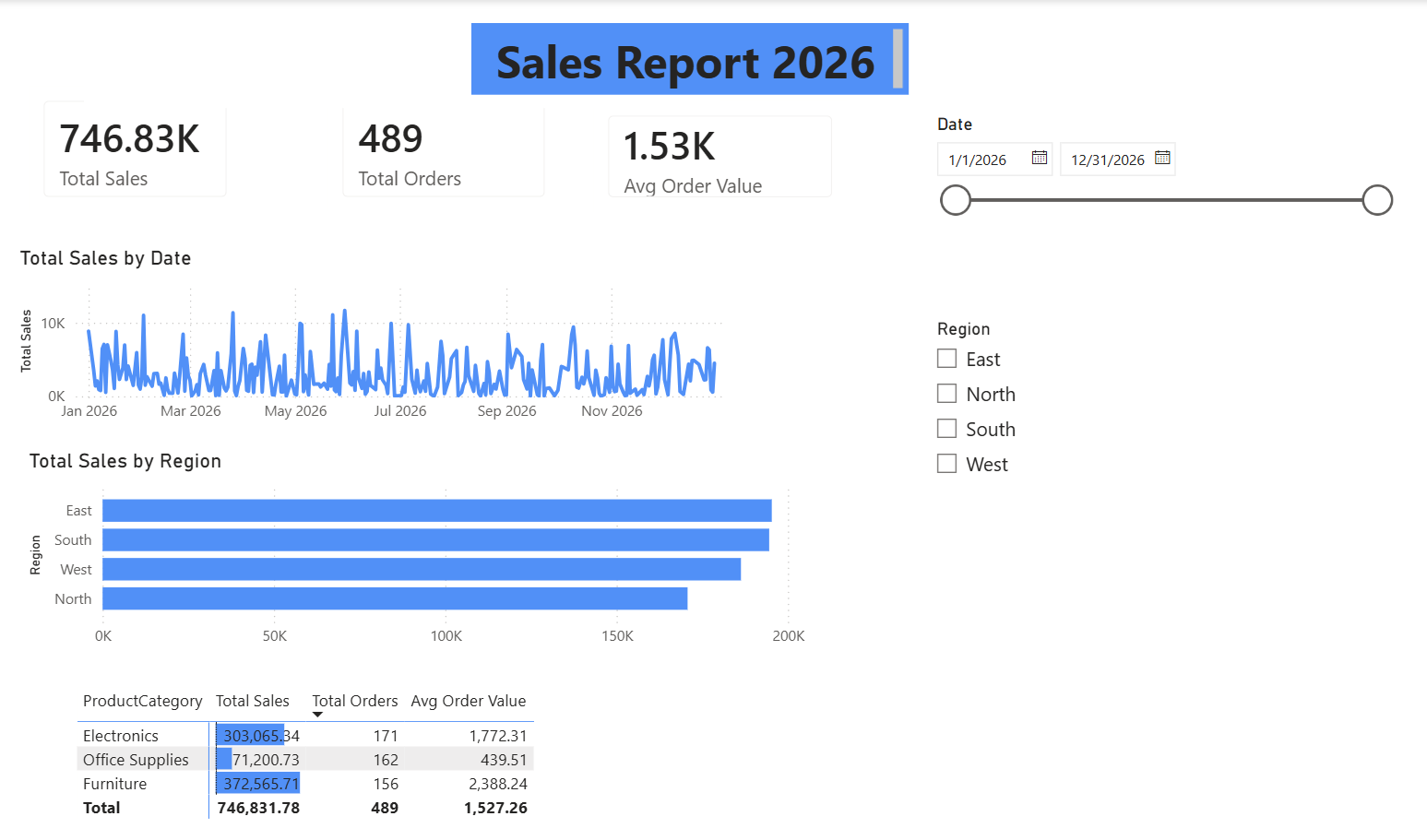
From raw data to interactive dashboard: build your first Power BI report
Welcome to our Power BI tutorial, where you’ll transform a raw data file into a polished, published report. This guide will walk you through the entire process, from initial data queries to deploying your finished dashboard in the cloud. You’ll learn to create an interactive dashboard that not only visualizes your data effectively but also includes essential features like alerts and automatic refresh settings. By the end, you’ll have the skills to empower your data storytelling and enhance your decision-making. Let's dive in and explore!

How enterprises can turn AI experiments into real-world impact
As enterprises shift from AI experimentation to large-scale deployment, the need for a robust infrastructure becomes paramount. In a conversation with VentureBeat, Nutanix leaders Tarkan Maner and Thomas Cornely explore the challenges of transitioning AI from pilot projects to real-world applications across diverse industries. They emphasize the importance of balancing human decision-making with AI-driven automation and the operational complexities introduced by agentic AI.
Building Local-First Web Apps Without the Hype
In 2026, the landscape of web development is evolving, and local-first applications are at the forefront of this transformation. This perspective offers seasoned developers an honest look at the architecture of local-first web apps, addressing common skepticism surrounding quick fixes and silver bullets. By exploring the benefits and challenges of this approach, we aim to empower developers to navigate the complexities of modern web architecture with confidence. Join us in discovering how local-first strategies can enhance user experiences and redefine productivity in web development.
Moving from notebooks to production: building ML platforms that deliver
In the evolving landscape of Machine Learning, the role of an ML Platform Engineer transcends traditional boundaries. While many focus on model training, the true essence of production ML lies in developing a robust system that ensures reliability and efficiency. This includes managing data pipelines, feature stores, and deployment workflows. By collaborating closely with Data Scientists and Product Managers, ML Platform Engineers craft solutions that address the complexities of real-world applications.

Discover how Runpod Flash simplifies AI development by removing container overhead.
Runpod has unveiled Runpod Flash, an open-source Python tool designed to streamline AI development by eliminating the cumbersome containerization process. This innovative platform enables developers to rapidly create, iterate, and deploy AI systems across various environments, enhancing efficiency in both research and production. By removing the "packaging tax" associated with traditional Docker workflows, Runpod Flash simplifies the development cycle, allowing for sophisticated data pipelines and seamless integration with AI agents.
Closing the truth gap where real-world data meets dusty job sites
Introducing a new operational tool for heavy industry, our small R&D team is dedicated to bridging the "Truth Gap" in industrial operations, specifically in Ports, Mining/Quarries, and Fleet Operations. We aim to transform the chaotic data landscape created by manual logs and disjointed systems. To achieve this, we seek genuine insights from those on the ground—your experiences and data are crucial. If you’re ready to share your operational challenges and help shape a solution tailored for real-world conditions, let’s connect.
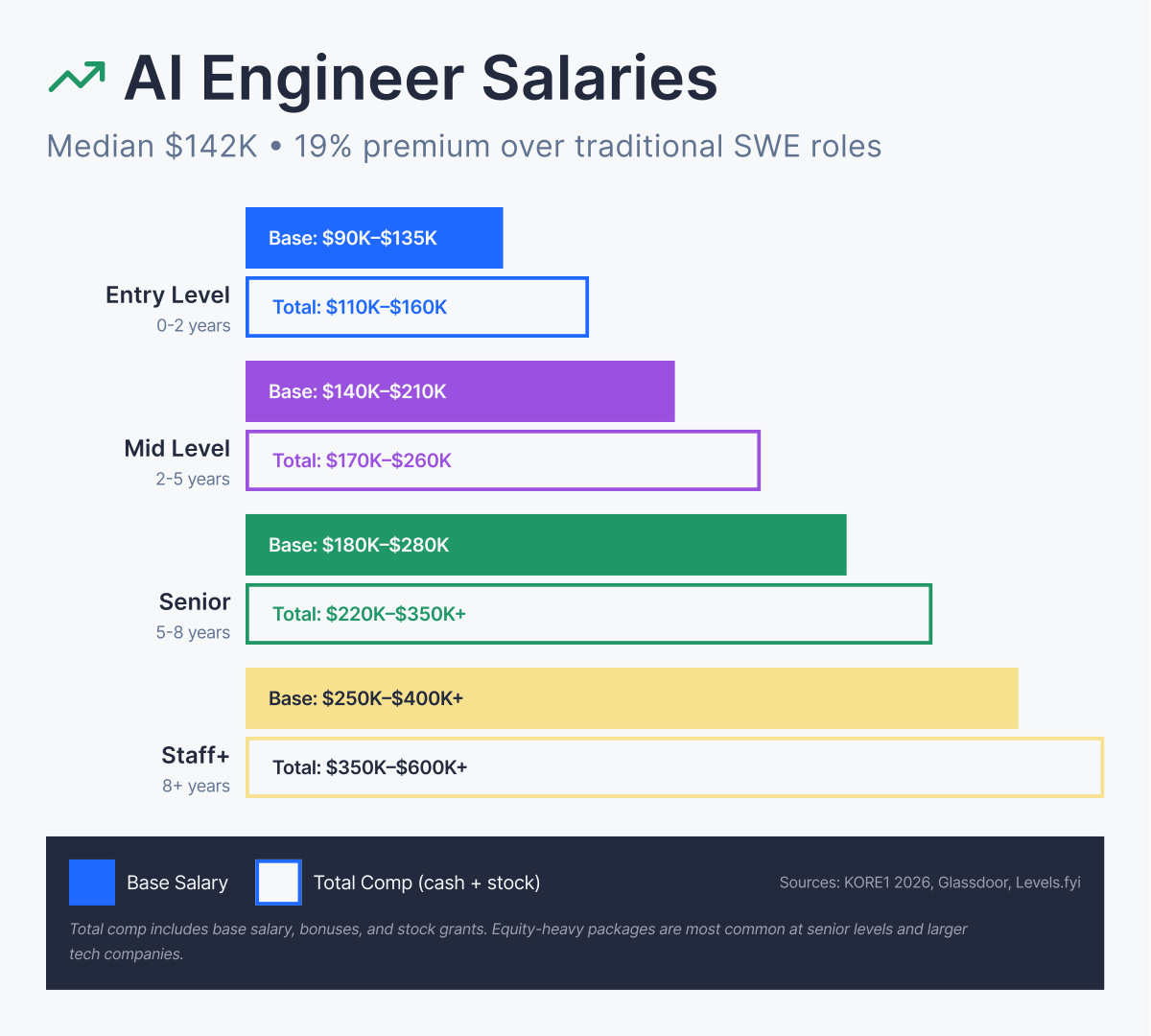
From First Prompt to Production AI in Under a Year
This comprehensive roadmap outlines the essential skills you need to acquire, such as Python, LLM APIs, RAG, and agents, presented in a logical learning sequence. With a realistic timeline of 8 to 12 months to transition from your first LLM prompt to deploying production AI systems, you'll also discover current salary expectations ranging from $130K to $250K+, depending on your experience.

Your agents are working alone. BAND connects them into one workflow.
In a landscape where AI agents proliferate, a new startup called BAND is addressing the challenge of fragmentation in digital communication. With $17 million in Seed funding, BAND introduces a "universal orchestrator" that enables seamless interaction between diverse AI agents, overcoming the limitations of existing systems. Co-founder Arick Goomanovsky emphasizes the need for agents to communicate like humans for effective collaboration. By providing a deterministic communication layer, BAND aims to transform isolated tools into a cohesive workforce, paving the way for a scalable "agentic economy."

One overlooked OAuth grant opened the door to Vercel's production systems
The recent breach at Vercel highlights a critical gap in OAuth security that many organizations overlook. An employee's use of the Context.ai AI tool, combined with an infostealer infection, created an unmonitored entry point to Vercel’s production systems. This incident underscores the urgent need for robust governance around third-party AI tool permissions and environment variable classifications. As investigations continue, it serves as a crucial reminder for security teams to reassess their detection capabilities and adapt to the evolving landscape of AI-driven threats.
Google's new AI agents blend web and private data into one research flow.
On Monday, Google unveiled its most significant upgrade to autonomous research agents with the launch of Deep Research and Deep Research Max. These new agents seamlessly integrate open web data with proprietary enterprise information through a single API call, enabling the generation of native charts and infographics within research reports. Built on the advanced Gemini 3.

One prompt, three AI agents: secrets spilled from your CI/CD pipeline.
A recent security disclosure reveals a critical vulnerability in three AI coding agents, exposing sensitive secrets via a prompt injection attack. Researcher Aonan Guan, alongside colleagues from Johns Hopkins University, demonstrated how a single malicious instruction infiltrated Anthropic’s Claude Code Security Review, Google’s Gemini CLI Action, and GitHub’s Copilot Agent. This incident highlights systemic risks in AI agent design, particularly around access to secrets and the lack of comprehensive safeguards.

Claude Design turns prompts into polished prototypes, no design skills required.
Anthropic has launched Claude Design, an innovative AI tool that transforms conversational prompts into polished prototypes, challenging established platforms like Figma. This new offering enables users to create interactive designs, slide decks, and marketing materials with intuitive editing controls and a seamless workflow. Available immediately in research preview for paid subscribers, Claude Design represents Anthropic's strategic shift toward becoming a full-stack product company. By integrating design capabilities with its powerful Claude Opus 4.

The jagged frontier: Why AI reliability is the next enterprise hurdle
According to Stanford HAI's ninth annual AI Index report, frontier models are struggling, failing in about one in three production attempts, a gap that poses significant challenges for IT leaders in 2026. This phenomenon, dubbed the "jagged frontier," highlights the disparity between AI capabilities and reliability. Despite impressive improvements in benchmarks, such as a 30% gain on Humanity's Last Exam, models still falter in basic tasks, underscoring the urgent need for better transparency and more effective evaluation methods in AI deployment.

One prompt, endless possibilities: Firefly AI unifies your entire Creative Cloud workflow.
Adobe has unveiled the Firefly AI Assistant, a groundbreaking tool designed to streamline creative workflows across its entire Creative Cloud suite. By allowing users to manage complex tasks in Photoshop, Premiere, Illustrator, and more through a single conversational interface, Firefly represents a significant shift in how creatives interact with technology. This launch also includes new features such as a Color Mode for Premiere Pro and enhanced collaboration tools.

AI agents found in 27 years what human review missed.
The emergence of Anthropic's Mythos marks a pivotal shift in cybersecurity, revealing vulnerabilities that have persisted for decades without detection. This AI-driven tool autonomously identified critical flaws, including a 27-year-old bug in OpenBSD’s TCP stack, demonstrating a remarkable capability to uncover security risks that traditional methods overlooked. As security teams face an escalating threat landscape, the need for a new detection playbook becomes essential. With Mythos achieving a 90x improvement in exploit writing, organizations must adapt swiftly to enhance their defenses against increasingly sophisticated adversaries.
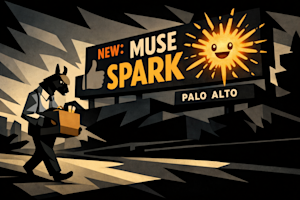
Meta's Muse Spark ushers in a new era of AI models beyond Llama.
Meta has unveiled Muse Spark, its first proprietary AI model since the formation of Meta Superintelligence Labs, signaling a significant shift from the open-source Llama family. Under the leadership of Chief AI Officer Alexandr Wang, Muse Spark is designed to support tool use, visual reasoning, and multi-agent orchestration, marking a leap in AI capabilities. Unlike its predecessors, Muse Spark aims to deliver "personal superintelligence," integrating visual data to enhance user interactions.

Anthropic enlists a dozen partners to secure critical infrastructure with an unreleased AI model.
On Tuesday, Anthropic unveiled Project Glasswing, a groundbreaking cybersecurity initiative that integrates its unreleased AI model, Claude Mythos Preview, with a coalition of twelve leading tech and finance firms. This collaborative effort aims to proactively identify and address software vulnerabilities within critical infrastructure before they can be exploited by adversaries.

Nvidia's open-source toolkit puts enterprise AI agents within reach.
At GTC 2026, Nvidia CEO Jensen Huang unveiled the Agent Toolkit, an open-source platform designed to build autonomous AI agents, backed by 17 major enterprise software companies including Adobe, Salesforce, and SAP. This toolkit streamlines the complexities of deploying AI agents by providing essential components like optimized models, runtime environments, and security frameworks. As these industry leaders commit to Nvidia's shared foundation, the landscape of enterprise AI is set to transform, positioning Nvidia as a pivotal player in this next phase of technological evolution.

Agentic SOC tools arrive as attacker dwell times hit new lows.
At RSA Conference 2026, CrowdStrike, Cisco, and Palo Alto Networks all introduced advanced agentic SOC tools, yet a significant gap in agent behavioral baselines persists across their offerings. CrowdStrike CEO George Kurtz revealed that the average adversary breakout time has dramatically decreased to 29 minutes, emphasizing the urgent need for enhanced detection capabilities. As the reliance on AI agents grows, security complexities also increase, underscoring the necessity for organizations to establish clear visibility and accountability in their security frameworks.

ThinkLabs AI raises $28 million to transform how we manage the power grid
ThinkLabs AI, a startup backed by Nvidia, has secured $28 million in Series A funding led by Energy Impact Partners to address the growing challenges of the electric grid. With a focus on artificial intelligence, ThinkLabs is developing models that simulate grid behavior, drastically reducing the time needed for complex power flow studies from weeks to mere minutes.

Mistral opens the voice AI market with a freely available speech model
Mistral AI has entered the competitive enterprise voice AI market with the launch of Voxtral TTS, a groundbreaking open-weight text-to-speech model designed for enterprise use. Unlike proprietary models from competitors, Voxtral TTS allows companies to fully control and customize their voice technology, fostering innovation and efficiency. With a lightweight architecture that runs on standard laptops and smartphones, the model offers impressive performance, supporting nine languages while maintaining high-quality customization.

Explore how xMemory tames context bloat for persistent AI agents
As demand for persistent AI assistants grows, traditional RAG pipelines falter under the weight of long-term, multi-session interactions. Enter xMemory, a groundbreaking technique from researchers at King’s College London and The Alan Turing Institute. By organizing conversations into a hierarchical structure of semantic themes, xMemory significantly reduces token usage—dropping it from over 9,000 to approximately 4,700 per query. This innovation enhances answer quality and long-range reasoning, enabling enterprises to deploy reliable, context-aware AI agents while managing computational costs effectively.

When an AI agent approves a contract at 2 a.m., who's accountable?
In the rapidly evolving landscape of autonomous agents, the stakes have never been higher. After 18 months of building production AI systems, we’ve learned that the challenge isn’t just about creating agents that respond accurately; it’s about ensuring they operate reliably and safely. A misstep—like an agent mistakenly approving a major vendor contract—can have serious consequences. This exploration delves into the complexities of engineering reliable autonomous agents, emphasizing the importance of guardrails, layered reliability, and the balance between innovation and caution in this transformative field.
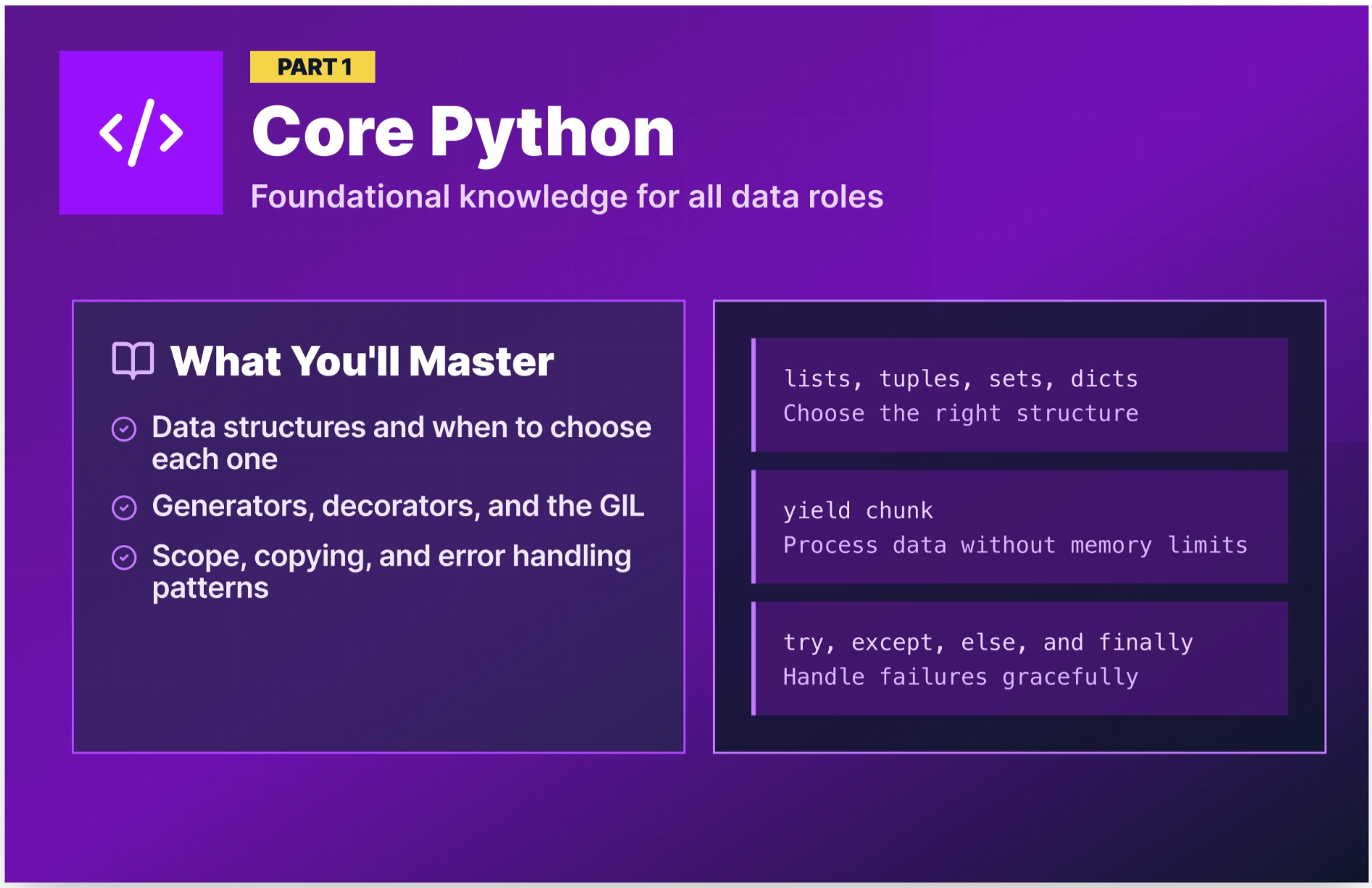
Ace Your Data Role Interview with Python Questions That Test Real Skills
Prepare to elevate your data role interviews with our comprehensive guide featuring over 40 Python interview questions and answers tailored specifically for data positions. Each question comes complete with a practical code example, a clear explanation of the underlying concept, and insights into what interviewers are truly assessing. Organized by role, this resource helps you concentrate your study efforts where they will be most impactful. With Python's prominence in data science and analytics, mastering these questions will empower you to showcase your skills confidently.