real-time data collaboration
85 stories filed under real-time data collaboration on Beyond Market Intelligence. The newest of them: “Empowering small-scale farmers with AI and NASA data for smarter planning.”, “Explore how OpenAI's Sol, Terra, and Luna models could reshape your workflows.”, and “Your Practical Roadmap to Becoming a Data Scientist by 2027”. AgroVision DEMO offers a future-focused solution for small-scale farmers in Nicaragua, addressing the challenges of crop loss due to climate uncertainty. OpenAI today initiates a limited preview of its next-generation GPT-5.6 model series—Sol, Terra, and Luna—designed to transform developer and enterprise workflows. Acme AI is the next-generation, AI-powered spreadsheet platform built to replace Excel and redefine how analysts, data scientists, and enterprise teams work… The list below is every real-time data collaboration story on Beyond Market Intelligence, newest first.
Empowering small-scale farmers with AI and NASA data for smarter planning.
AgroVision DEMO offers a future-focused solution for small-scale farmers in Nicaragua, addressing the challenges of crop loss due to climate uncertainty. This free demo, built using NASA data and machine learning, empowers producers to decide what to plant and when, simulating future climate conditions to optimize planting strategies. The system assesses potential losses and gains, providing insights in real córdobas, and features an AI advisor, ARI, to guide decision-making. Explore the possibilities at [https://agrovision10.vercel.app/](https://agrovision10.vercel.

Explore how OpenAI's Sol, Terra, and Luna models could reshape your workflows.
OpenAI today initiates a limited preview of its next-generation GPT-5.6 model series—Sol, Terra, and Luna—designed to transform developer and enterprise workflows. Following coordination with the U.S. government, access is currently restricted to approximately 20 organizations. Sol, the top-tier model, excels in complex reasoning and security applications, while Terra balances performance and efficiency, and Luna prioritizes speed and cost-effectiveness. This phased release reflects a novel landscape of safety interventions and compliance parameters for enterprise buyers. "It’s not about Anthropic vs.
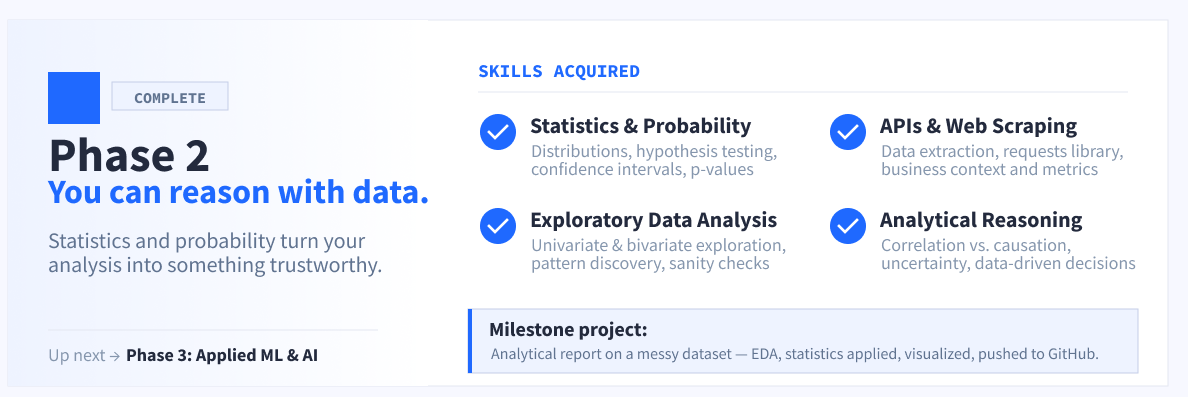
Your Practical Roadmap to Becoming a Data Scientist by 2027
## Data Scientist Roadmap for Beginners (2026–2027) Navigating the path to becoming a data scientist can feel overwhelming. This roadmap clarifies exactly what to learn, in what order, and how long it realistically takes to achieve job readiness by 2027 – whether you’re starting from zero or transitioning from data analysis, engineering, or research. We cut through the noise surrounding Python vs. R, degree requirements, and the rise of Generative AI to provide a focused, actionable plan.
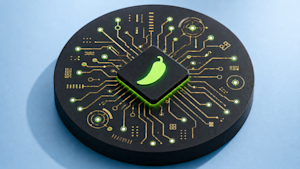
OpenAI's Jalapeño chip redefines inference for AI-native workflows
OpenAI and Broadcom have jointly unveiled Jalapeño, a custom AI inference chip designed to accelerate large language model (LLM) workloads. This purpose-built processor, developed in a remarkably swift nine-month timeframe, aims to reduce inference costs by approximately 50% and will initially support ChatGPT, Codex, and future agentic products. Jalapeño represents a strategic expansion for OpenAI, enabling greater efficiency and broader access to advanced AI—a move that mirrors similar initiatives by tech giants like Google and Amazon.

Meet your new teammate: Claude Tag brings persistent AI into Slack
Anthropic’s Claude Tag introduces a transformative approach to enterprise collaboration, replacing its Slack app with a persistent, AI-powered teammate. This isn't a chatbot; it's an agent designed to learn, monitor, and autonomously work within teams, delegating tasks via @Claude. Built on Claude Opus 4.8, Tag offers multiplayer interaction, proactive insights, and asynchronous project management, streamlining workflows and boosting productivity. For organizations seeking to integrate AI into their daily operations, Claude Tag represents a significant step forward—a shift from reactive tools to an always-on, intelligent collaborator.

Discover how your organization can learn from every AI insight it creates
Every day, organizations accumulate valuable knowledge their AI systems fail to utilize – a corrected investigation, a root cause analysis, a predicted service degradation. The next challenge for the agentic enterprise is to capture this operational experience and transform it into reusable institutional knowledge, empowering future AI-driven decisions. The real differentiator won’t be the most capable model, but whether those agents can learn from their environment.

Turn your Claude Code session into a live, shareable interactive workspace
Anthropic’s Claude Code now delivers live, shared dashboards and interactive workspaces for enterprises through its new Artifacts feature. Transforming a Claude Code session into a custom, shareable HTML webpage, Artifacts allow users to connect live code and data sources, creating dynamic visualizations for teams. This eliminates the need for manual status updates and facilitates clearer communication between engineers and stakeholders. As highlighted by Claude Code lead Boris Cherny, Artifacts are "a game changer" for collaborative workflows, and closely mirror a recent feature release from OpenAI.

Optimizing AI agents beyond guesswork with smarter constraint frameworks
Engineering teams face a persistent challenge: deploying AI agents that, despite initial success, often hallucinate or miss critical constraints in production. Addressing this requires tedious trial-and-error, making it difficult to pinpoint effective adjustments. Introducing Arbor, a new AI optimization framework developed by researchers at Renmin University of China and Microsoft Research, which delivers over 2.5 times the verifiable performance gains of standard AI coding agents like Claude Code and Codex – all within the same compute budget.

Sakana Marlin trades speed for strategic depth in autonomous business research
For businesses demanding insights beyond surface-level AI responses, Sakana AI introduces Marlin, a "Virtual CSO" designed for deep, strategic research. Unlike typical chatbots, Marlin leverages a novel Adaptive Branching Monte Carlo Tree Search (AB-MCTS) engine to autonomously generate comprehensive, 100-page reports and executive slides—often in just eight hours. Targeting enterprises like financial institutions and think tanks, Marlin represents a shift toward methodical reasoning over rapid generation, empowering data-driven decision-making. Explore sample reports and discover how this innovative agent can transform your research workflows.

AI speeds your data pipelines but can't replace their documentation
Vibe coding offers remarkable speed for generating isolated implementations, but prompts’ inherent temporality creates challenges for enterprise data platforms. These platforms, often fragmented across diverse teams and technologies, risk accumulating inconsistent logic and hidden dependencies as operational context resides in scattered conversations rather than the system itself. Spec-driven development (SDD) addresses this by converting prompts and knowledge into executable, versioned specifications—persistent operational memory for both humans and AI.
Designing for cognitive inclusion improves UX for everyone
Recent exploratory user research reveals the transformative power of cognitive inclusion in UX design. Our study, "The Benefits of Cognitive Inclusion in UX Research," highlights unique insights and actionable recommendations directly from participants with cognitive disabilities. These findings underscore the critical need for inclusive design practices, leading to more accessible and user-friendly experiences for everyone. Discover how prioritizing cognitive diversity can significantly improve usability and expand reach.

Bridging the gap between AI prototypes and real-world results
Many enterprises struggle to translate promising AI prototypes into reliable, production-ready systems. At Capital One, we’ve observed that successful AI implementation demands a disciplined research and development approach, connecting foundational work to real-world applications and rigorously evaluating progress. Bridging the gap between research and practical use—as demonstrated by our work with multi-agent architectures—is key to unlocking impactful AI solutions. Learn how organizations can transform AI ambition into production reality through deliberate research, evaluation, and deployment.
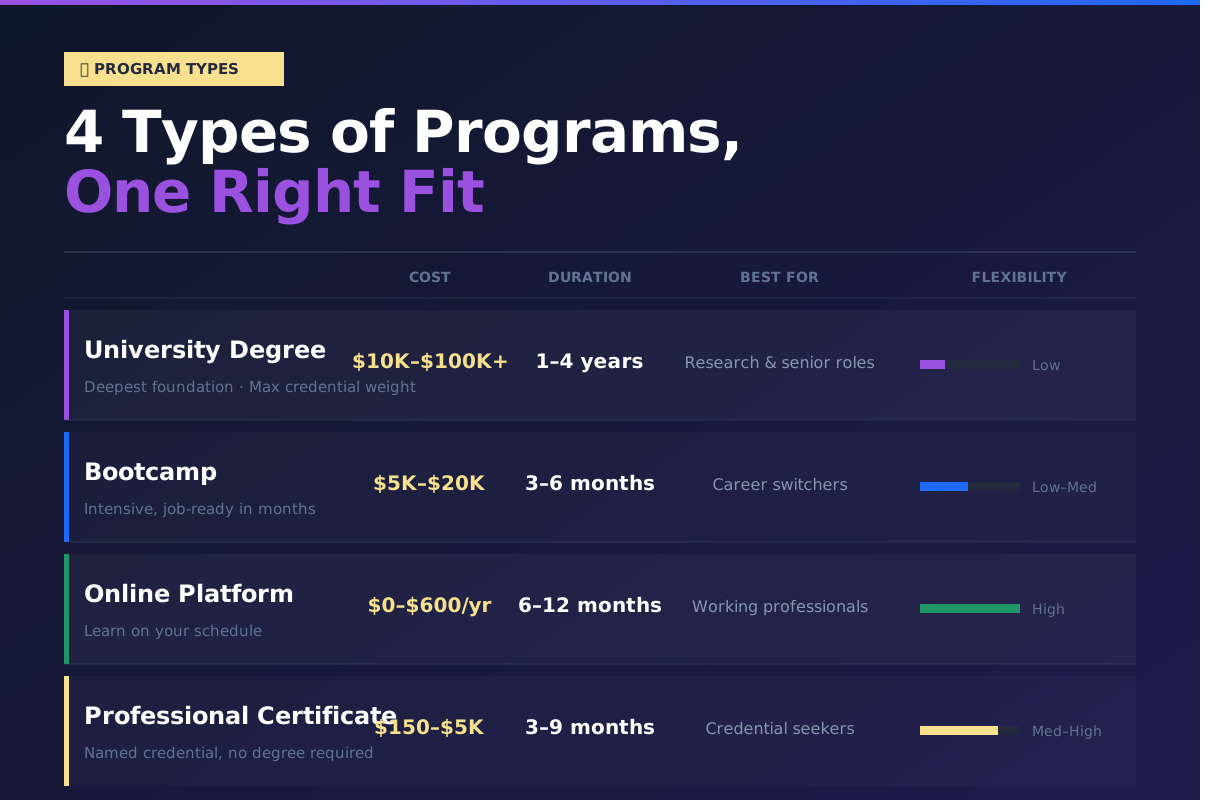
Navigating Data Science Education from Degrees to Self-Guided Paths
In 2026, navigating data science education feels like sprinting through a maze of degrees, bootcamps, and online courses, each claiming the quickest route to a career. The market ranges from free YouTube tutorials to multi‑hundred‑thousand‑dollar master’s programs, yet many comparison lists flatten these options without clarifying which path best fits your goals. This guide ranks programs by curriculum depth, industry relevance, and return on investment, helping you choose a course that truly transforms your data skills and accelerates your career.

Three Paths Through Machine Learning Based on Your Real Goal
In 2026, selecting the best machine learning course requires clarity on your goals—whether you aim to understand ML concepts, apply them practically, or engineer systems for production. Many lists fall short, offering either overly theoretical content or tool-centric bootcamps that miss critical math foundations. This guide breaks down the most effective courses tailored to your objectives, ensuring you find a path that empowers your learning journey.
Focus Your Deep Learning Search on Training, Not Just Using AI
Navigating the landscape of deep learning courses can be challenging, especially with the mix of AI literacy, pre-trained model usage, and hands-on neural network training. This guide focuses solely on the third category, offering you the best deep learning courses for 2026 that equip you with the skills to build and train your own models. If you're eager to deepen your understanding and practical expertise, this curated list is your gateway to transformative learning.

Mistral AI expands into factories and data centers to empower enterprise data control
At its inaugural conference, Mistral AI unveiled a bold expansion into industrial AI with the launch of Vibe, its rebranded enterprise assistant. This initiative aims to transform productivity in sectors like aerospace and automotive, signaling Mistral's commitment to becoming the go-to AI provider for companies seeking control over their data. Alongside a new inference data center near Paris, Mistral's comprehensive strategy emphasizes owning the entire tech stack to deliver tailored AI solutions.

AI agents meet human engineers in Resolve AI's new shared incident workspace
Resolve AI, a production-operations startup backed by Greylock and Lightspeed, has announced an expansive upgrade to its platform aimed at addressing the challenges posed by the AI coding boom. The new features include always-on background agents and a multi-agent investigation system that improves root cause accuracy by over twofold. This innovative architecture enables specialized agents to work collaboratively, mirroring human teamwork in debugging. As engineers face increasing production complexity, Resolve AI positions itself as a transformative solution.
Generative AI courses expire fast. Learn how to pick ones that last.
As generative AI technology evolves rapidly, finding the best courses in 2026 presents unique challenges for engineers. With content aging faster than most technical subjects, distinguishing effective learning opportunities from outdated information becomes essential. A LangChain tutorial from 2023 may already cover deprecated practices, while a 2024 prompt engineering course might overlook crucial modern concepts like agents or retrieval-augmented generation (RAG). To navigate this landscape, explore our insights on selecting relevant courses that empower your skill development in this dynamic field.

Smarter multi-agent AI with faster inference and 75% fewer tokens
RecursiveMAS represents a significant advancement in multi-agent AI systems, achieving 2.4x faster inference while reducing token usage by 75%. Traditional text-based communication among agents often leads to latency and inflated costs, hindering efficiency. Developed by researchers at the University of Illinois Urbana-Champaign and Stanford University, RecursiveMAS enables agents to share information in embedding space rather than through text, enhancing both speed and performance. This innovative framework not only improves accuracy across complex domains but also offers a cost-effective approach for scalable multi-agent solutions.
The enterprise AI fight shifts from models to agent infrastructure control
The next significant battle in enterprise AI isn't just about which model performs best; it's about controlling the infrastructure where AI agents operate. Recent VB Pulse data reveals that Microsoft and OpenAI are leading in enterprise agent orchestration, while Anthropic has made its first measurable entry into this space. As enterprises shift their focus from model quality to the orchestration layer, the stakes rise. It's no longer just about chatbots; it's about who governs the agent control plane.

A $100 billion debut signals a new era for AI infrastructure.
Cerebras Systems made a stunning debut on the Nasdaq, with its stock nearly doubling to $350 per share, propelling the AI chipmaker to a market capitalization of $100 billion. This monumental IPO not only marks one of the largest tech offerings since Uber but also highlights a pivotal moment in AI infrastructure, validating the company's decade-long commitment to innovative chip design. As Cerebras plans to invest its newfound capital into expanding cloud infrastructure, it positions itself at the forefront of the rapidly evolving AI landscape.

Measuring AI through a human lens: IQ scores for language models arrive.
Introducing AI IQ, a groundbreaking platform that assigns estimated IQ scores to over 50 leading AI language models, using the familiar yardstick of human intelligence. This innovative approach offers interactive visualizations at aiiq.org, making the complexity of AI advancements more accessible. While praised for its clarity by technologists, it also faces criticism for oversimplifying AI capabilities into a single number. For a deeper dive into the future of AI and its evolving landscape, explore our related article on Anthropic’s vision for proactive AI.

From isolated AI tools to an intelligent enterprise
Is your enterprise adaptive to AI? As organizations embark on their AI journeys, many discover that simply deploying individual solutions doesn’t lead to transformative impacts. The next phase requires a shift from automation to continuous adaptation, especially for complex, globally distributed entities like Global Business Services. Embracing adaptive AI ecosystems allows organizations to orchestrate workflows intelligently and respond to evolving business needs. To explore this critical transition and its implications, delve further into our insights on how adaptive AI can reshape your enterprise landscape.

From Turn-Based Chats to Flowing Conversations, AI Redefines Interaction
Thinking Machines is pushing the boundaries of AI interaction with its new 'interaction models,' which promise to revolutionize how we engage with technology. Unlike traditional turn-based chat, these models enable near-real-time, simultaneous processing of voice and video inputs, allowing for a fluid conversational experience. By integrating dialogue management with background reasoning, the system significantly reduces latency and enhances interaction quality. This innovation could transform enterprise workflows, offering capabilities like proactive safety monitoring and responsive customer service, ultimately making AI a more intuitive collaborator.