How to Answer AI System Design Interview Questions
Our take
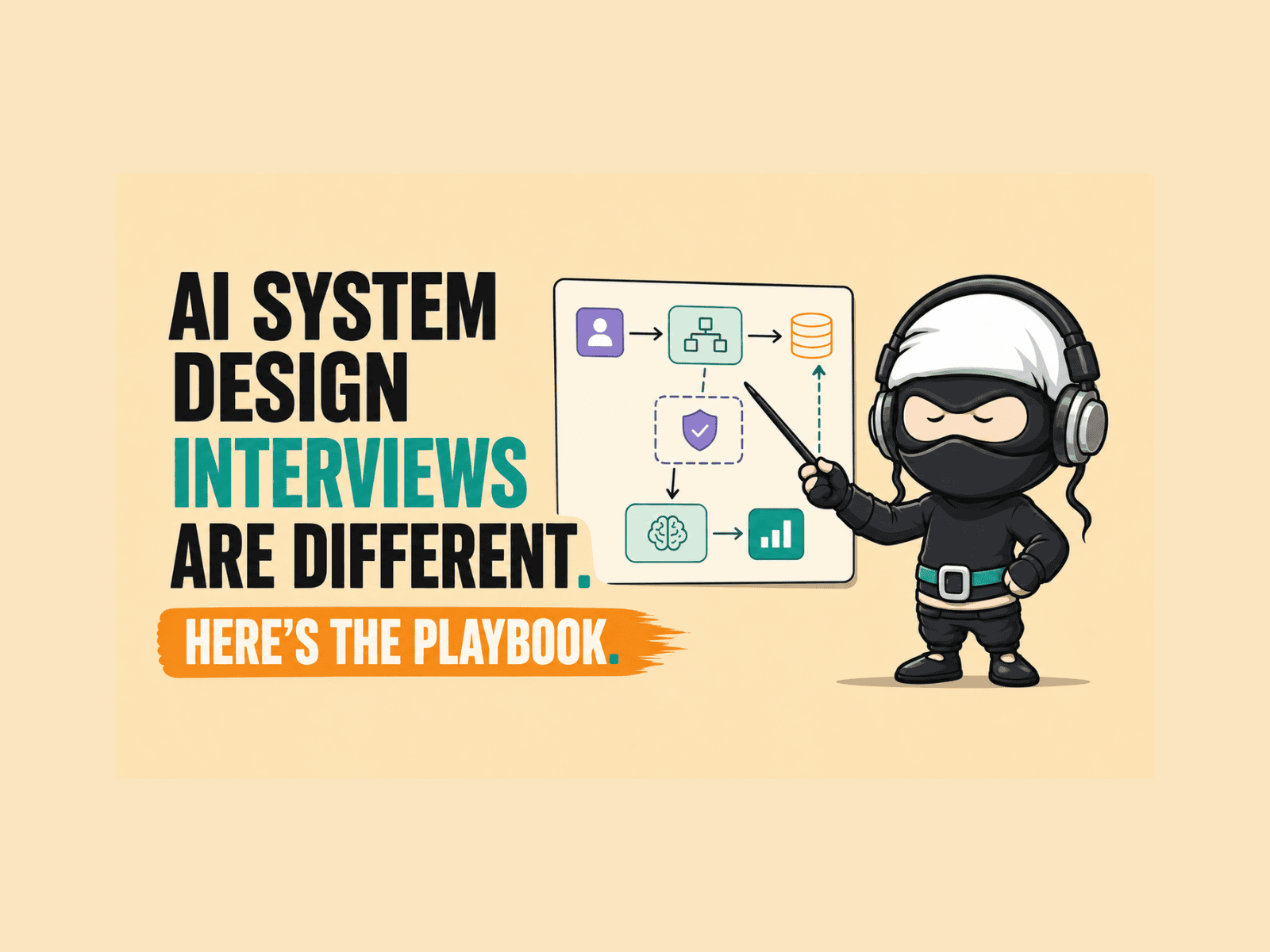
The shift in AI system design interviews, as highlighted in "How to Answer AI System Design Interview Questions," signals a fascinating evolution in how we evaluate technical talent. The move from hypothetical design scenarios—often involving sketching out YouTube architectures or similar familiar platforms—to designing systems around large language models like ChatGPT is a direct reflection of the industry's current trajectory. It's no longer sufficient to simply understand system architecture; aspiring AI engineers now need a grasp of prompt engineering, retrieval-augmented generation (RAG), and the nuanced challenges of managing conversational AI. This transition underscores a broader trend: the democratization of AI development, where core concepts are increasingly accessible, yet the practical application demands a deeper, more specialized skillset. Our community, many of whom are actively exploring machine learning applications, as demonstrated by inquiries like [how can I learn Machine Learning for Astronomical use? [D]](/post/how-can-i-learn-machine-learning-for-astronomical-use-d-cmt01lgfm0j2tmi9zpyzvvcv2), will find this shift particularly relevant as they navigate increasingly AI-driven career paths. The ability to articulate a design process for an LLM-powered application is quickly becoming a baseline expectation.
The framework presented in the article—focusing on understanding the problem, clarifying assumptions, discussing high-level architecture, and diving into specifics—provides a valuable roadmap for approaching these interviews. It’s a welcome move away from rote memorization of design patterns towards a more pragmatic, problem-solving approach. This mirrors the increasing complexity of real-world AI deployments, which often require navigating ambiguous requirements and rapidly evolving technologies. We've seen this complexity firsthand in discussions around tooling for production AI agent deployments, as detailed in 5 Tools for Building and Deploying AI Agents in Production. The ability to design robust, scalable, and maintainable AI systems is paramount, and the interview process is adapting to reflect that. The article’s emphasis on iterative design and constant questioning is particularly noteworthy, encouraging candidates to demonstrate not just knowledge, but also critical thinking and adaptability—essential qualities in a rapidly changing field.
The broader significance of this shift extends beyond the interview room. It highlights the increasing importance of understanding the limitations of LLMs, and the need for systems that augment, rather than replace, human intelligence. The excitement surrounding AI's potential—even in areas like medical research, as discussed in AI isn’t close to curing cancer. This startup says it knows what it will take.—must be tempered with a realistic assessment of the challenges involved. Designing effective AI systems requires a careful consideration of data quality, bias mitigation, and the ethical implications of AI decision-making. The interview process, by focusing on system design, is implicitly pushing candidates to confront these critical issues. It’s a move towards a more holistic understanding of AI, one that encompasses not just the technical aspects but also the societal impact.
Ultimately, this evolution in AI system design interviews is a positive development. It encourages a deeper understanding of AI principles and promotes a more practical, problem-solving approach to design. As AI continues to permeate every aspect of our lives, the ability to design and build responsible, effective AI systems will become increasingly valuable. A key question to watch is how interview frameworks will continue to adapt as LLMs evolve and new AI paradigms emerge. Will we see a shift towards evaluating the ability to design for multi-modal AI, or to build systems that seamlessly integrate with human workflows? The ongoing refinement of these assessment methods will be crucial in shaping the next generation of AI talent.
Read on the original site
Open the publisher's page for the full experience