- Agentic AI arrives, and the path forward demands our focus.
The age of agentic AI is upon us — whether we like it or not. What started with an innocent question-answer banter with ChatGPT back in 2022 has become an existential debate on job security and the rise of the machines.
More recently, fears of reaching artificial general intelligence (AGI) have become more real with the advent of powerful autonomous agents like Claude Cowork and OpenClaw. Having played with these tools for some time, here is a comparison.
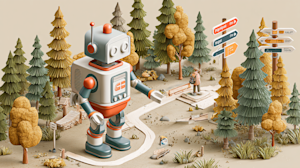
First, we have OpenClaw (formerly known as Moltbot and Clawdbot). Surpassing 150,000 GitHub stars in days, OpenClaw is already being deployed on local machines with deep system access. This is like a robot “maid” (Irona for Richie Rich fans, for instance) that you give the keys to your house. It’s supposed to clean it, and you give it the necessary autonomy to take actions and manage your belongings (files and data) as it pleases. The whole purpose is to perform the task at hand — inbox triaging, auto-replies, content curation, travel planning, and more.
Next we have Google’s Antigravity, a coding agent with an IDE that accelerates the path from prompt to production. You can interactively create complete application projects and modify specific details over individual prompts. This is like having a junior developer that can not only code, but build, test, integrate, and fix issues. In the realworld, this is like hiring an electrician: They are really good at a specific job and you only need to give them access to a specific item (your electric junction box).
Finally, we have the mighty Claude. The release of Anthropic's Cowork, which featured AI agents for automating legal tasks like contract review and NDA triage, caused a sharp sell-off in legal-tech and software-as-a-service (SaaS) stocks (referred to as the SaaSpocalypse). Claude has anyway been the go-to chatbot; now with Cowork, it has domain knowledge for specific industries like legal and finance. This is like hiring an accountant. They know the domain inside-out and can complete taxes and manage invoices. Users provide specific access to highly-sensitive financial details.
Making these tools work for you
The key to making these tools more impactful is giving them more power, but that increases the risk of misuse. Users must trust providers like Anthorpic and Google to ensure that agent prompts will not cause harm, leak data, or provide unfair (illegal) advantage to certain vendors. OpenClaw is open-source, which complicates things, as there is no central governing authority.
While these technological advancements are amazing and meant for the greater good, all it takes is one or two adverse events to cause panic. Imagine the agentic electrician frying all your house circuits by connecting the wrong wire. In an agent scenario, this could be injecting incorrect code, breaking down a bigger system or adding hidden flaws that may not be immediately evident. Cowork could miss major saving opportunities when doing a user's taxes; on the flip side, it could include illegal writeoffs. Claude can do unimaginable damage when it has more control and authority.
But in the middle of this chaos, there is an opportunity to really take advantage. With the right guardrails in place, agents can focus on specific actions and avoid making random, unaccounted-for decisions. Principles of responsible AI — accountability, transparency, reproducibility, security, privacy — are extremely important. Logging agent steps and human confirmation are absolutely critical.
Also, when agents deal with so many diverse systems, it's important they speak the same language. Ontology becomes very important so that events can be tracked, monitored, and accounted for. A shared domain-specific ontology can define a “code of conduct." These ethics can help control the chaos. When tied together with a shared trust and distributed identity framework, we can build systems that enable agents to do truly useful work.
When done right, an agentic ecosystem can greatly offload the human “cognitive load” and enable our workforce to perform high-value tasks. Humans will benefit when agents handle the mundane.
Dattaraj Rao is innovation and R&D architect at Persistent Systems.
- Embrace agentic AI: discover how autonomous tools reshape your workflow.
The age of agentic AI is upon us — whether we like it or not. What started with an innocent question-answer banter with ChatGPT back in 2022 has become an existential debate on job security and the rise of the machines.
More recently, fears of reaching artificial general intelligence (AGI) have become more real with the advent of powerful autonomous agents like Claude Cowork and OpenClaw. Having played with these tools for some time, here is a comparison.
First, we have OpenClaw (formerly known as Moltbot and Clawdbot). Surpassing 150,000 GitHub stars in days, OpenClaw is already being deployed on local machines with deep system access. This is like a robot “maid” (Irona for Richie Rich fans, for instance) that you give the keys to your house. It’s supposed to clean it, and you give it the necessary autonomy to take actions and manage your belongings (files and data) as it pleases. The whole purpose is to perform the task at hand — inbox triaging, auto-replies, content curation, travel planning, and more.
Next we have Google’s Antigravity, a coding agent with an IDE that accelerates the path from prompt to production. You can interactively create complete application projects and modify specific details over individual prompts. This is like having a junior developer that can not only code, but build, test, integrate, and fix issues. In the realworld, this is like hiring an electrician: They are really good at a specific job and you only need to give them access to a specific item (your electric junction box).
Finally, we have the mighty Claude. The release of Anthropic's Cowork, which featured AI agents for automating legal tasks like contract review and NDA triage, caused a sharp sell-off in legal-tech and software-as-a-service (SaaS) stocks (referred to as the SaaSpocalypse). Claude has anyway been the go-to chatbot; now with Cowork, it has domain knowledge for specific industries like legal and finance. This is like hiring an accountant. They know the domain inside-out and can complete taxes and manage invoices. Users provide specific access to highly-sensitive financial details.
Making these tools work for you
The key to making these tools more impactful is giving them more power, but that increases the risk of misuse. Users must trust providers like Anthorpic and Google to ensure that agent prompts will not cause harm, leak data, or provide unfair (illegal) advantage to certain vendors. OpenClaw is open-source, which complicates things, as there is no central governing authority.
While these technological advancements are amazing and meant for the greater good, all it takes is one or two adverse events to cause panic. Imagine the agentic electrician frying all your house circuits by connecting the wrong wire. In an agent scenario, this could be injecting incorrect code, breaking down a bigger system or adding hidden flaws that may not be immediately evident. Cowork could miss major saving opportunities when doing a user's taxes; on the flip side, it could include illegal writeoffs. Claude can do unimaginable damage when it has more control and authority.
But in the middle of this chaos, there is an opportunity to really take advantage. With the right guardrails in place, agents can focus on specific actions and avoid making random, unaccounted-for decisions. Principles of responsible AI — accountability, transparency, reproducibility, security, privacy — are extremely important. Logging agent steps and human confirmation are absolutely critical.
Also, when agents deal with so many diverse systems, it's important they speak the same language. Ontology becomes very important so that events can be tracked, monitored, and accounted for. A shared domain-specific ontology can define a “code of conduct." These ethics can help control the chaos. When tied together with a shared trust and distributed identity framework, we can build systems that enable agents to do truly useful work.
When done right, an agentic ecosystem can greatly offload the human “cognitive load” and enable our workforce to perform high-value tasks. Humans will benefit when agents handle the mundane.
Dattaraj Rao is innovation and R&D architect at Persistent Systems.
- Two paths emerge for taming AI agents in production.
The era of enterprises stitching together prompt chains and shadow agents is nearing its end as more options for orchestrating complex multi-agent systems emerge. As organizations move AI agents into production, the question remains: "how will we manage them?"
Google and Amazon Web Services offer fundamentally different answers, illustrating a split in the AI stack. Google’s approach is to run agentic management on the system layer, while AWS’s harness method sets up in the execution layer.
The debate on how to manage and control gained new energy this past month as competing companies released or updated their agent builder platforms—Anthropic with the new Claude Managed Agents and OpenAI with enhancements to the Agents SDK—giving developer teams options for managing agents.
AWS with new capabilities added to Bedrock AgentCore is optimizing for velocity—relying on harnesses to bring agents to product faster—while still offering identity and tool management.
Meanwhile, Google’s Gemini Enterprise adopts a governance-focused approach using a Kubernetes-style control plane. Each method offers a glimpse into how agents move from short-burst task helpers to longer-running entities within a workflow.
Upgrades and umbrellas
To understand where each company stands, here’s what’s actually new.
Google released a new version of Gemini Enterprise, bringing its enterprise AI agent offerings—Gemini Enterprise Platform and Gemini Enterprise Application—under one umbrella.
The company has rebranded Vertex AI as Gemini Enterprise Platform, though it insists that, aside from the name change and new features, it’s still fundamentally the same interface.
“We want to provide a platform and a front door for companies to have access to all the AI systems and tools that Google provides,” Maryam Gholami, senior director, product management for Gemini Enterprise, told VentureBeat in an interview. “The way you can think about it is that the Gemini Enterprise Application is built on top of the Gemini Enterprise Agent Platform, and the security and governance tools are all provided for free as part of Gemini Enterprise Application subscription.”
On the other hand, AWS added a new managed agent harness to Bedrock Agentcore. The company said in a press release shared with VentureBeat that the harness “replaces upfront build with a config-based starting point powered by Strands Agents, AWS’s open source agent framework.”
Users define what the agent does, the model it uses and the tools it calls, and AgentCore does the work to stitch all of that together to run the agent.
Agents are now becoming systems
The shift toward stateful, long-running autonomous agents has forced a rethink of how AI systems behave. As agents move from short-lived tasks to long-running workflows, a new class of failure is emerging: state drift.
As agents continue operating, they accumulate state—memory, too, responses and evolving context. Over time, that state becomes outdated. Data sources change, or tools can return conflicting responses. But the agent becomes more vulnerable to inconsistencies and becomes less truthful.
Agent reliability becomes a systems problem, and managing that drift may need more than faster execution; it may require visibility and control.
It’s this failure point that platforms like Gemini Enterprise and AgentCore try to prevent.
Though this shift is already happening, Gholami admitted that customers will dictate how they want to run and control any long-running agent.
“We are going to learn a lot from customers where they would be using long-running agents, where they just assign a task to these autonomous agents to just go ahead and do,” Gholami said. “Of course, there are tricks and balances to get right and the agent may come back and ask for more input.”
The new AI stack
What’s becoming increasingly clear is that the AI stack is separating into distinct layers, solving different problems.
AWS and, to a certain extent, Anthropic and OpenAI, optimize for faster deployment. Claude Managed Agents abstracts much of the backend work for standing up an agent, while the Agents SDK now includes support for sandboxes and a ready-made harness. These approaches aim to lower the barrier to getting agents up and running.
Google offers a centralized control panel to manage identity, enforce policies and monitor long-running behaviors.
Enterprises likely need both.
As some practitioners see it, their businesses have to have a serious conversation on how much risk they are willing to take.
“The main takeaway for enterprise technology leaders considering these technologies at the moment may be formulated this way: while the agent harness vs. runtime question is often perceived as build vs. buy, this is primarily a matter of risk management. If you can afford to run your agents through a third-party runtime because they do not affect your revenue streams, that is okay. On the contrary, in the context of more critical processes, the latter option will be the only one to consider from a business perspective,” Rafael Sarim Oezdemir, head of growth at EZContacts, told VentureBeat in an email.
Iterating quickly lets teams experiment and discover what agents can do, while centralized control adds a layer of trust. What enterprises need is to ensure they are not locked into systems designed purely for a single way of executing agents.