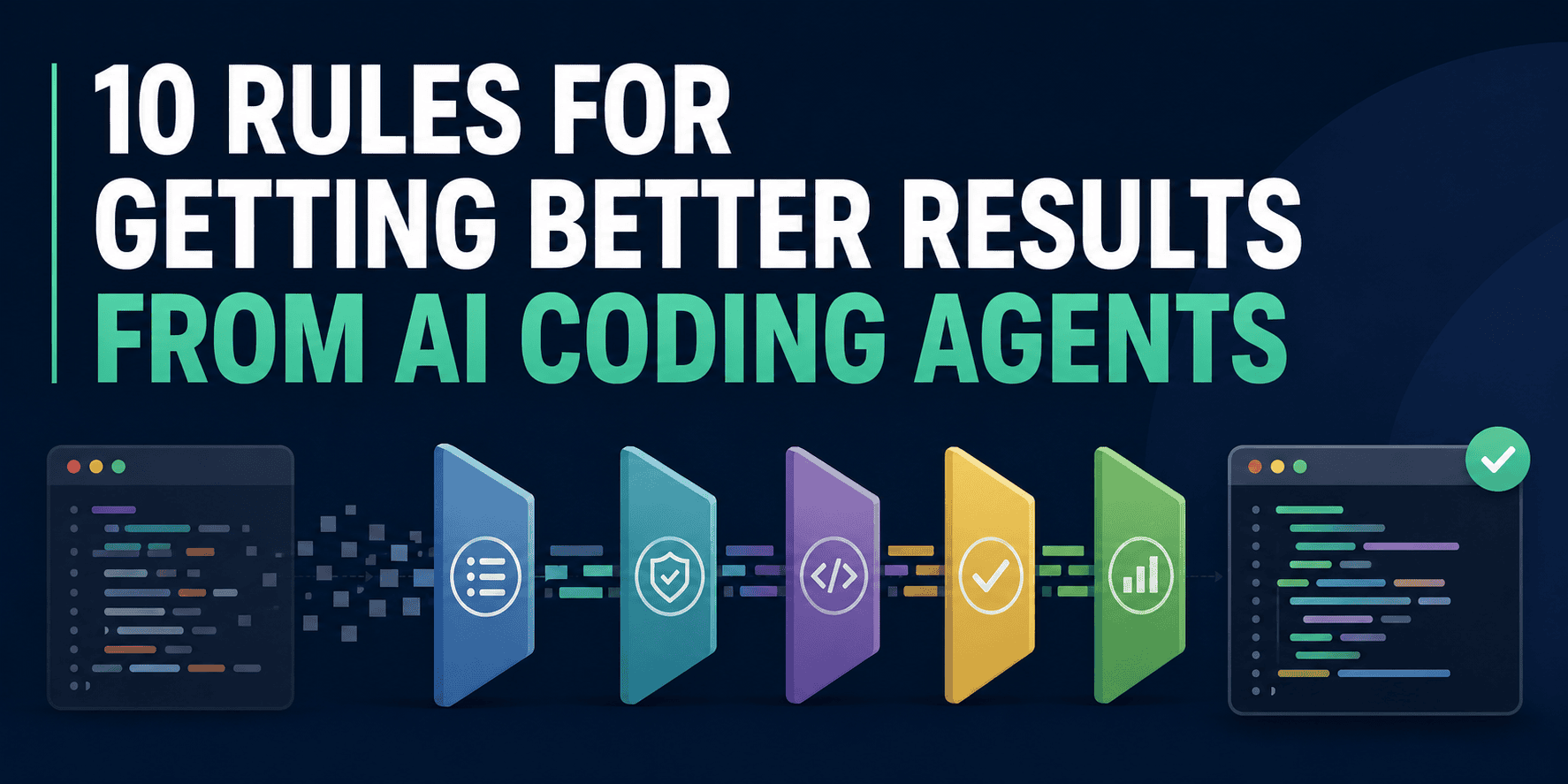
Everyone's asking why their AI coding agent delivers mediocre results. The answer isn't a better model or more compute. It's the rules you bring to the table. The ten rules are less about the technology and more about the discipline we've abandoned: being specific, iterative, and humble enough to check the work. That resonates with us because it mirrors a tension we see across the AI conversation. We're quick to marvel at what these systems can do, but slow to admit that our own sloppy prompts and unchecked assumptions are often the bottleneck. The agent is rightly treated as a capable but literal-minded collaborator, one that needs guardrails, not praise.
What we appreciate most is how the rules quietly reframe the human role. You're not there to write code; you're there to define the problem. That's why we'd point readers to Explore a consistent sandbox experience across laptop and cloud with Docker and Talking to My AI Clone Taught Me to Question the Tech. The first shows how a clean, repeatable environment removes the "it worked on my machine" chaos that derails any agent. The second is a cautionary tale about trusting the output just because it sounds confident. Both connect to the core insight: your results improve when you treat the tool as a mirror of your own process, not as a magic box. If your environment is messy or your intent is vague, the agent will happily amplify that mess.
This is where we'd push back on the prevailing hype. These rules work, but they're not new. They're the same principles behind writing a good ticket, a clear spec, or a useful code review. What's changed is the speed and the stakes. An AI agent will generate a hundred lines of wrong code in seconds, so the cost of sloppy thinking is higher. That's not a flaw in the tool; it's a demand for rigor. We'd tell a reader: don't look for a prompt that "just works." Look for a routine that forces you to slow down, break the task into pieces, and verify each step. That's the practical takeaway, and it's more valuable than any model update.
The real test isn't whether you can follow these rules once. It's whether you can build them into your daily workflow without turning every task into a bureaucratic exercise. We'd watch for that friction. The teams that succeed won't be the ones with the fanciest agents; they'll be the ones who embed checkpoints, clear contexts, and honest reviews into their loop. And if you're skeptical of the whole enterprise, that's fair. Just remember that every tool demands a different kind of attention. The question isn't whether AI coding agents are useful. It's whether you're willing to change how you think to make them so. That's the detail worth watching.