Quantifying User Behavior Patterns to Build Better Predictive Features
Our take
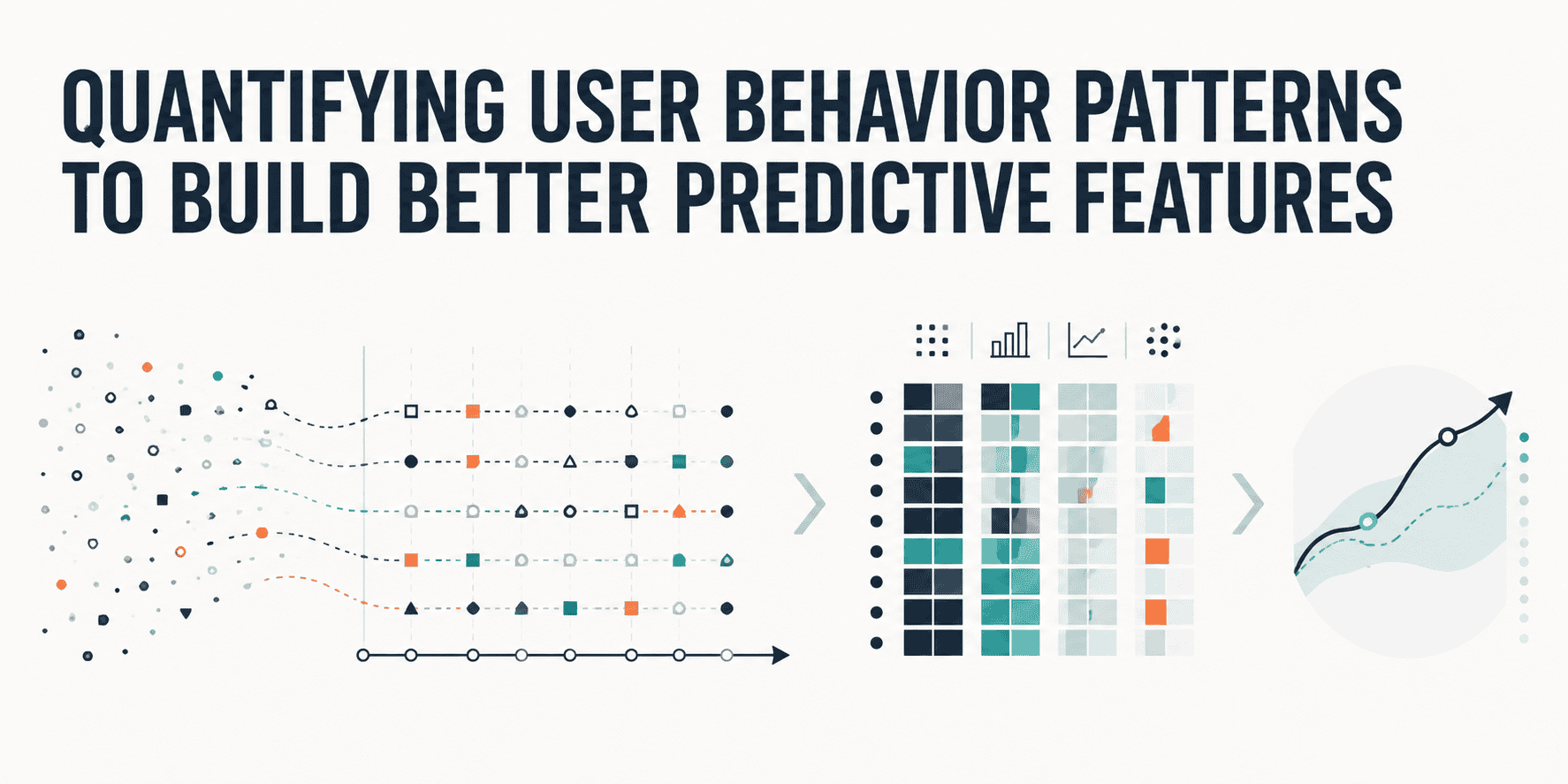
The seemingly simple act of a user clicking – quantifying that action as a mere number – fundamentally misses the point of understanding user behavior. As the article rightly points out, a statistic like “a 35-year-old male in Seattle clicked 12 times last month” is virtually meaningless without context. This highlights a critical limitation in how many data-driven systems, particularly those relying on legacy spreadsheet approaches, approach predictive modeling. We’re moving beyond simply aggregating data points; the future of AI-native spreadsheet technology lies in interpreting *why* those points exist. It’s a shift from reactive analysis to proactive insight, and it demands a more nuanced understanding of user intent. This echoes the discussions around addressing the complexities of data, as explored in What We Miss About Missing Values, where hidden assumptions and incomplete datasets can drastically skew interpretations. The inherent challenge, of course, is moving from easily measurable actions to inferring motivations, goals, and underlying workflows.
The article’s core message resonates deeply with our vision for data management. Building predictive features isn't about amassing more data; it's about enriching the data we already have with layers of contextual understanding. This means incorporating behavioral patterns, sequential actions, time dependencies, and even subtle cues that might indicate frustration or confusion. Think of it as moving from observing the *what* to understanding the *why* and the *how*. Consider, for example, a user repeatedly attempting the same function within a spreadsheet, then abandoning it. A simple click count wouldn't register this struggle, but an AI-native system could recognize the pattern and offer targeted assistance or suggest alternative approaches. This requires a departure from traditional, static data models and a move towards dynamic, context-aware systems. The ability to build such systems, while complex, is increasingly accessible, as demonstrated by projects like the one detailed in Detailed explanation of how to create a text-to-image model from scratch, showcasing the power of building models from the ground up to achieve specific goals.
This shift also has profound implications for user experience. Instead of feeling like they're feeding data *into* a system, users should feel like the system is actively learning *from* them, anticipating their needs, and streamlining their workflows. This isn't about creating an intrusive or overly personalized experience, but rather about providing subtle, helpful interventions that enhance productivity. Imagine a spreadsheet that proactively suggests formulas based on your recent actions, or automatically flags potential errors based on historical usage patterns. These are the kinds of transformative capabilities that emerge when we move beyond surface-level data aggregation and embrace a deeper understanding of user behavior. It's about empowering users to accomplish more with less effort, freeing them from the tedious and repetitive tasks that often bog down data analysis.
Ultimately, the ability to quantify user intent will be a defining differentiator in the future of data management. The rise of AI-native spreadsheets represents a fundamental shift in how we interact with data – moving away from rigid, pre-defined structures towards fluid, adaptive environments that learn and evolve alongside the user. The critical question moving forward isn't simply *how* to collect more data, but *how* to interpret it meaningfully and translate those insights into tangible improvements in user productivity and workflow efficiency. Will current review processes, as explored in I regret reviewing for AAAI, adequately support the rapid advancement and validation of these increasingly complex AI models and ensure their ethical and practical application in data management?
Read on the original site
Open the publisher's page for the full experience