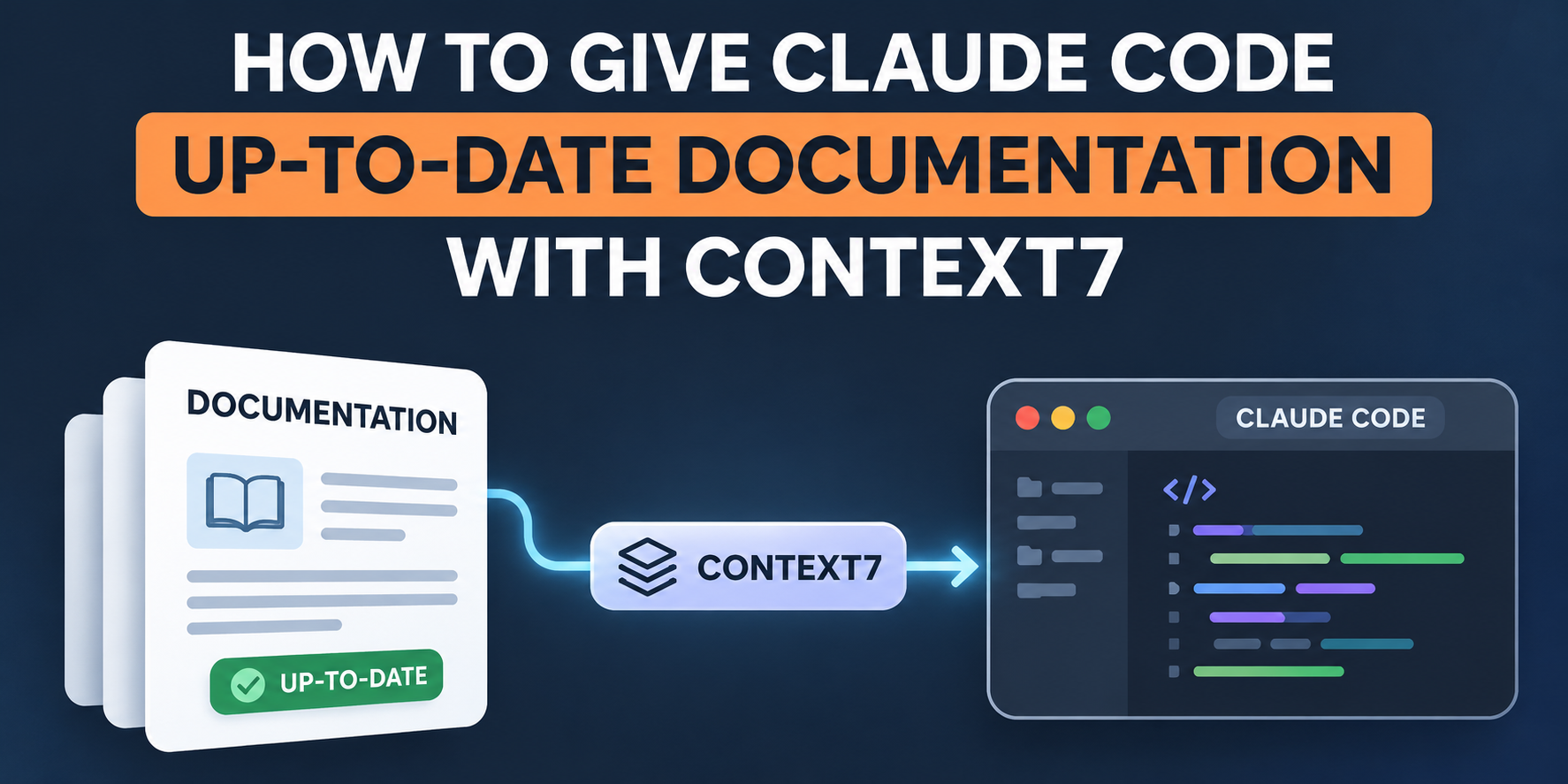
There is no reason to waste tokens feeding an AI stale documentation when a tool like Context7 can fetch the current version in real time. This is not a minor convenience, it is a direct answer to one of the most frustrating inefficiencies in AI-assisted development: the silent failure of an agent working from outdated sources. For anyone using Claude Code to debug, refactor, or build, Context7 removes the hidden tax of verifying whether the AI's knowledge matches the actual API or library you are running.
The problem is familiar to anyone who has watched an AI confidently generate code against a deprecated endpoint. The agent is not wrong; its context is. And fixing that context manually, copying fresh docs, trimming irrelevant sections, praying you stay under the token limit, is exactly the kind of low-value overhead that AI tools were supposed to eliminate. Context7 automates that step, giving Claude Code a direct line to current documentation so it can reason from facts, not assumptions. This aligns with a broader pattern we have observed in how teams are maturing their use of AI agents. Anthropic's own approach to Inside Anthropic's AI-Powered Code Review for Safer, Faster Development shows that the most effective workflows treat the AI not as an oracle, but as a collaborator that needs structured, accurate inputs to produce reliable outputs. Context7 is a practical implementation of that philosophy at the documentation layer.
The practical consequence for your team is measurable. Every token spent on stale context is a token that could have gone toward deeper reasoning or broader code analysis. More importantly, every bug introduced by an AI acting on outdated docs is a bug you will chase in production, a scenario that often reveals itself only after silent failures compound. We recently covered how Google's AQuA Open Source Tool Diagnoses AI Agent Failures in Production, and a recurring theme in those failure analyses is that the agent operated on incorrect assumptions about the environment. Context7 attacks that root cause before the agent acts, which is far cheaper than diagnosing the crash later.
One specific detail to watch: Context7 does not just grab the latest docs blindly. It fetches targeted, relevant sections based on the code context Claude Code is already working on. That means you are not burning tokens on entire API references when you only need the signature of one function. This is the kind of practical, human-centered design that makes a tool feel like an extension of your workflow rather than another configuration burden. If your team is already using Claude Code for anything beyond trivial scripts, the question is not whether to integrate Context7, but how quickly you can set it up before another stale doc sends your agent down the wrong path.