The Local AI Stack for Productive SLMs
Our take
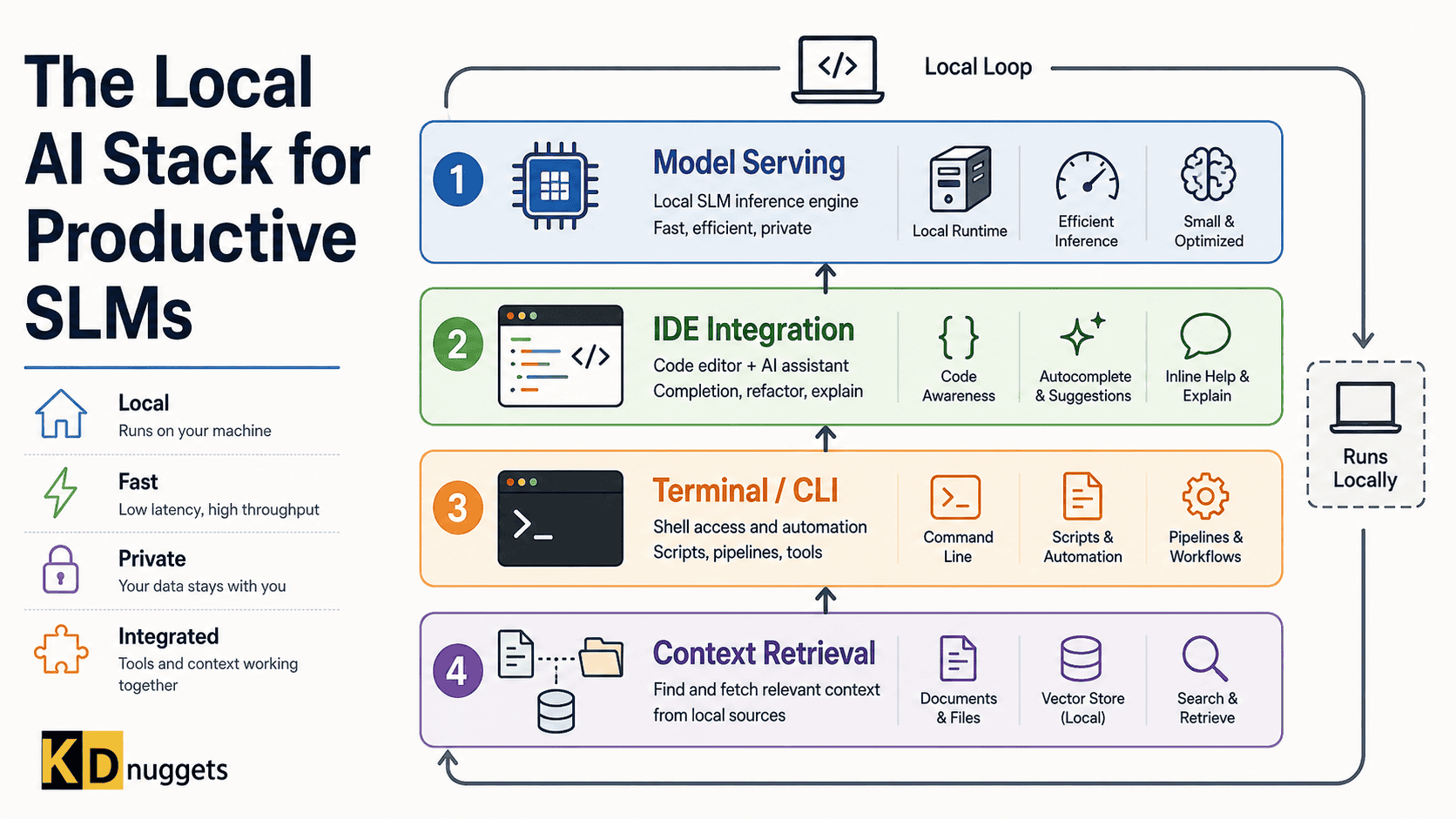
The rise of local AI is no longer a fringe experiment; it's rapidly becoming a pragmatic solution for a wide range of use cases. The recent article, "The Local AI Stack for Productive SLMs," rightly focuses on the practicalities of building and deploying these systems, moving beyond the hype to address the crucial question of tooling. We've seen increasing interest in self-contained AI environments, fueled by concerns around data privacy, latency, and cost. The framework outlined – considering each layer from model serving to context retrieval – offers a valuable roadmap for those seeking to harness the power of AI without relying solely on cloud-based services. It's a welcome shift towards building resilient and adaptable systems, a theme explored previously in our look at [Millwright — experimenting with an end-to-end machine learning framework in Rust [P]], which showcased an early attempt at creating a fully integrated local ML pipeline. The challenge, as always, lies in navigating the complexity of selecting and integrating the right components.
The current landscape is characterized by a proliferation of tools, each offering different strengths and weaknesses. The "Local AI Stack" piece’s emphasis on a layered approach is particularly insightful; it acknowledges that a successful implementation isn't about finding a single "magic bullet" but about carefully assembling a set of tools that work together harmoniously. Consider, for example, the recent collaboration between Perplexity and Nvidia to launch Portable Computer – [Perplexity partners with Nvidia to launch Portable Computer, a fully local AI agent with zero token costs]. This demonstrates the tangible potential of optimized local deployments, providing a compelling user experience without the ongoing expense of cloud token usage. However, deploying and maintaining such systems requires a different skillset than simply leveraging cloud APIs. Furthermore, as discussed in our recent podcast, [Podcast: The Human Edge: Why Brownfield Codebases Need Mob Programming, Not Just AI Vibes], integrating AI into existing systems, particularly legacy codebases, presents unique challenges that demand careful planning and collaboration.
The broader significance of this trend extends beyond individual productivity gains. Local AI stacks offer a pathway towards greater autonomy and control over data and models. This is particularly relevant for organizations dealing with sensitive information or operating in environments with limited connectivity. As the technology matures, we can anticipate a surge in demand for tools that simplify the development and deployment of these systems. The framework presented in the article is a significant step in that direction, providing a clear and actionable guide for practitioners. It also highlights the importance of open-source initiatives and community-driven efforts in fostering innovation in this rapidly evolving space. The ability to iterate quickly and customize solutions to specific needs will be a key differentiator for local AI deployments.
Looking ahead, the convergence of hardware advancements – particularly in edge computing and specialized AI accelerators – and the growing sophistication of local AI frameworks will further accelerate adoption. The question now becomes: how will these local ecosystems evolve to seamlessly integrate with cloud-based services, creating a hybrid model that leverages the strengths of both? Will we see the emergence of standardized interfaces and protocols that facilitate interoperability between local and cloud environments? The ability to bridge these two worlds will be critical for realizing the full potential of AI, empowering users to harness its power wherever and whenever they need it.
Read on the original site
Open the publisher's page for the full experience