There's a quiet satisfaction in deleting code you no longer need. Baseline and shipping less JavaScript taps into that feeling, and it's one we think deserves more attention. The premise is simple: most of us install a dependency once, forget about it, and move on. But the web platform hasn't stood still. While we were busy building features, the browser quietly absorbed a lot of the heavy lifting we assumed required a library. That 60KB to 90KB of minified and gzipped dependencies sitting in your typical mid-sized app? A surprising chunk of it is now redundant. This isn't about shaming legacy code; it's about recognizing that the gap between "you need a library for this" and "the browser does this" keeps closing. For teams juggling tight budgets or performance budgets, that's not just a nice-to-have. It's a competitive advantage.
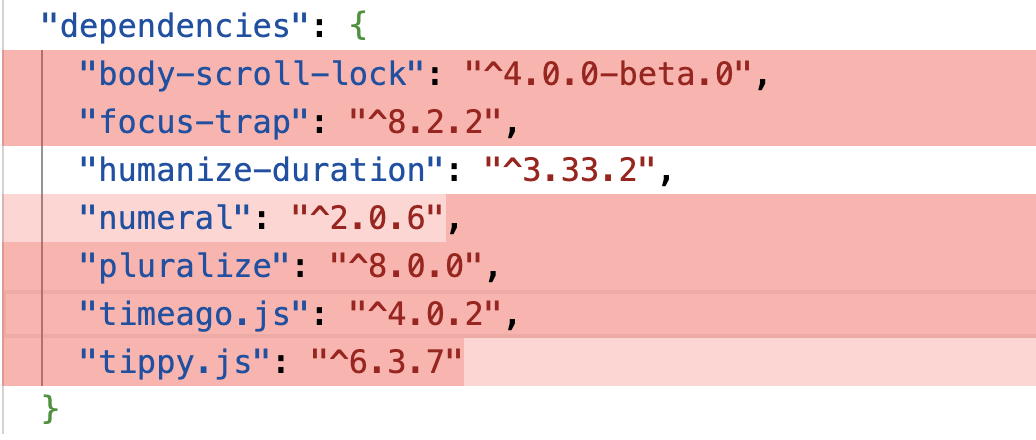
We'd tell you to start with an audit, but not the kind that ends with a spreadsheet and a shrug. Look at your `package.json` with fresh eyes. Date and number formatting, HTTP requests, modals, tooltips, deep cloning, grouping arrays. These were real gaps a few years ago. Today, they're often native. The platform has caught up, and we agree. But here's where we'd push back: the goal isn't to rip out every dependency just because you can. It's to make deliberate choices about what you bring in and why. If you're maintaining a data science notebook, you already know that keeping things lean and runnable matters. The same principle applies here. Keep Your Data Science Notebooks Running: Six Essential Habits emphasizes habits that keep a project alive after you close the laptop. Auditing your dependencies is one of those habits. It's not glamorous, but it's the kind of maintenance that prevents a slow, creeping bloat from becoming your default state.
The practical takeaway is straightforward: you don't need to chase every new tool, but you should know what you're carrying. We're not talking about a rewrite or a big bang migration. Start with one library. Look it up on a compatibility table. If the browser handles it natively, test it, and if the behavior matches, delete the dependency. Measure the bundle size before and after. You'll often find that the savings are more than just bytes. Fewer dependencies mean fewer attack surfaces, less code to maintain, and a faster initial load for your users. This is the same logic that drives modern tooling decisions elsewhere. When Streamline Your Monorepo: Changesets v3 Simplifies Releases and Reduces Size hit the scene, it wasn't just about new features. It was about reducing the footprint of your tooling. And Jotai 3.0 Ships as a Modernized, ESM-Only Package That Drops Legacy Builds and Deprecated APIs shows that even popular libraries are choosing to shed legacy weight, not add more.
Here's the point we want you to hold onto: shipping less JavaScript isn't a performance micro-optimization. It's a statement about how you approach your craft. It means you trust the platform and you're willing to verify that trust. The next time you're about to install a package, ask yourself if the browser already has an answer. The answer will surprise you more often than you think. And the next time you're staring at a bundle report, remember that every kilobyte you save is a small win for your users. The one thing we'd watch closely is how this trend accelerates. As browser vendors continue to close gaps, the libraries that survive will be the ones that offer real value beyond what the platform provides. The others will fade. That's not a threat. It's just the natural progression of a platform that keeps getting better.