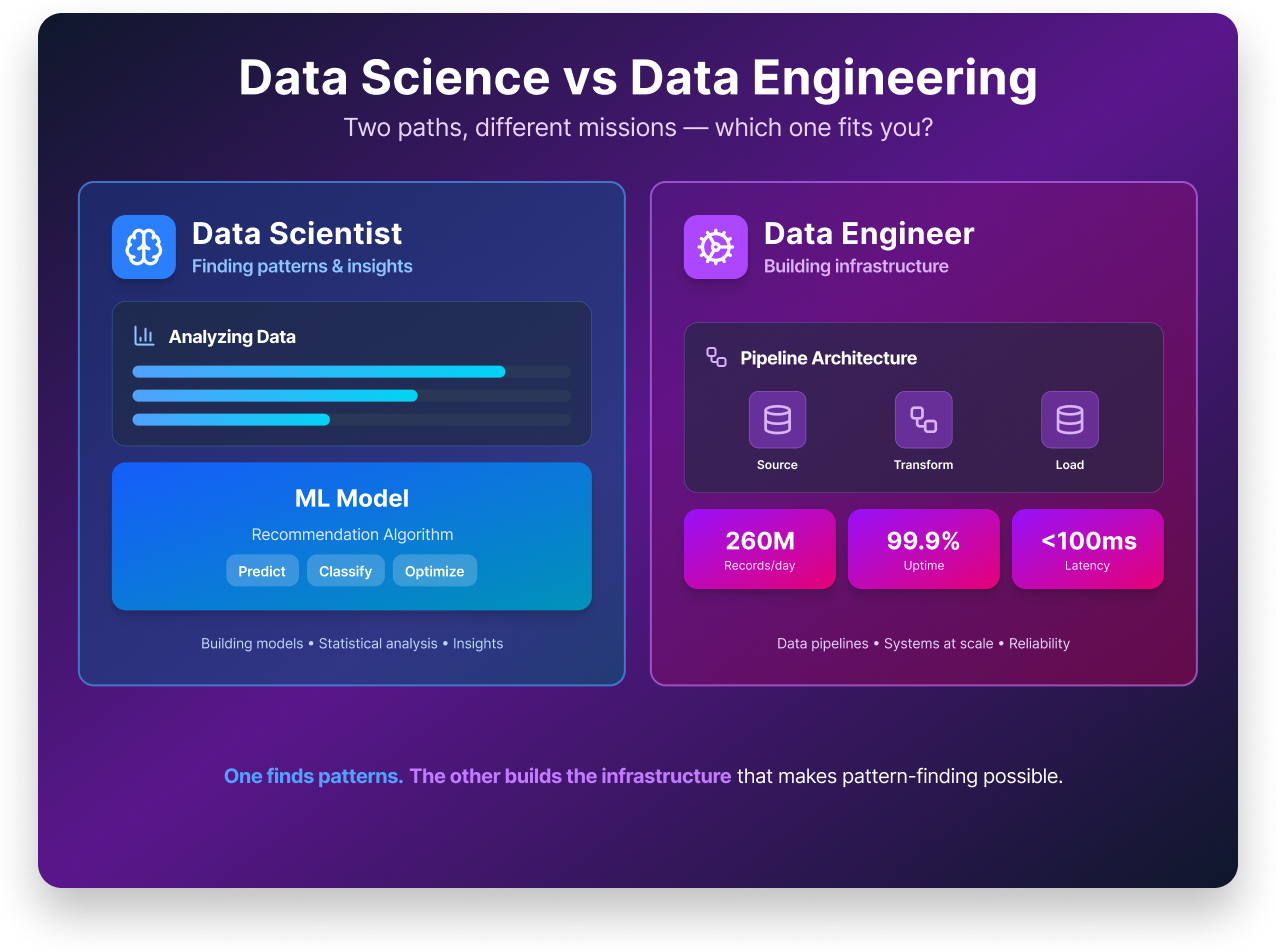
The distinction between data science and data engineering is clearer than most career guides admit, and choosing between them should be about how you prefer to think, not just which job pays more. Both roles are essential, but they serve fundamentally different purposes: data engineers build the infrastructure that makes data usable, while data scientists ask questions of that data once it exists. If you are trying to decide which path fits you, stop looking at salary comparisons and start looking at what kind of problem solving energizes you.
Consider the Netflix example. Data scientists design recommendation algorithms that predict your next show. They work with models, probabilities, and user behavior. Data engineers, on the other hand, build and maintain the pipelines that collect viewing data from millions of subscribers. They ensure data flows reliably, cleanly, and at scale. One role is about interpretation and discovery; the other is about construction and reliability. Neither is harder, but they attract different minds. If you enjoy building systems that others depend on, data engineering offers a clear path. If you prefer exploring patterns and deriving insights from finished data, data science is your fit.
The practical takeaway for readers is straightforward: stop treating these as interchangeable titles. When you see a job description that lumps both responsibilities together, that is a warning sign, not an opportunity. Companies that understand the distinction will hire for one or the other, and they will value you more for knowing which you are. Your career growth depends on depth, not breadth in this case. A data engineer who masters pipeline architecture will advance faster than one who dabbles in modeling. A data scientist who can communicate findings from clean data will outperform one who spends half their time fixing broken infrastructure.
What this means for your next step is concrete. Look at your daily work or your portfolio projects. Do you spend more time debugging data flows, writing ETL scripts, and optimizing storage? Or do you spend more time running statistical tests, building visualizations, and presenting findings? That answer tells you where you belong. The smart choice is not the one with the flashier title. It is the one that aligns with how you naturally work. Pick the path that lets you do your best thinking, and the compensation will follow.