What’s Actually Inside 24,723 Tokens of a Search Result? We Broke It Down, Field by Field
Our take
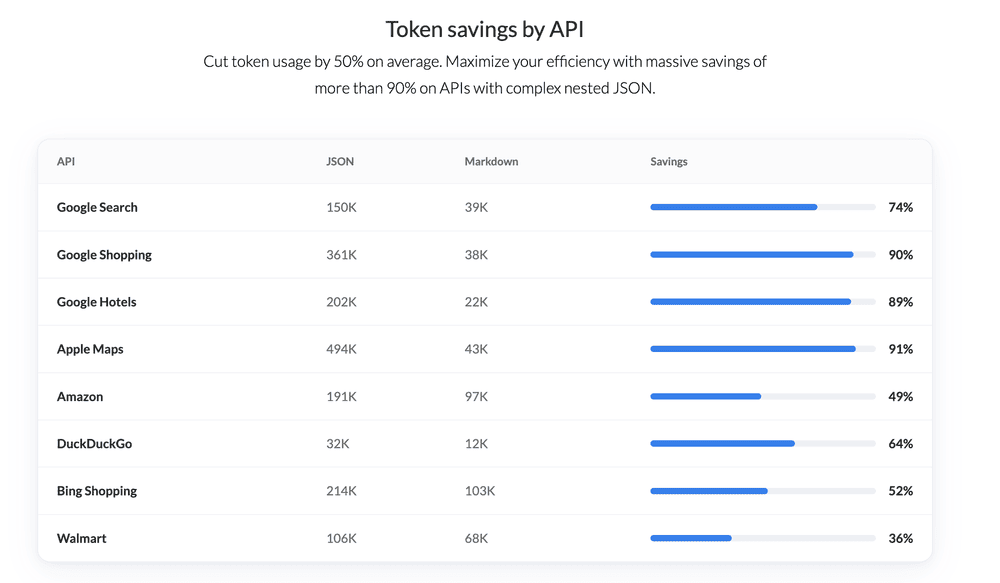
The relentless drive to optimize AI agent costs is reshaping how we interact with search data, and SerpApi's recent findings on Markdown output are a significant step forward. The core takeaway – a potential 74% reduction in token usage – is not merely a technical curiosity; it's a practical solution to a growing pain point for anyone building applications powered by large language models (LLMs). As we’ve seen in explorations of evaluating LLMs GoBench: Evaluating LLMs on the game of Go, performance isn't always the sole determinant of viability – cost efficiency is rapidly becoming a crucial factor in determining which models and approaches are truly sustainable. This isn't just about saving money; it's about unlocking new possibilities by making LLM-powered applications more accessible and scalable. The traditional parsing of raw HTML search results is inherently inefficient, bloating token counts with extraneous markup and formatting. SerpApi’s approach, by delivering structured data in Markdown, dramatically reduces this overhead, allowing agents to focus on the core information.
The implications extend far beyond simply reducing API bills. Token limits have historically been a significant constraint on the complexity of prompts and the amount of context LLMs can effectively process. Lowering the token footprint per search result opens doors to richer, more nuanced interactions. Imagine AI agents capable of synthesizing information from multiple search results with greater accuracy and coherence, or personalized experiences that leverage significantly more contextual data without breaking the bank. This efficiency gain also aligns with the broader trend of optimizing LLM architectures for resource-constrained environments. We've previously delved into the practicalities of retrieval architectures When Does Graph RAG Actually Add Value? A Hands-On Experiment, demonstrating the importance of efficient data retrieval and processing; SerpApi's Markdown output directly contributes to this goal by streamlining the initial data ingestion stage. Even seemingly simple tasks, like extracting specific data points from a search result, become more cost-effective and reliable with reduced token consumption. The ability to handle more complex queries and data volumes translates directly to improved user experiences and expanded application capabilities.
This development underscores a broader shift in the AI landscape: a move away from simply chasing larger models and towards a focus on architectural efficiency and data optimization. While the allure of ever-increasing parameter counts remains, the reality is that practical applications require a more nuanced approach. Techniques like Markdown output, alongside strategies for prompt engineering and data compression, are proving to be just as, if not more, impactful than simply scaling up model size. The efficiency gains highlighted by SerpApi are particularly relevant for users familiar with the intricacies of data manipulation, as illustrated by community discussions around tasks like Power Query help spitting data from a column into multiple new column. It demonstrates a practical application of data structuring that resonates with those comfortable with transforming data to extract its value.
Looking ahead, it will be fascinating to see how this trend towards data optimization accelerates. Will other search providers adopt similar structured output formats? Will we see the emergence of specialized parsing tools designed to further minimize token usage? The current focus on cost efficiency is likely to drive innovation across the entire AI ecosystem, from model architectures to data infrastructure. The question becomes not just *how* to build powerful AI agents, but *how* to build them sustainably, ensuring that the benefits of this technology are accessible to a wider audience and can be deployed at scale.
Read on the original site
Open the publisher's page for the full experience