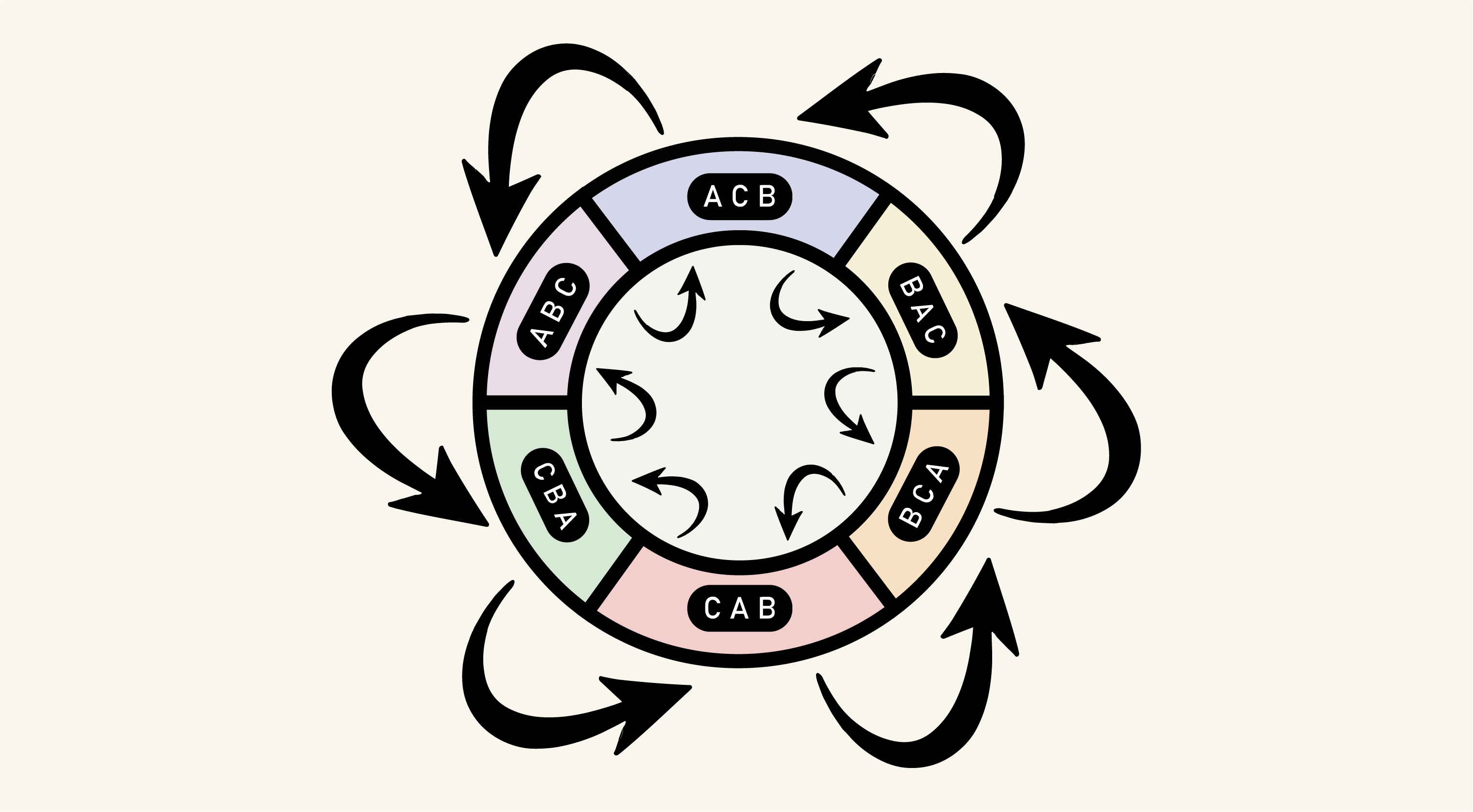
When sorting gets complex, most engineers reach for a familiar tool, quicksort, mergesort, or whatever their language's standard library provides. That reflex works fine until it doesn't. A recent post on Guided Merge Sort describes an approach that picks intelligently between ordinary and multi-way merge sort algorithms, using the old "goto" operator in a way that feels almost retro. The author argues that for certain data shapes, the static choice between algorithms leaves performance on the table, and a dynamic, guided path is the smarter alternative. We agree, and we'd argue this principle extends well beyond sorting.
What makes this insight worth attention isn't the specific algorithm. It's the mindset. Many of us treat algorithms as fixed recipes: you pick the right one upfront and trust it. But data doesn't stay still. Sorting patterns shift, edge cases appear, and the "optimal" choice for one batch can be wasteful for the next. Guided Merge Sort adapts mid-stream, using runtime information to switch strategies. That is exactly the kind of thinking we explored in Clean Architecture Removes the Signals Your Agent Needs, where we noted that every abstraction boundary you draw potentially removes signals your tooling relies on. A fixed sorting function is a boundary. When you allow it to consult the data itself and choose a path, you preserve more signal. The same logic applies equally to Spot Hidden Data Drift When Individual Features Seem Stable: static feature checks miss interactions that only emerge when you let the algorithm look at relationships rather than individual columns.
Here is the takeaway we would hand to any reader asking about this: watch for the point where your abstraction stops adapting. If your system treats a decision as one-size-fits-all, ask whether the data might justify a guided path instead. Guided Merge Sort is not going to replace your standard library tomorrow, but the philosophy behind it, dynamic selection based on actual input characteristics, is a pattern that shows up repeatedly in robust systems. The concrete question to carry away is this: how many of your current algorithmic choices are based on assumptions about data that you have never verified at runtime? If the answer is "most of them," you have an opportunity.