Your AI Assistant Wrote the Code. Who Checked the Defaults?
Our take
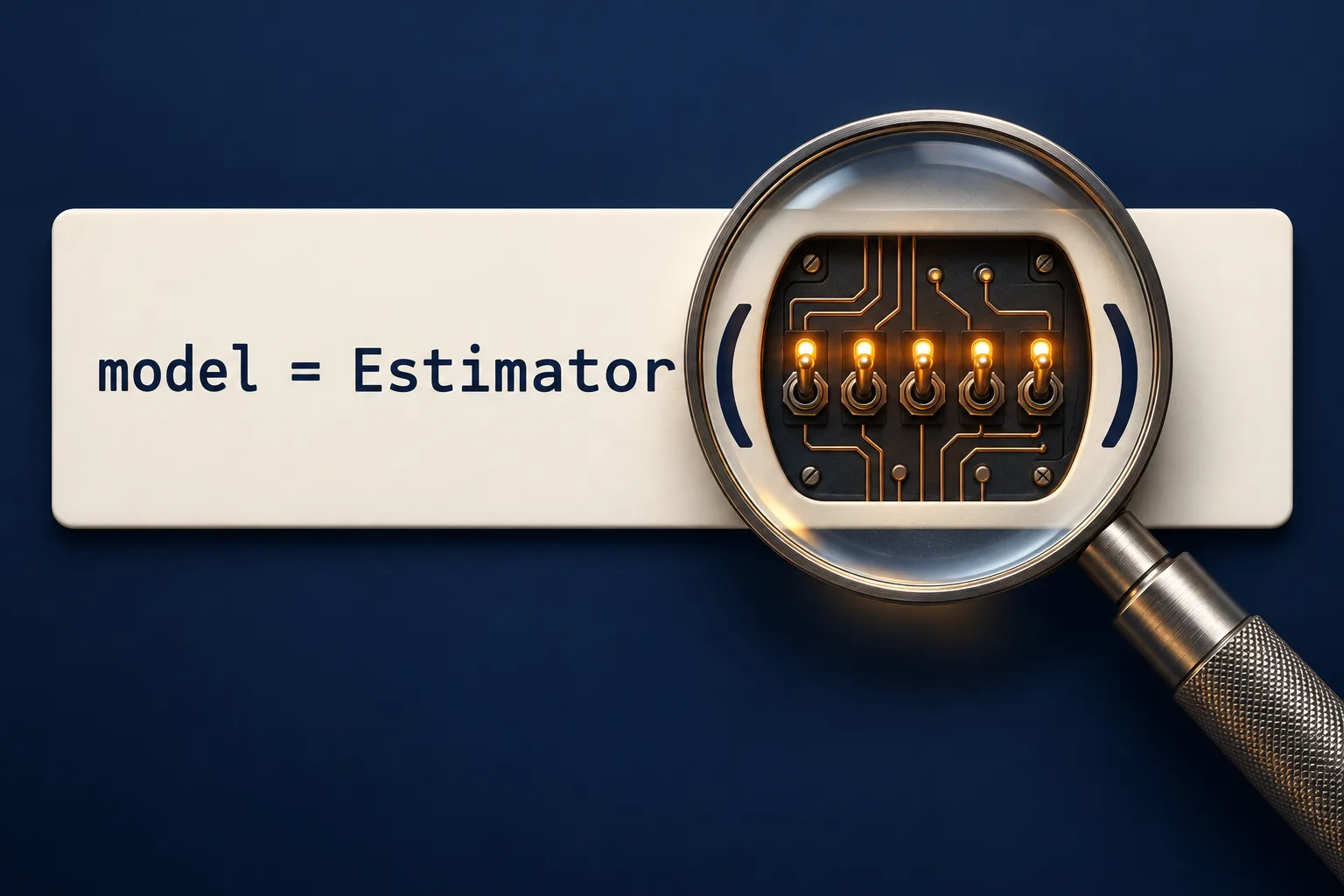
The recent Towards Data Science piece, "Your AI Assistant Wrote the Code. Who Checked the Defaults?" serves as a vital reminder of a critical, and often overlooked, aspect of deploying machine learning models: rigorous validation of underlying assumptions. It’s easy to get caught up in the excitement of leveraging AI to automate code generation and streamline workflows, but this article rightly highlights the potential pitfalls of blindly accepting default settings within libraries like scikit-learn. We’ve seen this trend amplified by the rise of low-code and no-code ML platforms, which further abstract away the complexities of model building, potentially leading to a generation of practitioners who are less familiar with the nuances of the tools they’re using. This echoes the sentiment in "Sharing my ML learning repo — NumPy to Transformers, 5 months, daily commits, all notebooks public," where a dedicated learning journey showcases the depth required to truly understand the foundational components of machine learning. The importance of this foundational understanding cannot be overstated.
The article’s focus on five specific scikit-learn defaults – concerning regularization, solver selection, standardization, random state, and class weights – is particularly insightful. These choices, seemingly minor on the surface, can dramatically impact model performance and generalizability. Failing to scrutinize them can lead to overfitting, biased predictions, and ultimately, unreliable results. Consider, for instance, the implications of using the default solver in a large-scale linear regression problem; a suboptimal choice could lead to significantly longer training times and a less accurate model. Similarly, the default random state can introduce unintended reproducibility issues, making it difficult to debug or compare different model versions. This aligns with the exploration of interactive demos in "I wanted to watch a neural network learn," where the ability to manipulate parameters and observe their effects firsthand is crucial for developing intuition and avoiding common pitfalls. The core message is clear: automation is powerful, but it shouldn’t come at the expense of critical thinking and thorough validation. It’s a call for a more mindful approach to AI-assisted development, one that prioritizes understanding over simply accepting the “easy” route.
Beyond the specific defaults highlighted, the article raises a broader question about the responsibility of both library maintainers and users in ensuring model reliability. Should libraries provide more explicit warnings or guidance regarding the potential impact of default settings? Should educational resources place greater emphasis on the importance of parameter tuning and validation? While there’s no single answer, the conversation needs to shift towards proactively addressing these concerns. The concept of "ProgramAsWeights: compile English function descriptions into neural programs that run locally" underscores the increasing complexity of ML systems, further emphasizing the need for careful oversight at every stage of the development pipeline. As models become more sophisticated and are deployed in increasingly critical applications, the consequences of overlooking seemingly minor details can be significant. The ease with which AI can now generate code shouldn’t diminish the need for human oversight; it should amplify it.
Ultimately, "Your AI Assistant Wrote the Code. Who Checked the Defaults?" is a valuable contribution to the ongoing discussion about responsible AI development. It serves as a timely reminder that even with the most advanced tools, human expertise and critical thinking remain essential. The future of AI-powered data management hinges not just on innovation, but also on a commitment to rigorous validation and a deeper understanding of the underlying mechanisms. What new tools and methodologies will emerge to proactively surface and mitigate the risks associated with default settings and automated code generation, ensuring that AI truly empowers, rather than undermines, data-driven decision-making?
Five scikit-learn defaults that deserve a closer look before your next model reaches production
The post Your AI Assistant Wrote the Code. Who Checked the Defaults? appeared first on Towards Data Science.
Read on the original site
Open the publisher's page for the full experience