business intelligence tools
business intelligence tools at Beyond Market Intelligence is a file of 149 stories. The newest of them: “IBM secures AI coding workflows with multi-model routing and human oversight”, “AI spreads across AWS as cloud exclusivity gives way to openness”, and “Agentic AI needs clean data; catch pipeline failures before they strike.”. IBM has launched Bob, an innovative AI-powered software development platform that integrates multi-model routing and human checkpoints, enhancing security and efficiency in coding workflows. Amazon Web Services (AWS) has marked a pivotal moment in the cloud landscape with its latest announcements, unveiling a suite of tools that integrate OpenAI's powerful models into its Bedrock platform. Acme AI is the next-generation, AI-powered spreadsheet platform built to replace Excel and redefine how analysts, data scientists, and enterprise teams work… The list below is every business intelligence tools story on Beyond Market Intelligence, newest first.

IBM secures AI coding workflows with multi-model routing and human oversight
IBM has launched Bob, an innovative AI-powered software development platform that integrates multi-model routing and human checkpoints, enhancing security and efficiency in coding workflows. Designed to address the complexities and potential pitfalls of AI in real-time data environments, Bob combines human oversight with AI capabilities, resulting in significant time savings for teams—up to 70% on selected tasks. With a structured approach, Bob empowers developers to seamlessly navigate the software lifecycle, ensuring effective collaboration between AI and human expertise in enterprise settings.

AI spreads across AWS as cloud exclusivity gives way to openness
Amazon Web Services (AWS) has marked a pivotal moment in the cloud landscape with its latest announcements, unveiling a suite of tools that integrate OpenAI's powerful models into its Bedrock platform. This move coincides with the recent restructuring of OpenAI's partnership with Microsoft, setting the stage for a new era of collaboration across cloud providers.
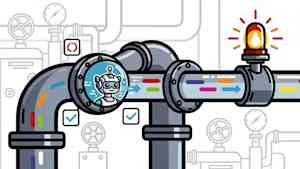
Agentic AI needs clean data; catch pipeline failures before they strike.
Definity is revolutionizing data pipeline reliability by embedding agents directly within Spark and DBT drivers, enabling real-time intervention during execution. Traditional monitoring tools often react to failures after they occur, leading to wasted resources and delayed insights. By catching issues before they impact downstream systems, Definity empowers data engineering teams to proactively optimize their workflows. In just one week, an enterprise customer identified 33% optimization opportunities and reduced troubleshooting efforts by 70%.
Open source YAML dashboards designed for AI-native analytics
Introducing an open-source dashboard-as-code tool designed for the modern data landscape. This code-first framework utilizes simple YAML and JSX files to build and deploy dynamic dashboards, enabling real-time generation of charts, tabs, and values. What sets it apart is its seamless integration with AI agents, creating a robust environment for AI-native analysis and business intelligence. Today marks its public release, and your feedback—whether constructive or critical—is invaluable. Explore the repository and join the conversation: https://github.com/bruin-data/dac.
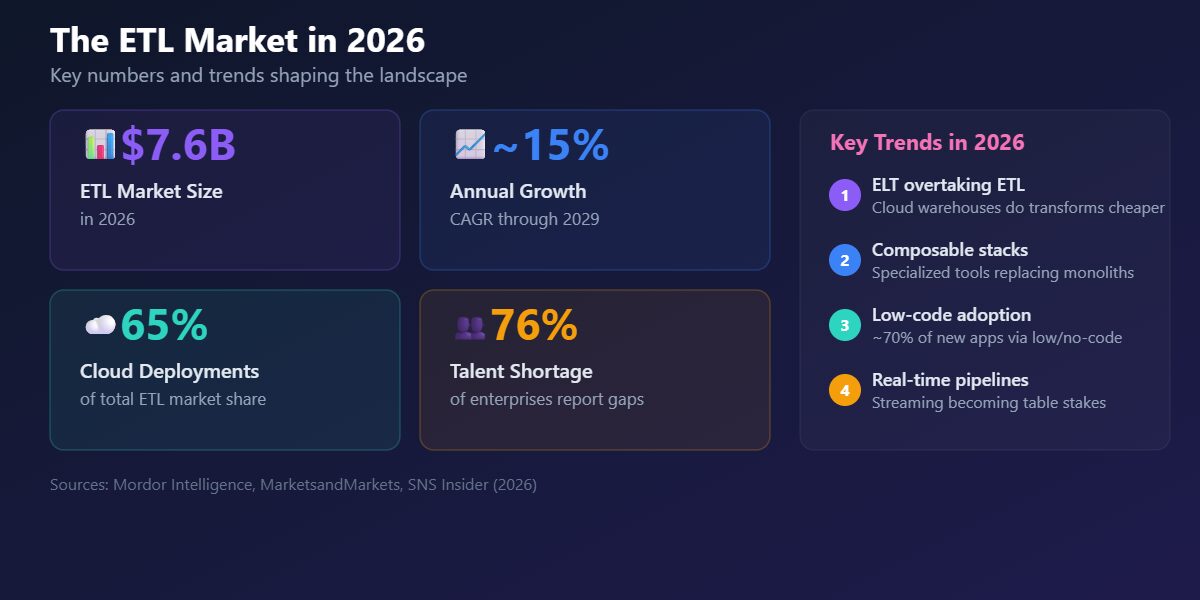
Your Data Pipeline Deserves More Than an Overcrowded Tool List
Choosing the right ETL tools is crucial when building a robust data stack, yet the abundance of overlapping options can be overwhelming. In 2026, the landscape continues to evolve, making it essential to understand which tools align with your specific needs. This practical guide not only highlights the best ETL tools available but also provides clear code examples to facilitate your decision-making process.

Mistral Workflows turns AI experiments into revenue-generating operations.
Mistral AI has unveiled Workflows, a powerful orchestration engine designed to elevate AI systems from mere proofs of concept to integral business processes. Operating within Mistral's Studio platform, Workflows already processes millions of daily executions, addressing critical gaps in operational infrastructure that hinder AI adoption. By separating orchestration from execution, it ensures data privacy and reliability, particularly for regulated industries.

Synthetic audiences make expert guesswork a relic of the past.
The consulting industry is on the brink of a transformation, as AI synthetic audiences emerge to challenge traditional methods. These digital representations of people enable rapid, cost-effective surveys, shifting the landscape of market research. While speed and affordability are appealing, questions about accuracy and data security linger. As established firms and agile startups navigate this evolving terrain, the future of consulting may not be a battleground but rather a collaborative journey.
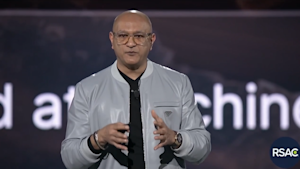
Trust in AI agents lags behind their enterprise adoption
Eighty-five percent of enterprises are piloting AI agents, yet only 5% have transitioned them to production, highlighting a significant trust gap. In an exclusive interview at RSA Conference 2026, Cisco's Jeetu Patel emphasized that this deficit is the key barrier to scaling AI adoption for critical tasks. He likened AI agents to intelligent yet immature teenagers, requiring structured oversight to ensure safe operation. Addressing this trust architecture is essential, as it differentiates thriving enterprises from those at risk of failure.

DeepSeek reemerges with powerful AI at a fraction of the cost
DeepSeek-V4 has arrived, marking a significant leap in AI capabilities with its 1.6-trillion-parameter Mixture-of-Experts model, available at just 1/6th the cost of competitors like GPT-5.5 and Claude Opus 4.7. This latest release, rooted in innovative architecture and a commitment to open-source accessibility, empowers developers and enterprises to harness advanced AI without prohibitive costs. As DeepSeek researcher Deli Chen emphasizes, "AGI belongs to everyone," positioning this model as a game changer in the landscape of affordable, high-performance AI

Introducing GPT-5.5: a subtle but meaningful step forward in AI
OpenAI has officially launched GPT-5.5, a significant advancement in AI language models that narrowly surpasses Anthropic's Claude Mythos Preview on the Terminal-Bench 2.0. This model, which has been internally referred to as "Spud," showcases OpenAI's commitment to enhancing user experience by simplifying complex tasks and improving coding efficiency. With a focus on agentic performance, GPT-5.5 autonomously tackles intricate workflows, making it an invaluable tool for professionals across various fields.
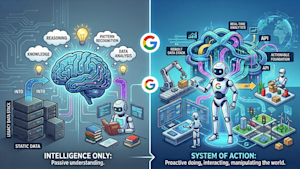
Agents need data built for action, not just answers.
The Agentic Data Cloud, unveiled by Google at Cloud Next, marks a pivotal shift in enterprise data architecture, transitioning from human-driven operations to agent-scale capabilities. This innovative framework, built on three key pillars—Knowledge Catalog, Cross-cloud lakehouse, and Data Agent Kit—aims to empower AI agents to autonomously activate data and drive business actions. By automating metadata curation, enabling seamless cross-cloud access, and simplifying data engineering tasks, Google is positioning itself as a leader in the evolving landscape of data management, prioritizing efficiency and user outcomes.

Discover private AI that empowers your data, even off the grid.
Cirrascale Cloud Services has announced a significant expansion of its partnership with Google Cloud, enabling the deployment of the Gemini AI model on-premises through Google Distributed Cloud. This pioneering move offers enterprises and government agencies a fully private, air-gapped server solution, addressing long-standing concerns about data control in regulated industries. With Gemini packaged in a secure, Dell-manufactured appliance, organizations can leverage powerful AI capabilities without compromising their sensitive information.
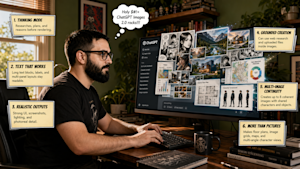
Explore how AI image generation now masters multilingual text, infographics, and more.
OpenAI's ChatGPT Images 2.0 is here, redefining the possibilities of AI-generated visuals. This latest update introduces a suite of remarkable features, including multilingual text generation, full infographics, and even manga creation. After extensive testing, this advanced model demonstrates enhanced reasoning capabilities, allowing it to synthesize complex information and produce coherent, high-quality images. With its ability to generate multiple distinct outputs from a single prompt, ChatGPT Images 2.0 empowers users to explore innovative creative workflows while ensuring safety and accuracy.
Google's new AI agents blend web and private data into one research flow.
On Monday, Google unveiled its most significant upgrade to autonomous research agents with the launch of Deep Research and Deep Research Max. These new agents seamlessly integrate open web data with proprietary enterprise information through a single API call, enabling the generation of native charts and infographics within research reports. Built on the advanced Gemini 3.

Von's AI picks the right model for every revenue task, automatically.
In the evolving landscape of revenue intelligence, Von emerges as a transformative AI platform designed to unify fragmented sales data and enhance decision-making for Go-To-Market teams. Unlike traditional AI solutions, Von builds a comprehensive context graph that integrates structured and unstructured data, empowering users with actionable insights. By leveraging a mixture of models, Von addresses common challenges in sales operations, automating tasks and providing deep analytical capabilities.

Enterprise governance must evolve as AI makes custom software accessible to all.
As AI-driven software development becomes increasingly accessible, the traditional logic of buying over building software is being challenged. Retool's 2026 Build vs. Buy Shift Report reveals that the cost to create custom tools has plummeted, empowering more teams to innovate independently. However, enterprise governance structures have not kept pace, leading to a rise in shadow IT as builders bypass traditional processes for speed.

Patch alone won't secure Copilot Studio from prompt injection risks.
Microsoft has assigned CVE-2026-21520 to a significant indirect prompt injection vulnerability in Copilot Studio, discovered by Capsule Security. This flaw, dubbed ShareLeak, exploits the interaction between SharePoint forms and the Copilot agent, allowing unauthorized data exfiltration even after patching. While Microsoft has acted swiftly, the incident underscores a broader issue with agentic systems and the need for enhanced security measures. As Capsule notes, this vulnerability class poses a new risk landscape for enterprises, emphasizing the importance of proactive audits and robust runtime security strategies.

Procurement's forgotten workflows finally get an AI upgrade.
Traza, a New York-based startup, has secured $2.1 million in pre-seed funding led by Base10 Partners, aiming to transform procurement workflows through AI. For years, procurement has operated largely on outdated methods like emails and spreadsheets, leading to significant inefficiencies. Traza's innovative solution deploys AI agents that autonomously manage tasks such as vendor outreach and invoice processing, reducing manual effort by up to 70%.

The hidden cost of AI coding: Nearly half of generated code fails in production.
A recent survey from Lightrun reveals a pressing challenge in the software industry: 43% of AI-generated code changes require manual debugging in production, highlighting the struggle to ensure reliability after deployment. Conducted among 200 senior site-reliability and DevOps leaders, the findings indicate that even after passing quality assurance, AI-generated code often leads to increased engineering bottlenecks.

From AI pilots to production: building agentic systems that perform.
In the rapidly evolving landscape of AI-driven enterprises, achieving measurable performance through agentic AI requires more than just innovative ideas. This presentation by Edgeverve delves into the critical transition from pilot programs to impactful, production-grade solutions. By establishing clear goals and data-driven workflows, organizations can harness the potential of semi-autonomous AI agents. This approach emphasizes the importance of integrating autonomy, governance, and observability while maintaining flexibility. Discover how to transform operational grey zones into streamlined processes that drive tangible results and enhance productivity.

When AI Models Seem to Lose Their Edge, Listen to the Users
Recent user complaints about Anthropic's Claude models, particularly Opus 4.6 and Claude Code, have sparked a heated debate within the AI community. Developers claim they are experiencing performance degradation, describing the coding model as less reliable and more prone to errors. Accusations of "AI shrinkflation" have emerged, suggesting users are paying the same price for diminished capabilities. While Anthropic denies intentionally downgrading the models, they acknowledge recent changes that may have affected user experience.
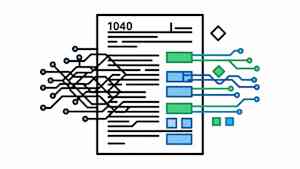
From 900 pages to hours: a compliance workflow built for speed and accuracy.
Intuit's TurboTax team tackled the challenge of the One Big Beautiful Bill, a complex 900-page tax document, by leveraging AI to streamline implementation from months to mere days. By employing large language models for document analysis and developing bespoke tools for coding and testing, they transformed a convoluted process into an efficient workflow adaptable to any regulated industry.
Meta's Muse Spark ushers in a new era of AI models beyond Llama.
Meta has unveiled Muse Spark, its first proprietary AI model since the formation of Meta Superintelligence Labs, signaling a significant shift from the open-source Llama family. Under the leadership of Chief AI Officer Alexandr Wang, Muse Spark is designed to support tool use, visual reasoning, and multi-agent orchestration, marking a leap in AI capabilities. Unlike its predecessors, Muse Spark aims to deliver "personal superintelligence," integrating visual data to enhance user interactions.
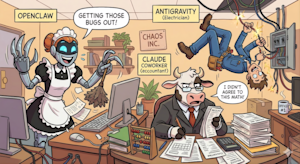
Agentic AI arrives, and the path forward demands our focus.
The age of agentic AI is here, bringing both promise and complexity to our digital landscape. Tools like OpenClaw and Claude Cowork are redefining our interaction with technology, automating tasks from inbox management to legal contract review. However, as these powerful agents gain autonomy, they also introduce risks, raising concerns about data security and ethical use. Balancing innovation with responsibility is essential.