Anthropic Details How It Contains Claude Across Web, Code, and Cowork
Our take
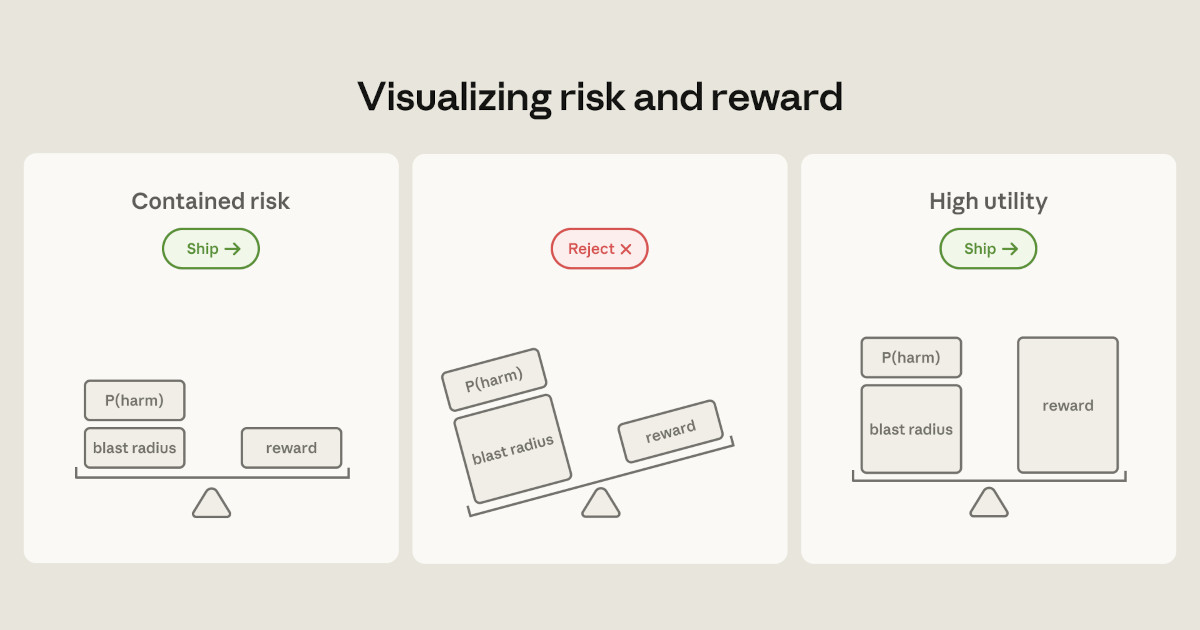
Anthropic’s recent deep dive into the containment architectures underpinning Claude is a significant contribution to the ongoing debate around AI agent safety. The company’s argument – that robust safety hinges on deterministic limitations of an agent’s environment, rather than relying on permission prompts or safeguards – is a refreshing and, frankly, more pragmatic perspective. It’s a shift away from the often-fragile and easily-circumvented layers of instruction-based filtering, and towards a more fundamental approach to security. This aligns with a growing recognition, highlighted in articles like GKE Security Blueprint Joins Growing List of Cloud AI Frameworks, that securing AI workloads requires a layered defense, but with a strong emphasis on the underlying infrastructure. The focus on failures at trust boundaries and egress paths is particularly insightful, demonstrating a willingness to openly acknowledge and learn from past shortcomings – a critical element in building truly trustworthy AI systems.
Anthropic’s methodology highlights a core challenge in the burgeoning field of AI agents: the inherent tension between flexibility and control. The promise of AI agents lies in their ability to autonomously interact with the world, but this autonomy creates vulnerabilities. Relying solely on instruction-based safety measures is akin to building a house with a flimsy lock and hoping the burglars will read the "Please don't steal" sign. As Glow’s emergence and its focus on endpoint risks underscores in Glow emerges from stealth at $1.2B valuation to challenge endpoint security in the AI era, the expanding attack surface created by AI agents demands a more proactive and structurally sound approach. The granular control over filesystem, network, and execution environments detailed by Anthropic offers a more resilient foundation for agent safety, one that can withstand more sophisticated attack vectors. The fact that they are publicly detailing this architecture is itself a notable step, encouraging transparency and fostering collaboration within the AI safety community.
The implications of Anthropic’s work extend beyond Claude itself. This architectural philosophy can be applied to a variety of AI agent platforms, providing a blueprint for developers seeking to build safer and more reliable systems. While the technical implementation will undoubtedly vary depending on the specific use case and platform, the core principle – prioritizing deterministic environmental controls – remains universally applicable. Consider the ongoing efforts to identify vulnerabilities within agent skills, as explored in Detecting Vulnerabilities in Agent Skills with SkillSpector: From Green Checkmark to Real Security Judgment. Anthropic’s approach complements such efforts by creating a more secure environment within which those skills operate, reducing the likelihood of malicious or unintended consequences. It’s a move from reactive vulnerability detection to proactive risk mitigation.
Ultimately, Anthropic’s detailed disclosure signals a maturing of the AI safety conversation. We're moving beyond abstract discussions of ethical guidelines and towards concrete engineering practices. The challenge now lies in translating these principles into practical tools and frameworks that can be readily adopted by developers across the AI landscape. A crucial question to watch is how other leading AI developers will respond: will they embrace this more deterministic approach to containment, or will they continue to prioritize flexibility at the expense of inherent security? The answer to that question will significantly shape the future of AI agent safety and determine whether these powerful tools can be responsibly deployed at scale.
Anthropic detailed the containment architectures it uses for Claude across its products. It argues that agent safety depends on placing deterministic limits on an agent’s filesystem, network, and execution environment rather than on permission prompts or safeguards. Most notably, it examines failures at trust boundaries and along permitted egress paths that led Anthropic to revise those designs.
By Eran StillerRead on the original site
Open the publisher's page for the full experience