Cloudflare Cuts Astro Github Issues by 85% with AI Agents
Our take
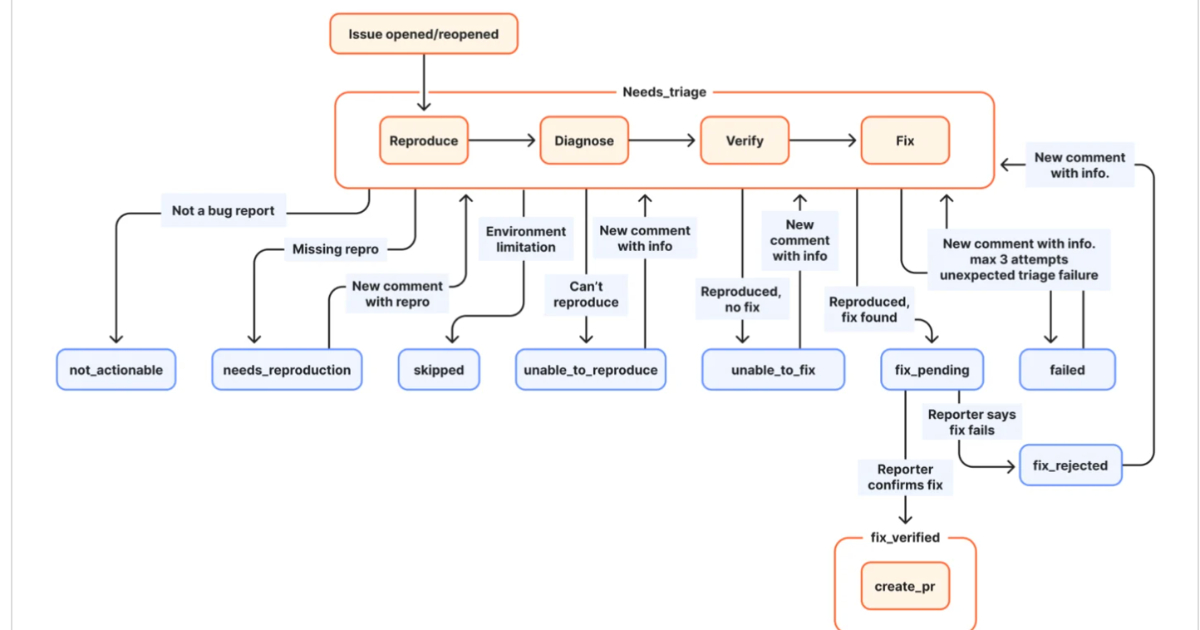
Cloudflare’s recent implementation of AI agents to manage GitHub issues within their Astro project, resulting in an impressive 85% reduction, underscores a pivotal shift in how software engineering teams can leverage AI to boost developer productivity. This isn't merely about automating a tedious task; it’s a demonstration of agentic AI’s potential to fundamentally reshape workflows. The success of this project builds upon Cloudflare’s broader exploration of AI-driven engineering practices, as detailed in their recent initiative to [Cloudflare Turns Engineering Standards Into an AI-Enforced Control System], highlighting a proactive approach to integrating AI across their internal processes. It’s also relevant to the ongoing conversation around the evolving role of AI in developer tools, exemplified by Slack's ambitions to bring AI coding directly into team communication, as described in [Slack wants to drag AI coding out of the terminal and into the group chat]. The efficiency gains achieved by Cloudflare suggest a future where AI isn't just assisting developers with code, but actively managing and optimizing the entire development lifecycle.
The core of Cloudflare’s solution, built upon Cloudflare Workers and Flue, lies in the intelligent triage of incoming GitHub issues. Rather than relying on manual sorting and prioritization, the AI agents automatically categorize issues, assign them to the appropriate teams, and even suggest potential solutions. The "human in the loop" approach, where developers review and refine the agent’s actions, is crucial. It prevents the system from becoming a black box and ensures that the AI aligns with the team’s judgment and coding standards. This contrasts sharply with the potential pitfalls of unchecked AI code generation, a concern also explored in [Presentation: Enchant Your AI and APIs with eBPF Magic 🪄], which emphasizes the importance of oversight and control when integrating AI into production environments. Cloudflare’s methodology showcases a practical and responsible application of AI, prioritizing accuracy and developer collaboration over purely automated decision-making.
The implications of this development extend far beyond Cloudflare. The sheer magnitude of the productivity gains—85%—is a compelling argument for other organizations to investigate similar AI-powered solutions. While the specific implementation details (Cloudflare Workers, Flue) may be unique to their infrastructure, the underlying principle of leveraging autonomous agents for issue triage and workflow automation is broadly applicable. This represents a move beyond simple code completion tools toward a more holistic integration of AI into the software development pipeline. The challenges remain, of course. Training and maintaining these AI agents requires ongoing effort, and ensuring their accuracy and reliability is paramount. Furthermore, the integration of AI into existing development workflows requires careful planning and a willingness to adapt established processes.
Looking ahead, the successful deployment of AI agents for issue triage by Cloudflare serves as a compelling proof-of-concept for agentic AI’s potential in software engineering. It’s likely we’ll see a proliferation of similar tools and services emerge, catering to the specific needs of different development teams and projects. A key question to watch is how these AI agents will evolve to handle more complex tasks, such as code review, automated testing, and even contribution to the codebase itself. The line between AI assistant and AI collaborator will continue to blur, fundamentally reshaping the role of the software engineer and the future of software development.
Cloudflare, Astro, AI agents, GitHub Actions, issue triage, agentic AI, software architecture, open source, developer tools, AI automation, automated testing, human in the loop, agent workflows, GitHub, software engineering, AI software development, bug triage, continuous integration, developer productivity, autonomous agents, AI coding, Cloudflare Workers, Flue, triagebot
By Leela KumiliRead on the original site
Open the publisher's page for the full experience