Language Model Hallucination Evaluation with GraphEval
Our take
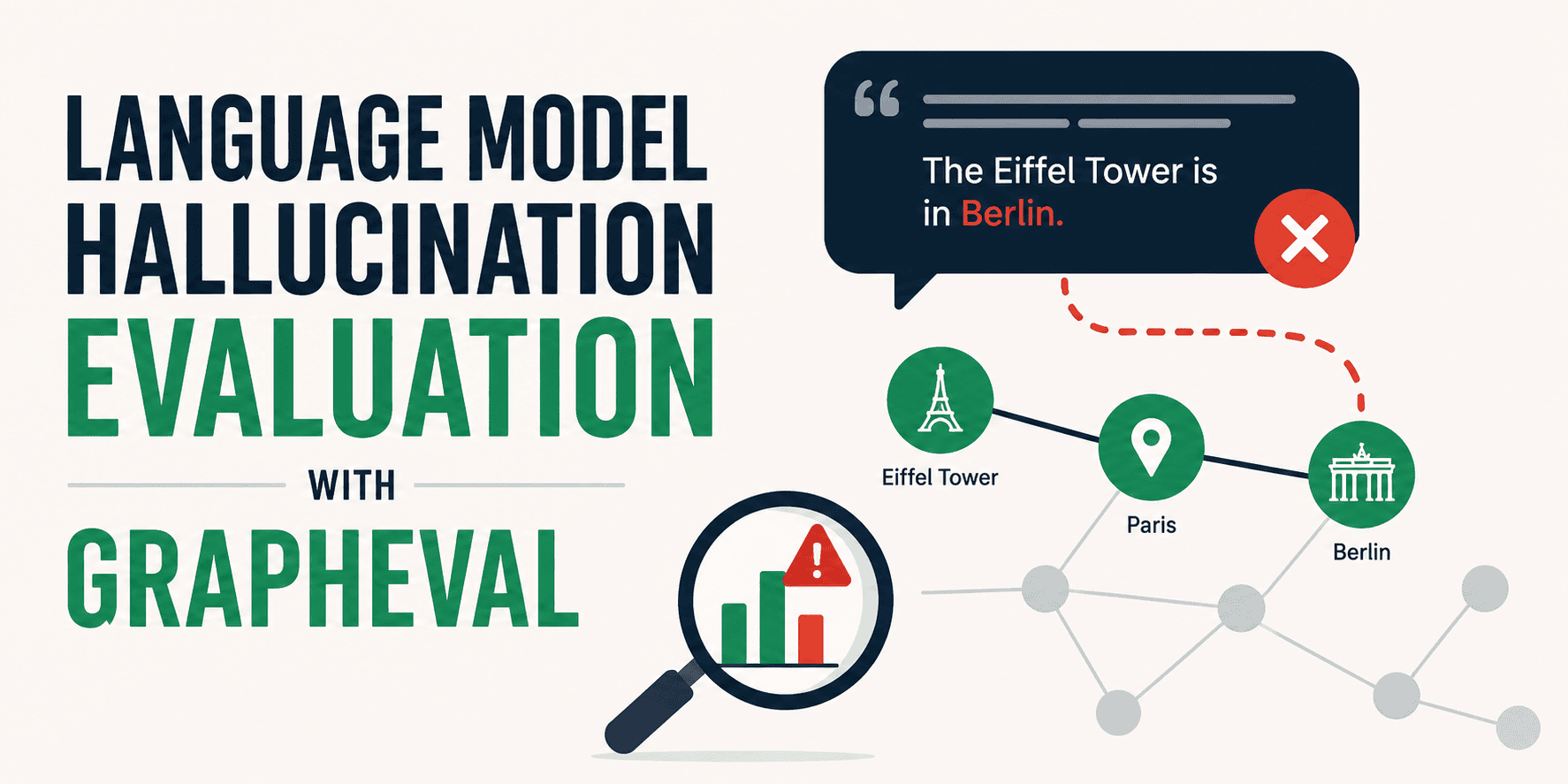
The ongoing challenge of Large Language Model (LLM) hallucinations remains a central concern for anyone deploying these powerful tools, particularly in enterprise settings. Recent explorations like GraphEval, detailed in the article “Language Model Hallucination Evaluation with GraphEval,” offer a promising avenue for better understanding and mitigating this issue. It’s encouraging to see researchers moving beyond simply identifying hallucinations to developing methods for *diagnosing* them – pinpointing the root causes rather than just observing the symptom. This is particularly relevant given the growing complexity of AI deployments, as highlighted in “The agent evaluation gap: Enterprise AI organizations have a reality-alignment problem, not a coverage problem — and most are shipping to production anyway.” Organizations are increasingly granting AI agents more autonomy, often while relying on evaluations that may not accurately reflect real-world performance and alignment with expectations. GraphEval's approach of representing knowledge as graphs and assessing the consistency of LLM responses against that graph feels like a significant step towards more robust and reliable evaluations.
The simulated practical scenario approach described in the article is particularly valuable. Moving from theoretical frameworks to tangible examples demonstrates the utility of GraphEval in a relatable way. The ability to trace inconsistencies back to specific nodes and relationships within the knowledge graph allows for targeted interventions, whether that's refining the training data, adjusting prompting strategies, or re-evaluating the knowledge representation itself. It’s a welcome shift from broad, reactive fixes to a more proactive and diagnostic approach. We’ve previously explored how seemingly simple errors can stem from deeper issues in retrieval augmented generation (RAG) systems; “Most RAG Hallucinations Are Extraction Errors: Seven Patterns for a Typed Generation Contract” offers a detailed look at common pitfalls in RAG pipelines, further emphasizing the importance of granular error analysis tools like GraphEval. The ability to visualize and interrogate the reasoning process behind an LLM’s response, as facilitated by the graph-based evaluation, is a powerful asset for developers and data scientists striving for accuracy and trustworthiness.
The broader significance of GraphEval extends beyond simply addressing hallucinations; it represents a move towards a more structured and transparent understanding of LLM reasoning. Traditional evaluation metrics often focus on surface-level accuracy, failing to capture the underlying knowledge and reasoning processes. By explicitly modeling knowledge as a graph, GraphEval encourages a more holistic assessment of LLM behavior, allowing us to identify not just *what* an LLM gets wrong, but *why*. This shift is critical as we move towards more complex AI applications, where explainability and reliability are paramount. The computational overhead of creating and maintaining these knowledge graphs is undoubtedly a consideration, but the potential benefits in terms of improved accuracy and trust arguably outweigh the costs, especially in high-stakes scenarios. The method allows for a level of scrutiny that is simply not possible with traditional black-box evaluation techniques.
Looking ahead, the most compelling question revolves around the scalability and automation of GraphEval. While the simulated scenario provides valuable insights, the real test will be integrating this methodology into continuous development and deployment pipelines. Can these knowledge graphs be automatically generated and updated to reflect evolving knowledge bases? Can the evaluation process be streamlined to provide rapid feedback to developers? The development of automated tools to construct and maintain these knowledge graphs, alongside automated evaluation processes, will be crucial for widespread adoption. Furthermore, exploring different graph structures and evaluation algorithms to optimize for specific application domains promises to unlock even greater potential for combating LLM hallucinations and building truly trustworthy AI systems.
Read on the original site
Open the publisher's page for the full experience