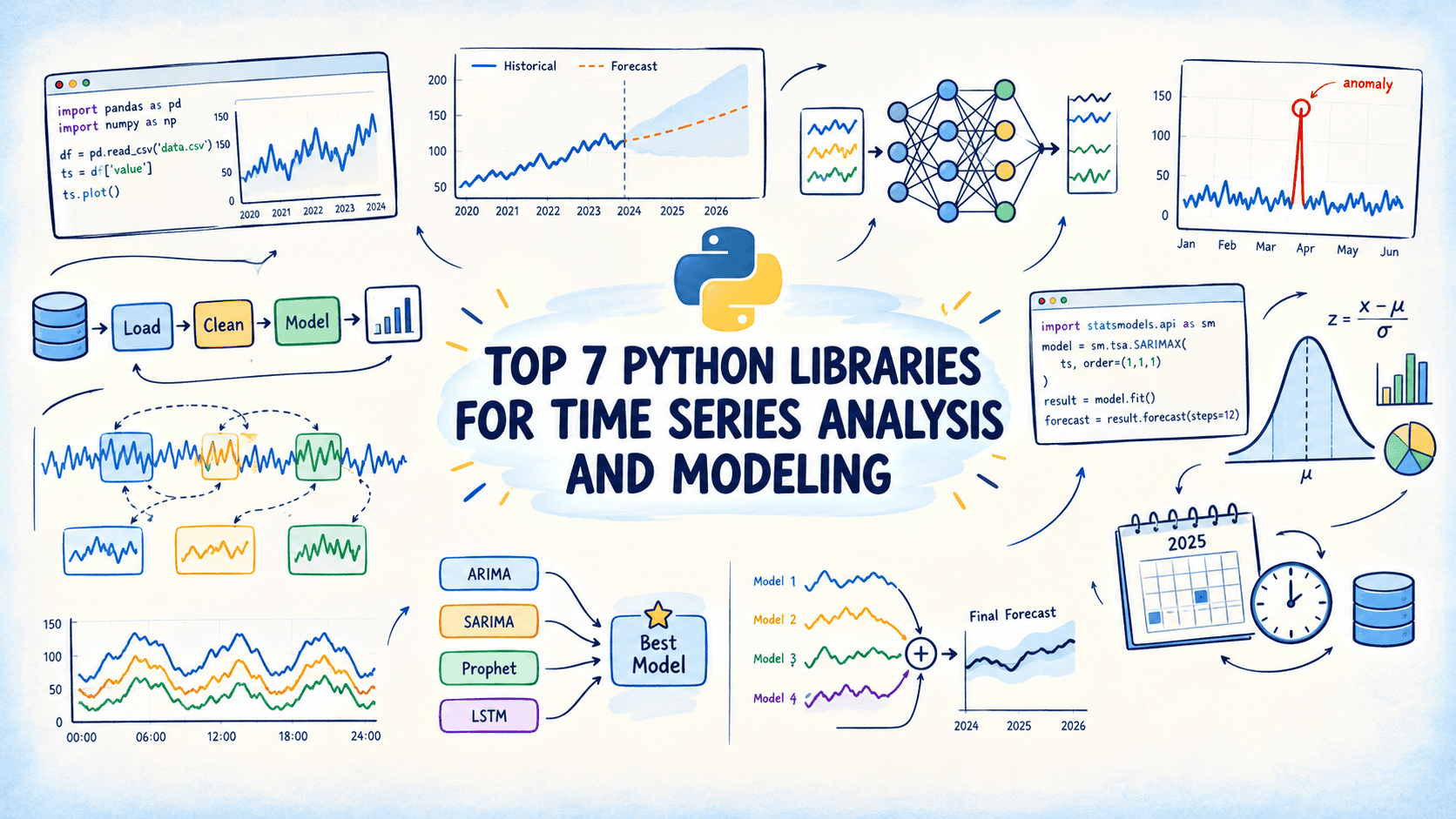
Time series analysis has long been a domain where the barrier to entry felt unnecessarily high, often requiring a deep statistical background or expensive proprietary software. The emergence of accessible Python libraries that handle everything from classical forecasting to deep learning and anomaly detection signals a meaningful shift. We believe this is not just a convenience for data scientists; it is a direct invitation for analysts, researchers, and product teams to reclaim their time and focus on what the data actually means, rather than wrestling with the mechanics of the analysis itself.
For anyone who has felt the weight of a stalled research project or the frustration of a tool that fights back, this development aligns with a broader pattern of technology becoming more human-centered. Consider the scholar working to Returning to Research After a Setback: Reclaiming Your Scholarly Path, where the challenge is often rebuilding momentum after a difficult period. A library that simplifies time series forecasting removes one of those technical hurdles, allowing the researcher to spend energy on interpretation and insight rather than debugging a forecast model. Similarly, the ability to Build Persistent Memory for Your AI Agent with a Single JSON File shows how minimal, well-designed code can unlock powerful capabilities. These libraries for time series follow the same philosophy: they are not about adding complexity, but about removing it so that the user can focus on the outcome.
The practical consequence for our readers is straightforward. If you have been avoiding time series work because it felt like a specialized skill, the tools are now approachable enough to change your workflow. Classical methods like ARIMA and exponential smoothing are available alongside modern deep learning approaches, all within the same ecosystem. This means you can start with a simple, interpretable model and only introduce complexity when your data demands it. The key is that you are no longer locked into a single approach; you can experiment, compare, and iterate without switching tools or languages. For teams that need to process large volumes of data quickly, the ability to Explore 7,000 pages in minutes with Python and Olostep's batch API demonstrates that speed and scale are now accessible to anyone with a script, not just those with enterprise infrastructure.
The specific takeaway is this: the next time you face a dataset with timestamps, you have no excuse to settle for a static chart or a gut-feel trend line. Pick a library, run a forecast, and see what the data tells you directly. The open question worth watching is how these libraries handle the gap between a clean, pre-packaged dataset and the messy reality of production data. The documentation will always show a perfect CSV. The real test will come when your sensor data has gaps, your timestamps are inconsistent, and your anomaly detection model needs to learn from a system that is constantly changing. That is where the true accessibility of these tools will be measured.