Optimal Traffic Allocation Under Heterogeneous Variant Cost
Our take
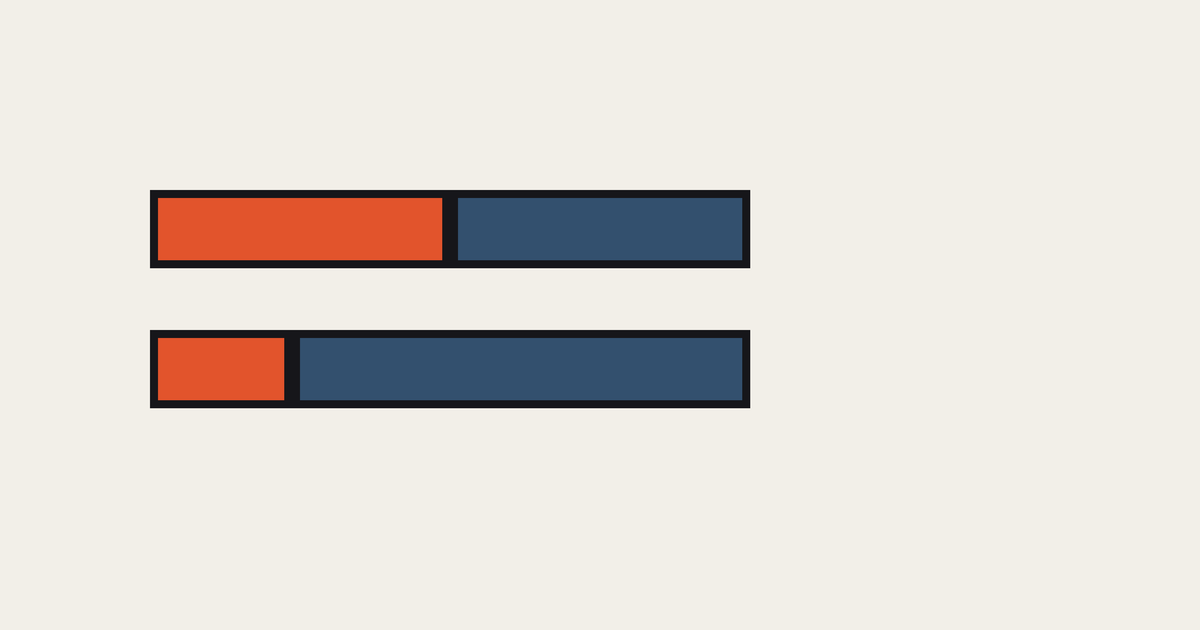
The seemingly simple act of splitting traffic between different versions of a product or experiment—a 50/50 split being the most common default—can introduce significant bias when those versions have differing costs. As explored in the recent *Towards Data Science* piece, "Optimal Traffic Allocation Under Heterogeneous Variant Cost," this default approach fails to account for the economic realities of experimentation. The article rightly points out that a more sophisticated approach, utilizing cost-based sampling weights, is necessary to ensure statistically sound conclusions, especially when one variant is demonstrably more expensive to serve than another. This isn't just an academic exercise; it has direct implications for resource allocation and the efficiency of A/B testing programs across countless organizations. Understanding this nuance is critical, particularly as teams increasingly leverage sophisticated AI models—as discussed in "How to Run 10+ Claude Code Sessions Without a Powerful Computer"—where computational costs can vary drastically between different model configurations or deployment strategies.
The core issue is that a 50/50 split, while easy to implement, doesn't guarantee equal statistical power. If Variant B is twice as expensive as Variant A, a 50/50 split will actually allocate twice as much budget to Variant B, potentially skewing the results. The cost-based sampling weights, as detailed in the article, correct for this by adjusting the traffic allocation proportionally to the cost difference. This allows for a more equitable and efficient use of resources, leading to faster and more reliable conclusions. Furthermore, this aligns with broader trends in data science, where we're seeing a greater emphasis on optimizing for both statistical significance *and* operational efficiency. The ability to run robust experiments without breaking the bank is becoming increasingly vital, especially in resource-constrained environments. Considering how frequently models are deployed and iterated upon, as highlighted by "My Model Worked Perfectly. Then I Tried to Make It Useful," the ability to efficiently test and refine them is a significant advantage.
The broader significance of this development extends beyond simply optimizing A/B testing. It reflects a growing maturity in the field of data science, moving beyond simplistic approaches towards more nuanced and economically aware methodologies. It’s a shift from treating experimentation as a purely statistical endeavor to recognizing it as a strategic investment. Ignoring the cost implications of different variants can lead to suboptimal decisions, wasted resources, and potentially misleading conclusions. This is particularly important as companies grapple with the complexities of deploying AI-powered features and experiences, where the cost of serving different models or personalization strategies can vary significantly. We are seeing a push for more rigorous and reliable experimentation practices, where the statistical soundness of the results is tightly coupled with the financial viability of the implementation.
Looking ahead, it’s worth considering how these cost-based sampling techniques will evolve and integrate with more advanced experimental designs. Will we see automated systems that dynamically adjust traffic allocation based on real-time cost data? How will these methods be adapted to account for other factors beyond cost, such as latency or user experience? The article provides a crucial foundation, but the ongoing exploration of optimal traffic allocation strategies—particularly in the context of increasingly sophisticated AI models and heterogeneous environments—promises to be a fascinating area of development. The implications of overlooking seemingly minor details, like the cost of data handling, as demonstrated in "What We Miss About Missing Values," are a constant reminder of the importance of a holistic and nuanced approach to data analysis.
Why the default 50/50 split is the wrong move when your treatment is more expensive than your control, and how cost-based sampling weights fix it
The post Optimal Traffic Allocation Under Heterogeneous Variant Cost appeared first on Towards Data Science.
Read on the original site
Open the publisher's page for the full experience