Your Model Isn't Done Until Someone Else Can Call It
Our take
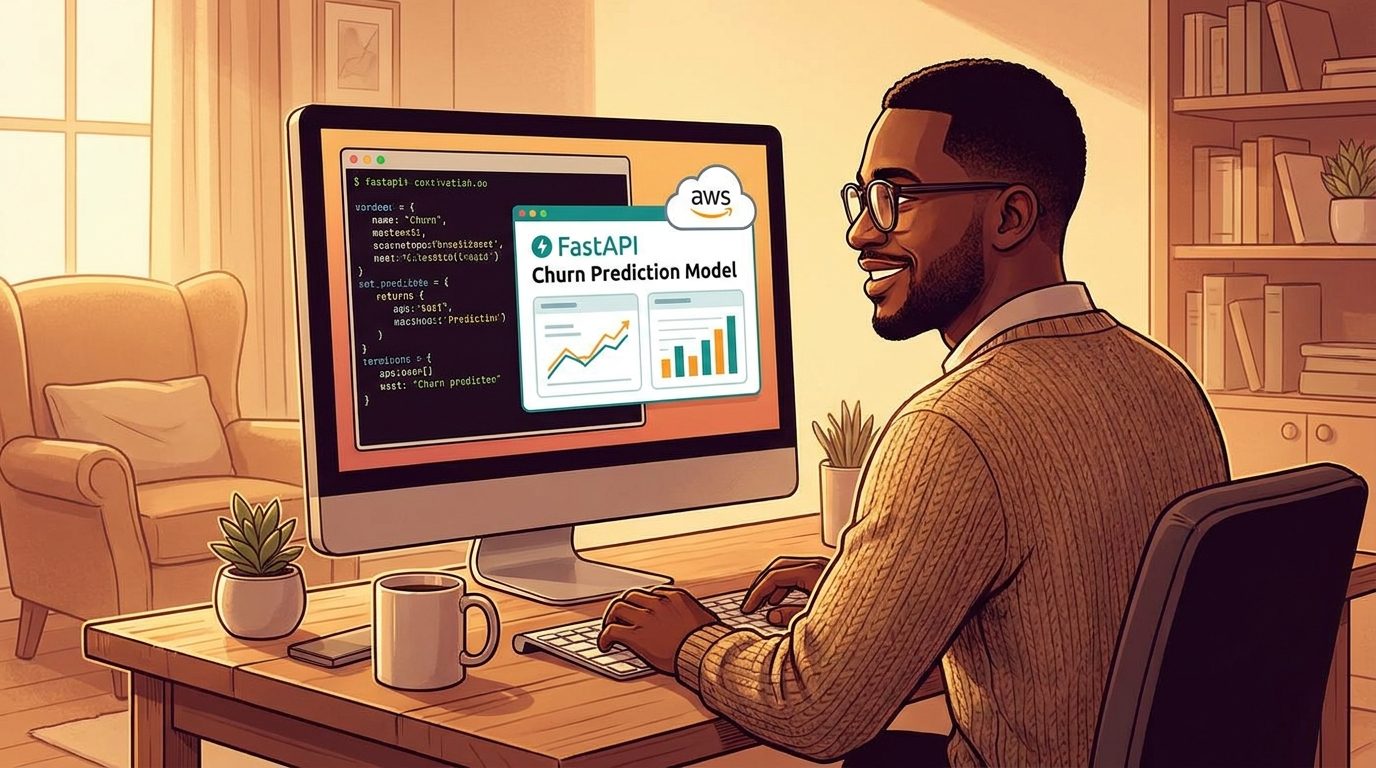
The recent Towards Data Science piece, "Your Model Isn't Done Until Someone Else Can Call It," resonates deeply with the challenges faced by data scientists moving beyond the controlled environment of development to the unpredictable reality of production. The author’s journey, detailing the cascade of issues encountered when deploying a churn prediction model via FastAPI, is a familiar one. It highlights a crucial, often overlooked, stage in the machine learning lifecycle – the transition from “it runs” to “it’s live.” We’ve all been there, celebrating a successful local test only to be confronted with dependency conflicts, data format mismatches, or subtle bugs that only surface under real-world load. The article’s focus on the importance of thorough testing, including integration and performance testing, is a timely reminder that a model's true value isn't determined solely by its accuracy on a held-out dataset, but by its robustness and reliability in a production setting. This emphasis echoes the ongoing discussion around statistical rigor, as explored in "The 95% Illusion: Why Your Confidence Interval Isn't What You Think It Is," demonstrating that confidence in model performance extends beyond initial metrics and requires a deeper understanding of potential pitfalls.
The core issue the article addresses—the disconnect between development and deployment—is increasingly relevant as organizations strive to operationalize AI. It’s not enough to simply build a model; it must be seamlessly integrated into existing systems and workflows. The challenges highlighted – ensuring data consistency across environments, handling API versioning, and monitoring performance – are all critical components of a successful AI deployment strategy. Many teams struggle with these complexities, often treating model deployment as an afterthought. The author’s experience reinforces the need for a more holistic approach, one that incorporates DevOps principles and emphasizes continuous integration and continuous delivery (CI/CD) pipelines specifically tailored for machine learning. Furthermore, the discussion of potential confounding variables, as explored in "How to handle cofound variables?" demonstrates that even a seemingly well-performing model can be susceptible to biases or inaccuracies when exposed to new data distributions in production, underlining the importance of ongoing monitoring and retraining.
The article’s value extends beyond simply recounting a troubleshooting experience. It serves as a practical guide for data scientists and engineers seeking to improve their model deployment processes. By explicitly outlining the areas where things can break down – from environment configuration to API design – the author provides a valuable checklist for avoiding common pitfalls. The shift towards serverless functions and containerization technologies, like Docker, aims to address some of these challenges by providing more consistent and reproducible environments. However, as the article demonstrates, these tools are not silver bullets and require careful configuration and testing. The move toward more automated and reproducible AI workflows is essential for unlocking the full potential of machine learning. The challenges highlighted in the article, and the ongoing conversations around best practices, underscore the need for a culture of continuous learning and improvement within data science teams.
Looking ahead, the increasing complexity of AI models – particularly the rise of large language models and generative AI – will only exacerbate the challenges of deployment and monitoring. Ensuring these models are reliable, scalable, and ethically sound in production will require even more sophisticated tooling and processes. The discussion around site selection for Neurips 2026 [Neurips 2026: site selection email [D]] hints at the broader organizational shifts needed to support cutting-edge AI research and deployment. The question becomes: how can we build systems that not only deploy models effectively but also continuously monitor their performance, detect and mitigate biases, and adapt to evolving data distributions, all while maintaining transparency and accountability? The answer likely lies in a combination of robust engineering practices, advanced monitoring tools, and a commitment to ongoing learning and adaptation.
Building a FastAPI endpoint for churn prediction, and everything that broke between "it runs" and "it's live
The post Your Model Isn't Done Until Someone Else Can Call It appeared first on Towards Data Science.
Read on the original site
Open the publisher's page for the full experience