data visualization tools
144 stories filed under data visualization tools on Beyond Market Intelligence. The newest of them: “Your Data Pipeline Deserves More Than an Overcrowded Tool List”, “Xiaomi's latest open models deliver powerful AI at an accessible price”, and “From First Prompt to Production AI in Under a Year”. Choosing the right ETL tools is crucial when building a robust data stack, yet the abundance of overlapping options can be overwhelming. Xiaomi has unveiled the MiMo-V2.5 and MiMo-V2.5-Pro, two powerful open-source AI large language models designed for efficient agentic "claw" tasks. Acme AI is the next-generation, AI-powered spreadsheet platform built to replace Excel and redefine how analysts, data scientists, and enterprise teams work… The list below is every data visualization tools story on Beyond Market Intelligence, newest first.
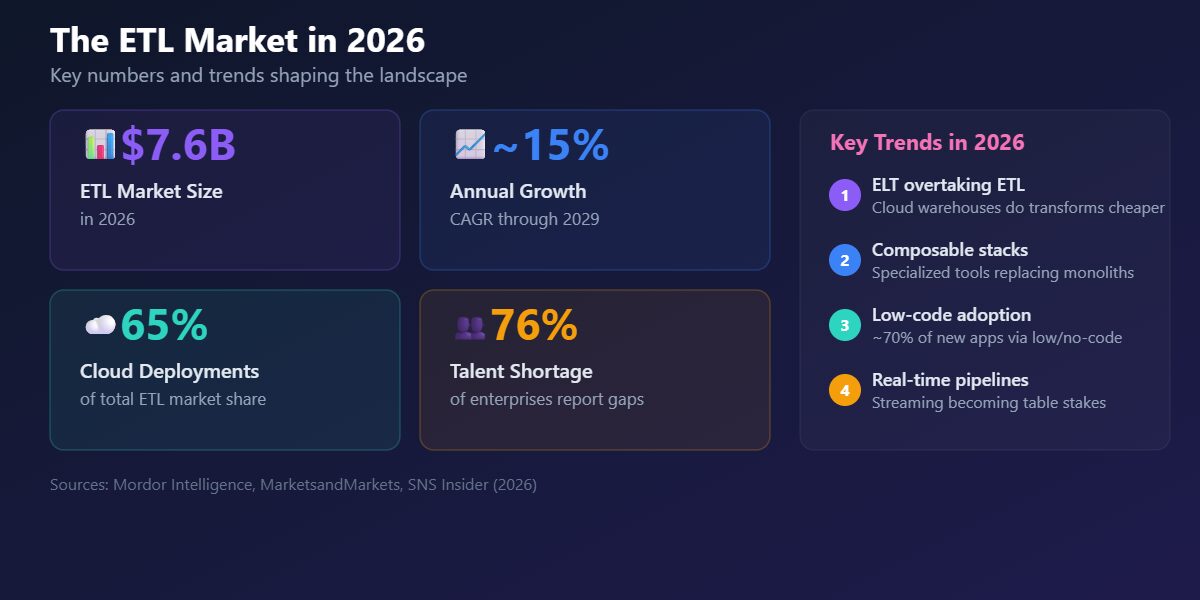
Your Data Pipeline Deserves More Than an Overcrowded Tool List
Choosing the right ETL tools is crucial when building a robust data stack, yet the abundance of overlapping options can be overwhelming. In 2026, the landscape continues to evolve, making it essential to understand which tools align with your specific needs. This practical guide not only highlights the best ETL tools available but also provides clear code examples to facilitate your decision-making process.

Xiaomi's latest open models deliver powerful AI at an accessible price
Xiaomi has unveiled the MiMo-V2.5 and MiMo-V2.5-Pro, two powerful open-source AI large language models designed for efficient agentic "claw" tasks. Available under the MIT License, these models empower developers to adapt and deploy them in commercial applications without restrictions. Notably, MiMo-V2.5-Pro boasts a leading 63.8% success rate while using significantly fewer tokens than competitors for similar tasks. With competitive pricing and a commitment to innovation, Xiaomi positions itself as a formidable player in the open-source AI landscape, inviting developers to explore transformative
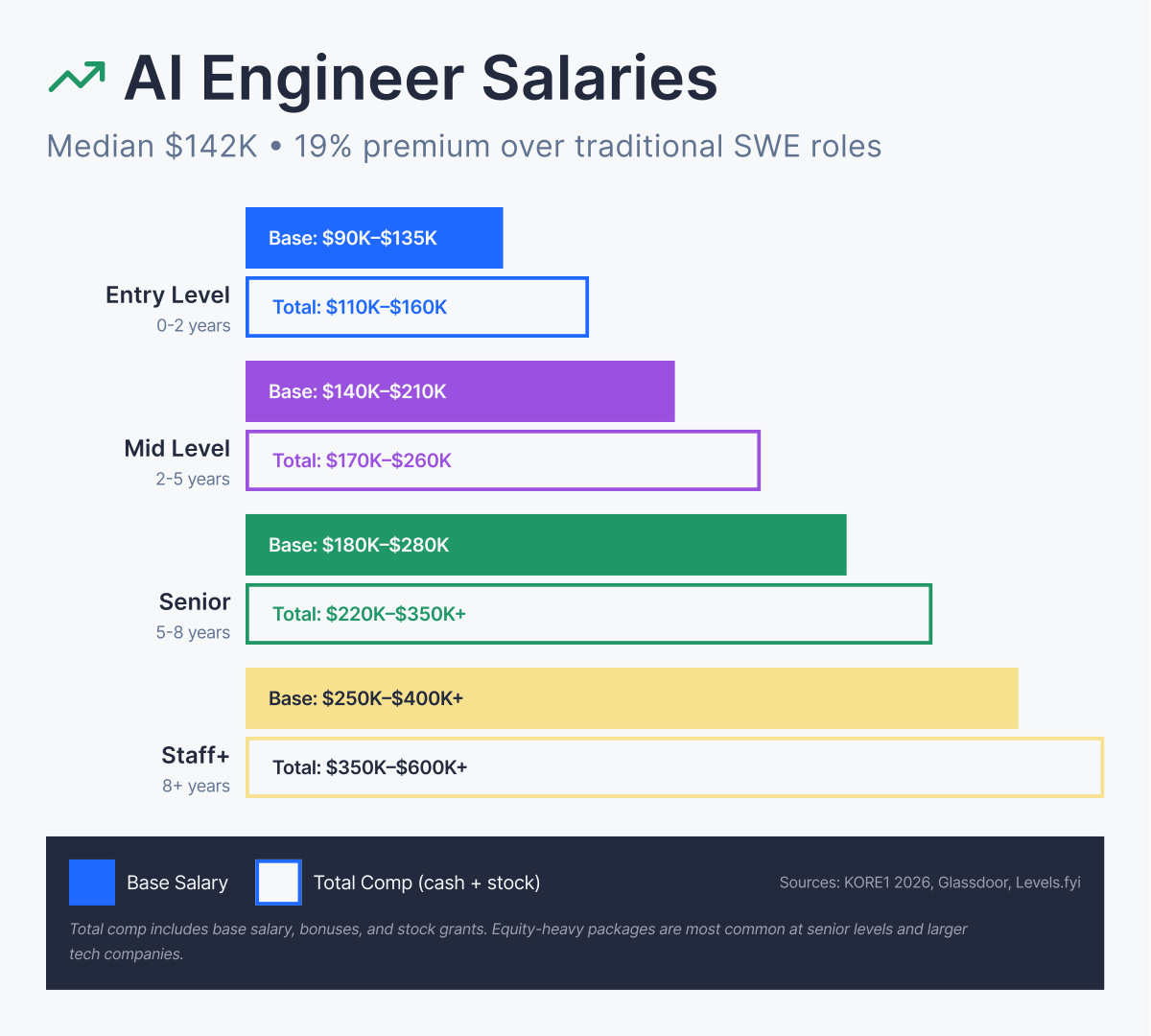
From First Prompt to Production AI in Under a Year
This comprehensive roadmap outlines the essential skills you need to acquire, such as Python, LLM APIs, RAG, and agents, presented in a logical learning sequence. With a realistic timeline of 8 to 12 months to transition from your first LLM prompt to deploying production AI systems, you'll also discover current salary expectations ranging from $130K to $250K+, depending on your experience.

Explore how AI image generation now masters multilingual text, infographics, and more.
OpenAI's ChatGPT Images 2.0 is here, redefining the possibilities of AI-generated visuals. This latest update introduces a suite of remarkable features, including multilingual text generation, full infographics, and even manga creation. After extensive testing, this advanced model demonstrates enhanced reasoning capabilities, allowing it to synthesize complex information and produce coherent, high-quality images. With its ability to generate multiple distinct outputs from a single prompt, ChatGPT Images 2.0 empowers users to explore innovative creative workflows while ensuring safety and accuracy.

Google's new AI agents blend web and private data into one research flow.
On Monday, Google unveiled its most significant upgrade to autonomous research agents with the launch of Deep Research and Deep Research Max. These new agents seamlessly integrate open web data with proprietary enterprise information through a single API call, enabling the generation of native charts and infographics within research reports. Built on the advanced Gemini 3.
Human Judgment Still Powers the Future of AI-Driven Playtesting
In "Dragons, Data Science, and Game Design," I explore the critical intersection of human insight and machine learning in tabletop game design. Having developed AI models for playtesting, I uncovered the profound importance of human involvement in shaping these tools. The author reflects on early mistakes and lessons learned, emphasizing key insights such as the significance of sample size, data stratification, and the unexpected challenges of data drift.
Session Timeouts Deserve Accessible Design, Not Silent Dead Ends
Session timeouts often go unnoticed, yet they can pose significant accessibility barriers in authentication design. Poorly managed timeouts disrupt critical online tasks, particularly for users with disabilities, leading to frustration and inefficiency. This discussion highlights the importance of thoughtful session management in enhancing usability and fostering a more inclusive web experience. By implementing strategies that prioritize accessibility, we can transform session handling into a seamless aspect of user interaction, ensuring that all individuals can engage with digital platforms without unnecessary interruptions.

Claude Design turns prompts into polished prototypes, no design skills required.
Anthropic has launched Claude Design, an innovative AI tool that transforms conversational prompts into polished prototypes, challenging established platforms like Figma. This new offering enables users to create interactive designs, slide decks, and marketing materials with intuitive editing controls and a seamless workflow. Available immediately in research preview for paid subscribers, Claude Design represents Anthropic's strategic shift toward becoming a full-stack product company. By integrating design capabilities with its powerful Claude Opus 4.

Salesforce turns its entire platform into raw infrastructure for AI agents.
Salesforce has unveiled "Headless 360," a groundbreaking architectural transformation that redefines its platform by exposing every capability as an API, CLI command, or MCP tool. This initiative empowers AI agents to operate seamlessly without relying on a traditional graphical interface. Launched during the TDX developer conference, Headless 360 introduces over 100 new tools for developers, marking a significant shift in enterprise software.

Claude Opus 4.7 arrives, giving you a smarter, simpler path through complex data.
Anthropic has unveiled Claude Opus 4.7, marking its most powerful large language model to date and retaking the lead in the competitive landscape of AI. This release surpasses OpenAI's GPT-5.4 and Google's Gemini 3.1 Pro in critical benchmarks, particularly in agentic coding and knowledge work. While Opus 4.7 excels in hard sciences and autonomous workflows, it requires careful prompting to maximize its capabilities. With enhanced self-verification and multimodal support, this model positions itself as a specialized powerhouse for enterprises seeking reliable AI solutions.

The jagged frontier: Why AI reliability is the next enterprise hurdle
According to Stanford HAI's ninth annual AI Index report, frontier models are struggling, failing in about one in three production attempts, a gap that poses significant challenges for IT leaders in 2026. This phenomenon, dubbed the "jagged frontier," highlights the disparity between AI capabilities and reliability. Despite impressive improvements in benchmarks, such as a 30% gain on Humanity's Last Exam, models still falter in basic tasks, underscoring the urgent need for better transparency and more effective evaluation methods in AI deployment.

One prompt, endless possibilities: Firefly AI unifies your entire Creative Cloud workflow.
Adobe has unveiled the Firefly AI Assistant, a groundbreaking tool designed to streamline creative workflows across its entire Creative Cloud suite. By allowing users to manage complex tasks in Photoshop, Premiere, Illustrator, and more through a single conversational interface, Firefly represents a significant shift in how creatives interact with technology. This launch also includes new features such as a Color Mode for Premiere Pro and enhanced collaboration tools.
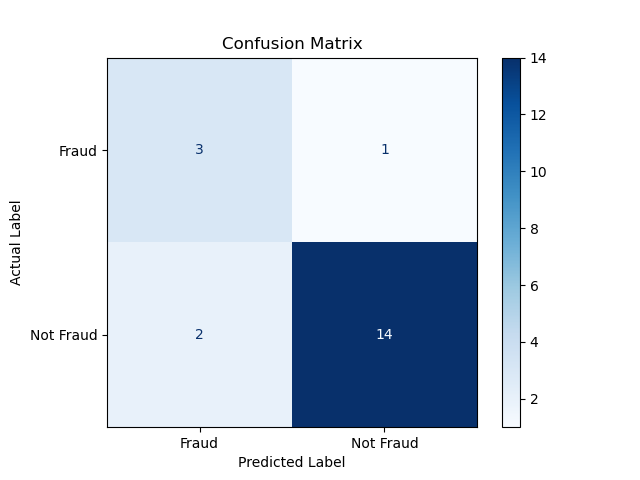
Move Beyond Accuracy: Read the Confusion Matrix to Know What Your Model Gets Right
A confusion matrix in machine learning is essential for distinguishing between perceived success and actual performance. For instance, you may have trained a classification model to detect credit card fraud that boasts a 98% accuracy rate, leaving stakeholders excited. However, the reality could be starkly different if the model simply labels every transaction as legitimate. Understanding the confusion matrix allows you to critically evaluate your model's effectiveness, revealing insights that empower you to enhance its predictive capabilities and ensure reliable outcomes.
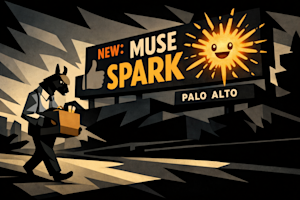
Meta's Muse Spark ushers in a new era of AI models beyond Llama.
Meta has unveiled Muse Spark, its first proprietary AI model since the formation of Meta Superintelligence Labs, signaling a significant shift from the open-source Llama family. Under the leadership of Chief AI Officer Alexandr Wang, Muse Spark is designed to support tool use, visual reasoning, and multi-agent orchestration, marking a leap in AI capabilities. Unlike its predecessors, Muse Spark aims to deliver "personal superintelligence," integrating visual data to enhance user interactions.

Open source AI accelerates as GLM-5.1 brings capable coding to everyone.
Today marks a significant milestone in artificial intelligence as Z.ai unveils GLM-5.1, an open-source large language model designed for eight-hour autonomous tasks. This model outperforms competitors like Opus 4.6 and GPT-5.4 on SWE-Bench Pro, showcasing its advanced capabilities in coding and engineering tasks. Released under a permissive MIT License, GLM-5.1 empowers enterprises to customize and utilize its features for commercial applications. As China re-emerges in the open-source AI landscape, GLM-5.1 positions Z.ai as a leader in

Square's Managerbot turns proactive AI into a quiet business partner for sellers.
Block has unveiled Managerbot, a proactive AI agent integrated into the Square platform, designed to monitor sellers' businesses, identify potential issues, and propose actionable solutions without requiring prompts from users. This innovation marks a significant evolution from the previous reactive AI assistant, showcasing CEO Jack Dorsey's vision for AI's transformative role in business operations. By seamlessly managing inventory forecasting, employee scheduling, and marketing campaigns, Managerbot empowers small business owners to enhance their productivity and decision-making, reinforcing Square’s commitment to supporting sellers in their day-to-day commerce.

The enterprise edge shifts to governed data, not newer models.
As enterprise AI evolves, the focus is shifting from model capabilities to the governed data that fuels them. Unstructured data, encompassing everything from contracts to internal knowledge, is where genuine advantage lies. Leaders must prioritize platforms that effectively govern this content, ensuring accessibility and compliance. Box's Yash Bhavnani and Ben Kus emphasize that the organizations poised to lead are those that establish robust governance infrastructures, enabling trustworthy AI applications that integrate seamlessly with their systems of record.

AI agents that prevent, detect, and fix software issues arrive with NeuBird's Falcon launch.
NeuBird AI is transforming incident management with the launch of Falcon and FalconClaw, innovative AI agents designed to prevent, detect, and resolve software issues autonomously. As enterprises navigate increasingly complex infrastructures, the need for proactive solutions has never been more critical. Moving beyond traditional incident response, NeuBird AI emphasizes incident avoidance to minimize operational chaos. With a recent funding round of $19.3 million, the company aims to empower engineers by reducing alert fatigue and streamlining workflows, ultimately enhancing productivity and reliability across tech environments.
DAAF: Open-Source AI Workflow Accelerates Data Analysis Without Losing Rigor
Today, I'm excited to introduce DAAF, the Data Analyst Augmentation Framework. This open-source, extensible workflow for Claude Code empowers skilled researchers to enhance their data analysis capabilities by 5-10 times, all while upholding the scientific principles of transparency, rigor, and reproducibility. With just a 10-minute setup, you can leverage DAAF to transform your research process. By embracing the role of human researchers and providing essential guardrails, DAAF ensures that AI becomes a supportive tool, fostering collaboration and innovation in data analysis.

Karpathy's AI-maintained markdown library points past traditional RAG.
Andrej Karpathy, a pivotal figure in AI, introduces his innovative "LLM Knowledge Base" architecture, which sidesteps traditional Retrieval-Augmented Generation (RAG) methods. By leveraging a Markdown library maintained by AI, he addresses the common frustration of context-limit resets in AI development. This approach transforms raw data into a dynamic, self-updating knowledge repository, where the LLM acts as an active research librarian.
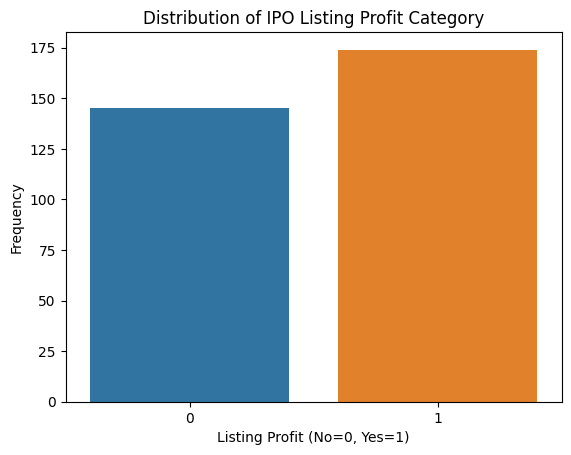
Forecasting IPO Listing Day Moves with Accessible Machine Learning
In the dynamic world of initial public offerings (IPOs), predicting listing gains is crucial for investment firms managing multiple listings annually. Speculation abounds as companies set their initial prices, but the market's verdict on listing day can significantly impact capital allocation. This project tutorial explores how to leverage TensorFlow to forecast IPO performance, turning uncertainty into informed decision-making. By harnessing advanced machine learning techniques, you can enhance your investment strategies, minimize costly miscalculations, and fully capitalize on market opportunities.

Gemma 4 opens doors with Apache 2.0, shifting enterprise AI choices.
Google's release of Gemma 4 under the Apache 2.0 license marks a significant shift in the open-weight model landscape, eliminating previous licensing complexities that hindered enterprise adoption. This new model family offers four distinct configurations, catering to both workstation and edge deployments, while ensuring seamless integration of text, image, and audio capabilities. With strong performance benchmarks and a commitment to accessibility, Gemma 4 empowers organizations to leverage advanced AI without the legal obstacles that once caused friction.

From demo to done: Softr's AI Co-Builder turns ideas into business apps
Softr, the Berlin-based no-code platform trusted by over one million builders and organizations like Netflix and Google, has launched an AI-native platform designed to empower non-technical teams to create production-ready business applications without code. The innovative AI Co-Builder allows users to articulate their software needs in plain language, generating fully integrated systems ready for real-world deployment. This groundbreaking move addresses the gap between flashy demos and functional business software, reinforcing Softr’s commitment to providing accessible and efficient solutions for today’s complex data management challenges.
Explore how a reflow-free web could transform data interaction.
Cheng Lou, a renowned software engineer, has unveiled Pretext, an open-source standard poised to transform web design. This innovative 15KB TypeScript library bypasses traditional DOM constraints, enabling seamless multiline text layout in "userland." By decoupling text measurement from the browser's architecture, Pretext significantly enhances performance, allowing for dynamic, interactive text that adapts fluidly to various web elements. With early demos showcasing its capabilities, Lou’s creation promises to redefine how developers approach web interactivity, paving the way for a more engaging and responsive online experience.