prompt engineering
56 stories filed under prompt engineering on Beyond Market Intelligence. The newest of them: “The invisible risk that makes prompt injection a real priority”, “Shortening prompts costs more; asking for brevity saves.”, and “Testing the boundaries of AI safety with Claude's content filters”. The expert vote and the incident record are two witnesses telling different stories about the same risk. Recent research definitively answers a critical question: does instructing an LLM to "be concise" actually save money? Acme AI is the next-generation, AI-powered spreadsheet platform built to replace Excel and redefine how analysts, data scientists, and enterprise teams work… The list below is every prompt engineering story on Beyond Market Intelligence, newest first.

The invisible risk that makes prompt injection a real priority
The expert vote and the incident record are two witnesses telling different stories about the same risk. Prompt injection holds the top spot on the OWASP list, yet it lands at No. 12 in the public record. That gap is not a measurement failure. It is a visibility problem. The attack leaves no CVE behind. Build your controls around your own exposure, and treat the ranking as a map, not a mandate.
Shortening prompts costs more; asking for brevity saves.
Recent research definitively answers a critical question: does instructing an LLM to "be concise" actually save money? Across nine models—including GPT-4o and Claude Haiku—our analysis reveals a clear winner: prompting for shorter output consistently reduces costs by 1.5x on average (up to 3x in some cases) while maintaining accuracy. Conversely, shortening input prompts proved counterproductive, increasing costs and diminishing answer quality. This highlights a key insight: controlling output tokens is the most effective strategy for cost optimization, as demonstrated in our paper.

Testing the boundaries of AI safety with Claude's content filters
Anthropic's Opus 4.6 is supposed to be a disciplined model, yet TechCrunch's tests reveal a glaring gap: a simple nudge was enough to bypass its guardrails and generate explicit content. That fragility matters because it shows how easily safety measures can be outmaneuvered, even by casual users. It's a reminder that robust AI governance isn't just about intent; it's about engineering resilience. For more on how Anthropic is navigating infrastructure bets, our piece on Akamai's cloud offers useful context.

Stripe's OpenRouter move is about practical AI infrastructure, not hype
When Stripe says it acquired OpenRouter because of "the singularity," that's a headline, not the whole story. The real motive is far more grounded: owning the payment rails for the exploding ecosystem of AI model routing. It's a smart, forward-looking play that prioritizes infrastructure over ideology. This isn't about chasing a sci-fi future. It's about positioning for the practical, messy reality of how AI is deployed today. For a deeper look at the underlying mechanics, our guide to distributed training algorithms offers useful context.
Give your AI agents new skills without retraining the model
Ever wondered how ChatGPT and Gemini pull off PDFs and PowerPoints when an LLM is all they have? The trick isn't a smarter model; it's skills, instructions an agent loads only when needed. That's a clever, accessible idea, and seeing it applied through LangChain makes it feel actionable. We like how this reframes capability as context, not complexity. For a deeper take on how agents learn by editing context rather than weights, check out our piece on Agentic Context Learning. It's a natural next step.
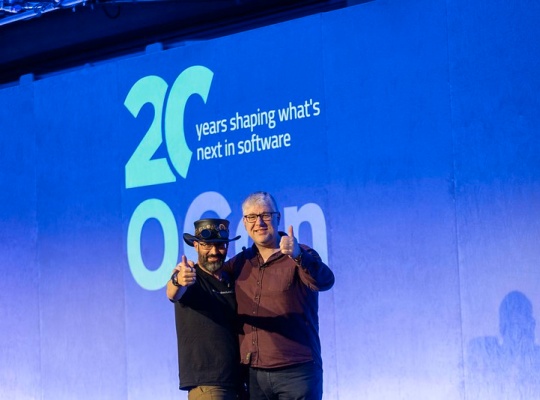
Smarter Prompts, Not Bigger Ones: Engineering Context That Works
Big context windows feel like the easy answer, but Baruch Sadogursky and Patrick Debois argue otherwise in their session, "The Right 300 Tokens Beat 100k Noisy Ones." They show why stuffed prompts drag coding agents down, then offer practical fixes like lazy-loaded skills and externalized memory banks. It is a grounded, useful take for engineering leaders wrestling with agentic workflows.

Install Claude Code and discover a smarter way to work from your terminal
You have probably heard by now: Claude Code burns through usage limits. Most of us live in the web app, though, distant from the terminal where the real buzz lives. That gap might have sparked your curiosity. Maybe you already know exactly what it is and just want it running. Either way, this guide cuts through the setup friction. It is a practical, no-nonsense walkthrough.
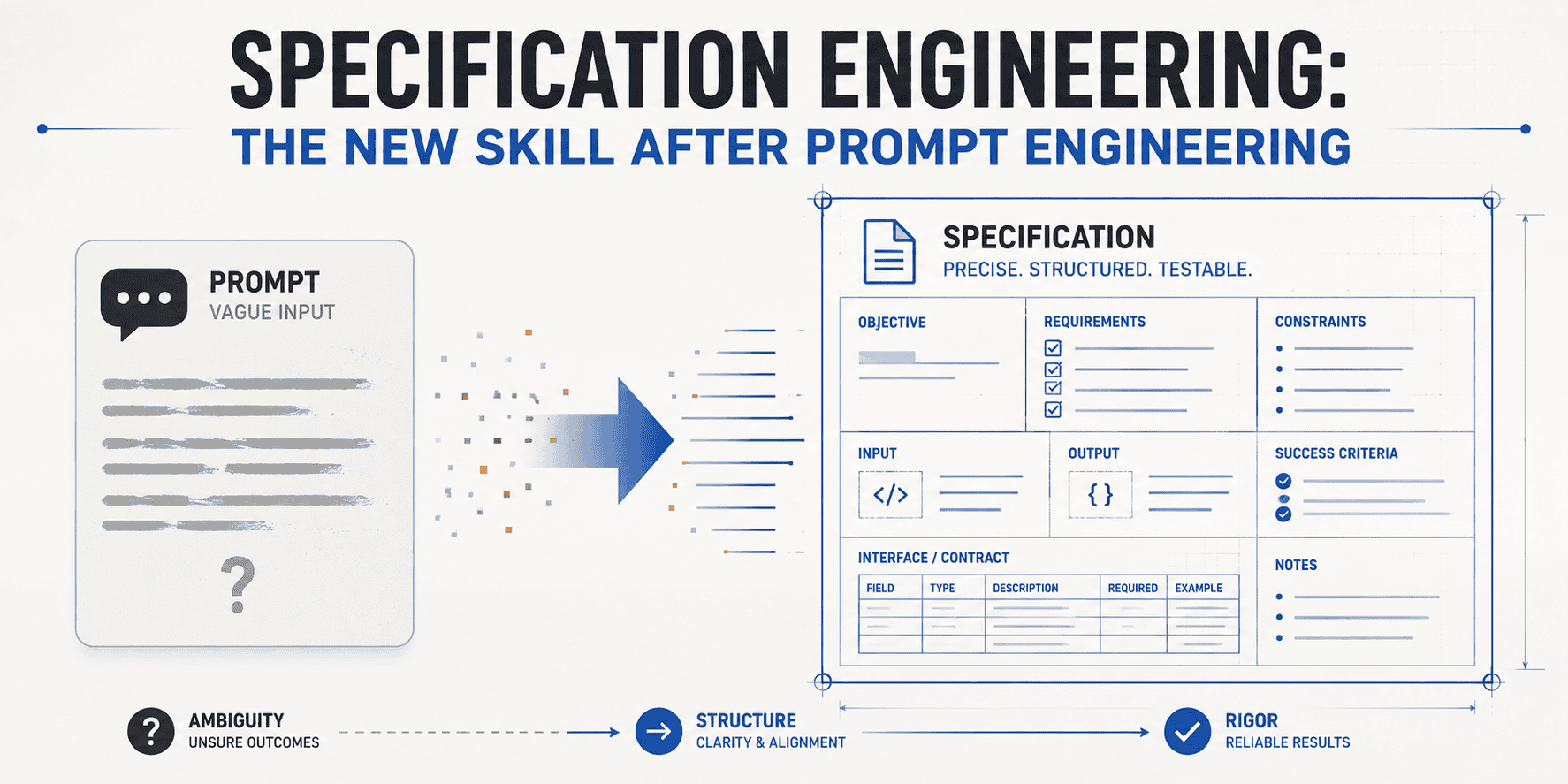
From Prompt to Purpose: The Shift Toward Specifying Work
Prompt engineering taught us how to ask better questions. Specification engineering teaches us how to define better work. That's the natural next step, and it's one worth exploring if you've ever felt the limits of a clever prompt. We're moving from conversational nudges to precise, actionable blueprints. For a deeper look at how AI can misunderstand even clear instructions, our piece on verifying your AI's understanding offers a practical checkpoint. This skill is about taking control, and that's a shift we can get behind.

From 60 years of databases to 18 months of agents, memory bridges the gap.
Six decades of database engineering. Eighteen months of modern AI agents. That ratio explains everything about the state of agentic development right now, we're not mid-curve, we're at its base. Token-maxxing already taught us the hard lesson: context is scarce, and stuffing it isn't strategy. The real answer is persistent, queryable memory, semantic, access-controlled, human-curated, that makes each expensive answer cheap next time. That's the architecture emerging.

Bring Structure to Local LLMs with a Practical Implementation Guide
Structured output turns a local LLM from a clever autocomplete into a dependable tool for real workflows. It's not about caging the model; it's about giving it guardrails so answers arrive clean and usable. The implementation is straightforward once you map your schema, and when things break, you debug with validation errors instead of guesswork. That practical edge makes it worth the setup. For another angle on AI's limits, "Verify Your AI's Understanding: A Simple Check for Tax Season" pairs nicely with this.
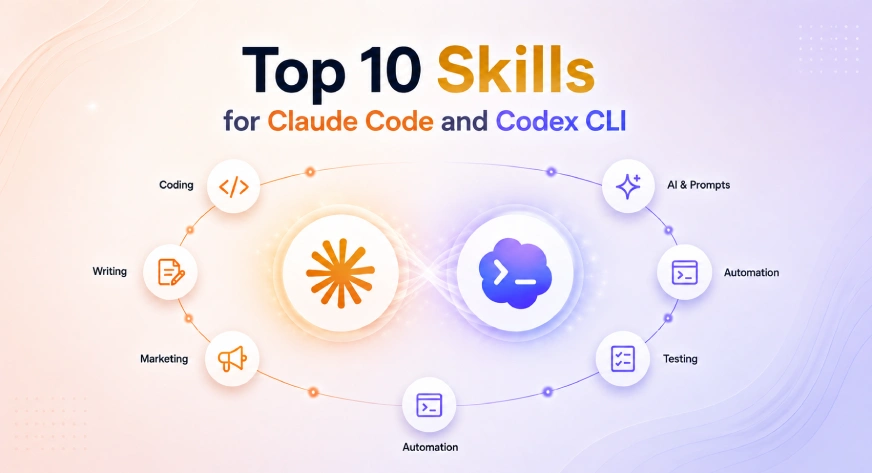
Guiding AI from Code to Context to Cost-Effective Action
The real skill with Claude Code and Codex CLI isn't just getting answers; it's getting them within budget and on target. It's about guiding these tools with clear context and shaping their output into something you can actually use. This list cuts through the noise, focusing on practical moves rather than endless possibilities. For a deeper look at how context shapes AI behavior, our piece on how agents learn by editing context pairs well here. Start with the essentials and build from there.
Three Lessons from 400,000 Sessions on What Actually Works
For years, we treated Claude Code workflows as personal preference. Pick your mode, set your memory, move on. That thinking was comfortable, but it was also wrong. Anthropic analyzed roughly 400,000 sessions from over 235,000 users, scoring them against hard evidence of success: passing tests, landed commits, and confirmed user satisfaction. The result? Best practices are not a matter of taste. They are measurable, and they can be learned. This is what the data actually shows, and it is worth your attention.

Asana's AI agents share team memory without exposing your secrets
Asana's new Agentic Work Management platform attacks a real problem: AI agents that can't remember what happened five prompts ago. The company built AWM on its 18-year-old Work Graph, turning a static database into shared memory for AI teammates. That's the smart bet, context is the moat, not the model. Bose's guardrail for confidential projects is the detail worth noting; it keeps shared memory from leaking into unauthorized hands. For teams tired of stateless chatbots, this is a practical path forward.

Master reasoning budgets to make your AI work smarter, not harder
Controlling how much an LLM thinks before it answers is quietly becoming one of the most practical levers in AI. This post breaks down reasoning effort and token budgets with the kind of clarity that makes you wonder why it took so long to ask. It's not about hype; it's about giving users a dial they can actually turn. If you're tired of guessing why some responses feel overthought or rushed, this is worth your attention.
Why I Stopped Installing Skills and Found a Smarter Workflow
There's a quieter path past the constant churn of installing Claude Skills. I stopped adding them to my workflow, and the shift has been liberating. Instead of stacking tools, I'm focusing on direct conversations with the model, letting it adapt to my specific needs in the moment. It feels less like managing a toolbox and more like collaborating. If you're curious about the limits of this kind of interaction, our piece on talking to an AI clone offers a useful counterpoint.

Smarter Context, Not More Context, Unlocks Smarter Coding Agents
Most coding agents drown in the very context meant to help them. They gather more files, add more data, and hope the model sorts it out. It doesn't work. Irrelevant code competes for attention, and when the window fills, agents compress their own memory mid-task. That's not forgetting; that's degraded context. Treat prompt construction like a compiler, deciding what to keep, reduce, or discard. It's a practical, human-centered fix.
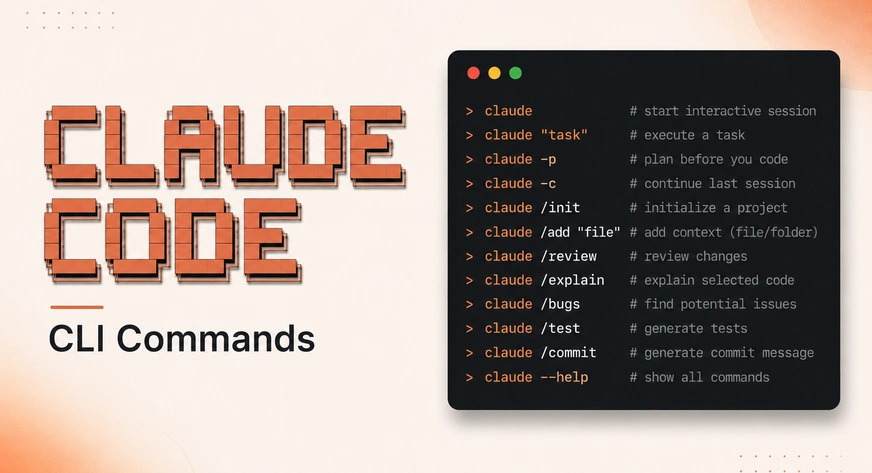
Unlock Hidden Commands to Transform Your CLI Workflow
Months of daily use, and the real power of Claude Code only surfaced by accident. This author kept restarting sessions, re-explaining the same project structure, simply because `claude --help` hides the full picture. It's a familiar frustration, and their discovery of a deeper CLI reference is a practical win for anyone tired of repetitive setup. Digging past the surface reveals a smoother workflow. For more on questioning AI's limits, our piece on talking to an AI clone offers a fitting follow-up.

Streamline Your Coding Agent Workflow for Smarter Task Management
If you're juggling multiple coding agents, the chaos of scattered tasks can quickly become its own project. This guide cuts through the noise, offering a practical way to organize every request and keep your workflow moving. It's a straightforward approach for anyone tired of losing track of what each agent should be doing. For more on how AI handles structured work, our related piece on paragraph structure is worth a look.

Your prompts need a safety net before one rename breaks production.
One variable rename broke every live call. That's the failure mode prompt engineering can't solve. Writing better prompts matters, but managing them safely at scale is where production systems actually live. Treating prompts like contracts, backed by lightweight static analysis that catches breaking changes before they ship, prevents production failures. It's a practical, grounded take on a real operational gap. For a deeper look at how LLMs navigate structure, our related piece on paragraph token space pairs well here.
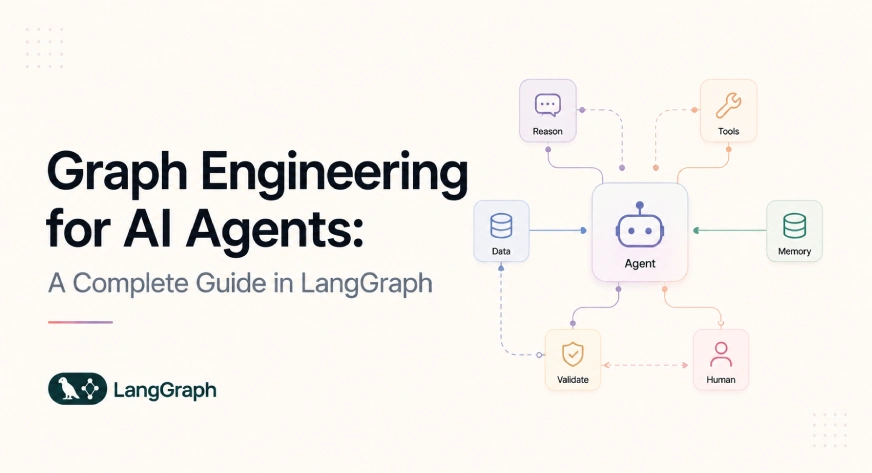
Design Your AI Workflows with Graph Engineering, Not Just Agent Loops
Single-agent loops are only part of the story. Graph engineering treats AI applications as explicitly designed workflows, where agents, tools, validators, and humans coordinate with intention. It's a shift from autonomous tinkering to deliberate architecture. That distinction matters. Moving beyond isolated prompts and toward systems that feel engineered, not improvised is a strong case. If you're curious how such coordination plays out in practice, our piece on talking to an AI clone offers a grounded counterpoint.
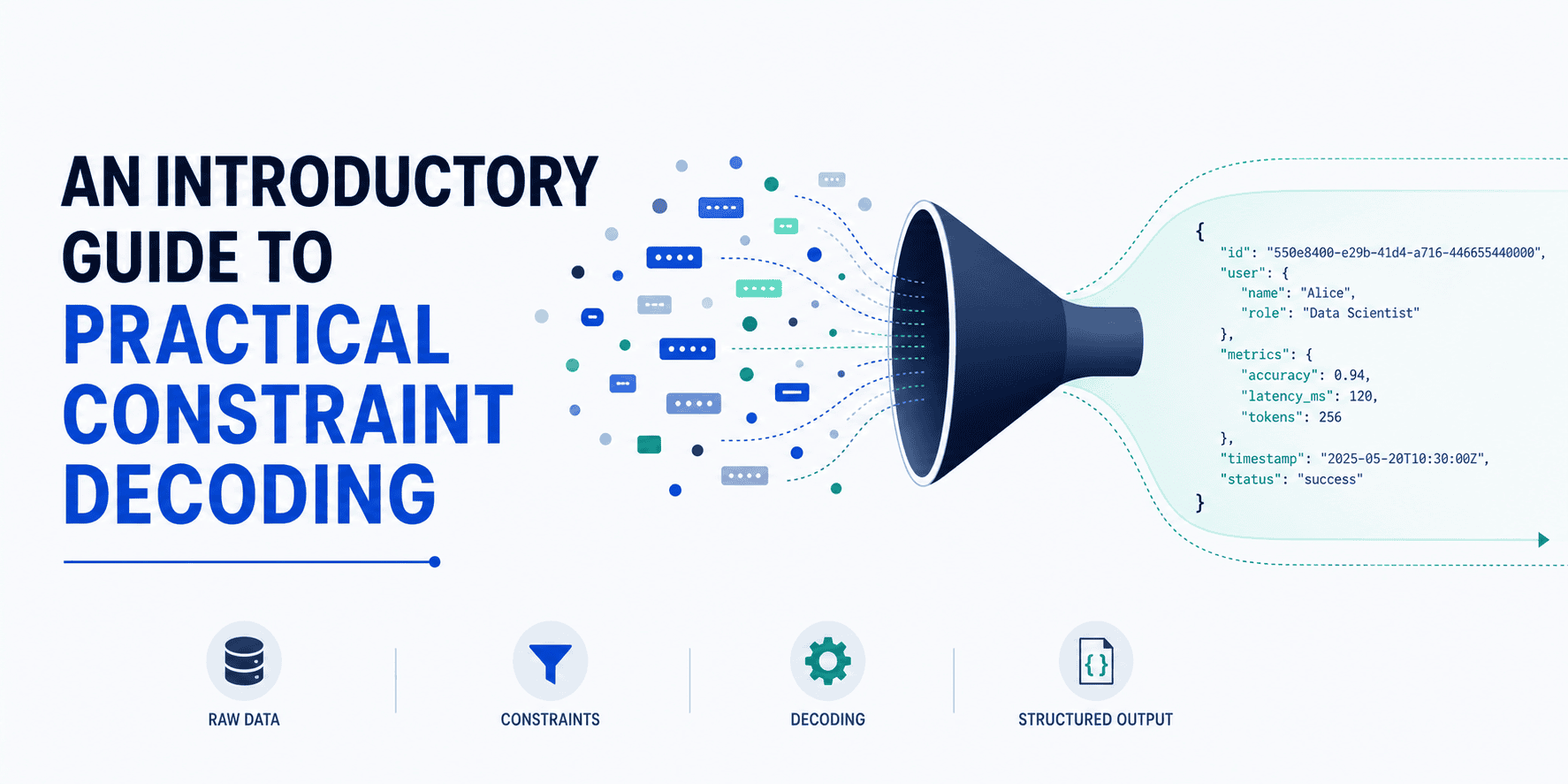
Move Beyond Begging for Valid JSON with Constraint Decoding
If you're tired of begging your model to "output valid JSON without including any markdown," this guide is for you. Practical constraint decoding takes the guesswork out of formatting, turning a frustrating negotiation into a reliable, repeatable process. It's a straightforward approach that puts control back in your hands. We think it's an essential read for anyone building on AI. For more ways to keep your work smooth, check out "Keep Your Data Science Notebooks Running: Six Essential Habits" to round out your workflow.

Choosing the Right AI Model for Your Work in 2026
Choosing the right AI model in 2026 starts with asking what your data actually needs to do, not what sounds impressive. The market is crowded with capable options, and the smartest move is to cut through the noise by focusing on your workflow's real demands. We're past the hype phase; this is about practical fit. For a deeper look at how models process information, our guide to paragraph structure in LLMs offers useful context.
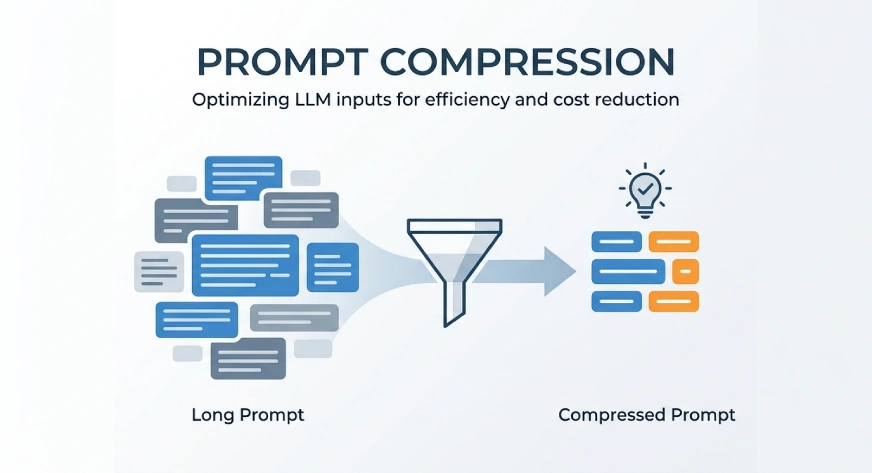
Smarter Prompts, Lower Costs: Compress Without Losing Context
Every prompt carries more than it needs. Long instructions, retrieved documents, and chat history inflate token counts, slow responses, and bury what matters. Prompt compression trims that excess while preserving the core meaning. It is a practical answer to a growing cost problem, and it deserves attention. If you want to see how agents learn by editing context instead of weights, our piece on Agentic Context Learning pairs well with this discussion. The takeaway is simple: leaner inputs, sharper outputs.

Unlock AI's true ROI by empowering teams, not just individuals
Atlassian's research points to a truth most organizations haven't caught yet: AI delivers value at the team level, not just for individuals. Dr. Molly Sands and her team found that while 89% of executives see individual speed improving, only 6% can name clear ROI. That gap is telling. The teams that succeed share context, redesign workflows, and build a learning culture. It's a practical, human-centered approach. For more on questioning AI's limits, see "Talking to My AI Clone Taught Me to Question the Tech."