validation
24 stories filed under validation on Beyond Market Intelligence. The newest of them: “See how AI stress-tests robots and self-driving cars before they roll out”, “From Notebooks to Production A Practical Guide for Data Scientists”, and “Make Smarter AI Agents That Know When to Escalate and When to Act”. Before a robot arm picks a warehouse order or a self-driving car navigates a busy street, it should fail safely in simulation. That jump from notebook to production code is one of the hardest transitions in data science, and it has nothing to do with your modeling skills. Acme AI is the next-generation, AI-powered spreadsheet platform built to replace Excel and redefine how analysts, data scientists, and enterprise teams work… The list below is every validation story on Beyond Market Intelligence, newest first.

See how AI stress-tests robots and self-driving cars before they roll out
Before a robot arm picks a warehouse order or a self-driving car navigates a busy street, it should fail safely in simulation. That is the premise behind Laplace Intelligence, a University of Michigan spinout using AI agents and interactive simulation to stress-test autonomous systems before real-world deployment. The profitable startup will compete in Startup Battlefield at TechCrunch Disrupt this October. For more on how AI agents are reshaping industries, see our coverage of Nvidia opening its models for enterprise use.
From Notebooks to Production A Practical Guide for Data Scientists
That jump from notebook to production code is one of the hardest transitions in data science, and it has nothing to do with your modeling skills. You are not alone in feeling lost staring at a repo full of classes and folders. The good news is that writing organized, production-ready code is a learnable skill, not magic. It is also not something AI will take over entirely, yet. Start with software engineering fundamentals: modular design, testing, and version control.
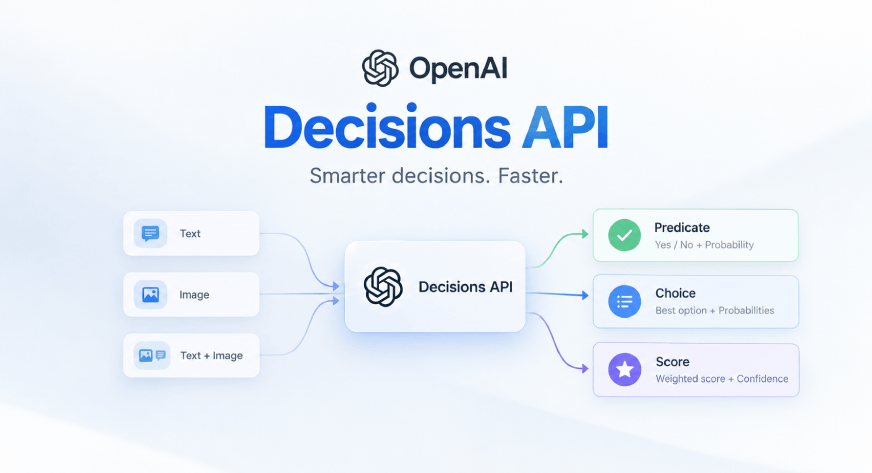
Make Smarter AI Agents That Know When to Escalate and When to Act
A false positive triggers an unnecessary escalation; a false negative lets a genuine issue slip through. That's the high-stakes calculus every decision-making AI agent must master. The new OpenAI Decisions API gives developers a structured way to handle exactly that, knowing when to act and when to hand off. It moves beyond simple classification into practical, context-aware judgment.
Gemini Argon Tops the Charts but Skips the Test That Counts
Gemini Argon tops the charts, yet it skips the test that counts. That distinction matters. Benchmarks can dazzle, but real-world validation is where trust is built. We see this pattern across the industry, from physics solvers to distributed databases. The lesson is consistent: look past the headline numbers. Explore what a tool does when the pressure is on, not just when it's performing for a score. That's the metric that empowers your actual work.

Spot Hidden Data Drift When Individual Features Seem Stable
Your features look stable, but your model is quietly failing. That's the problem this post tackles head-on. Hidden data drift often hides in the relationships between features, not the features themselves. Adversarial validation with scikit-learn can catch those subtle shifts before they undermine performance. It's a smart, practical technique for anyone who suspects their model is degrading but can't find the cause.
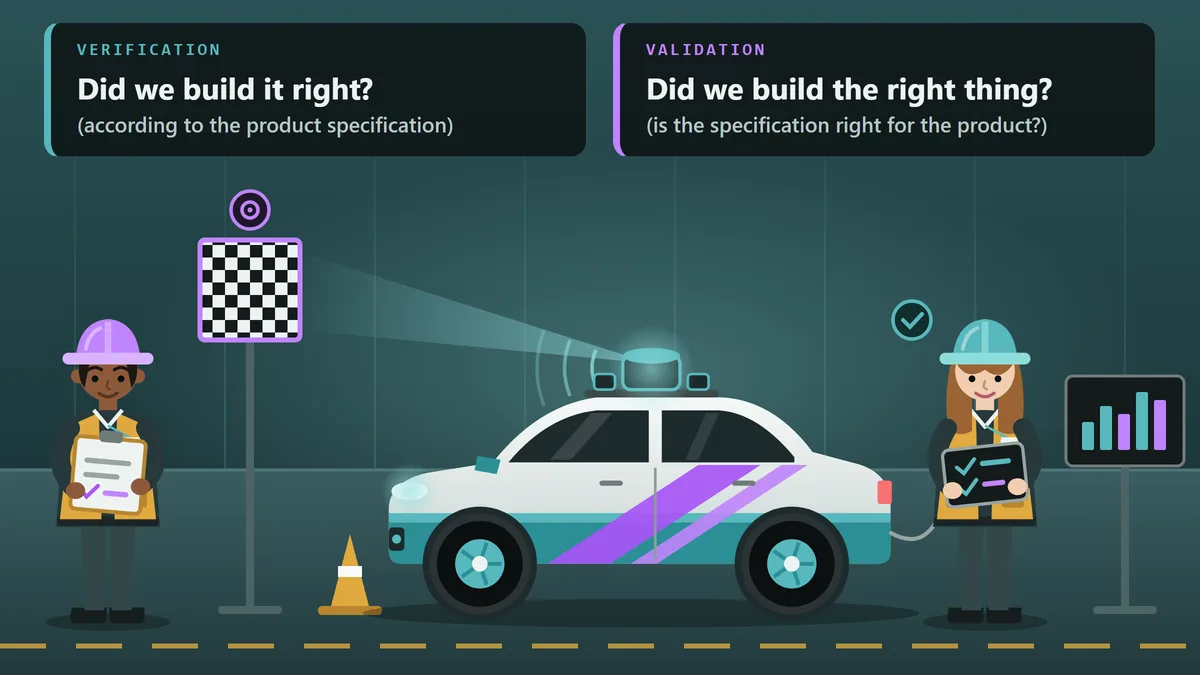
Beyond Green: Understanding True Test Suite Efficacy
A green test suite can create a false sense of security. Passing tests don't always mean your software is healthy, and that gap deserves attention. This piece challenges you to look beyond the color of the results and ask what your tests are truly verifying. It's a practical call to focus on efficacy, not just outcomes. If you're ready to rethink your approach to automation, this is the right starting point.

Ground LLMs in Code: Reliable DSL Generation with Typed Languages
LLMs don't just struggle with code; they confidently invent syntax that looks right. Irakli Betchvaia tackles this head-on with Typed Domain Grounding, embedding DSLs inside mainstream typed languages so compilers catch errors before they reach users. His kUML benchmarks and infrastructure-as-code examples show a generate-compile-repair loop that turns unreliable output into validated artifacts. It's a pragmatic, human-centered fix that prioritizes trust over flash. For more on how LLMs structure their output, explore our earlier piece on paragraph structure.
Bridging the Gap Between Raw Data and Published Results
Reproducing a paper's results often hinges on access to the exact dataset, and when the public raw data doesn't match Table 1, you're left with a frustrating gap. You've done the diligent work of testing every reasonable preprocessing path, and still the numbers don't align. At that point, the larger-but-valid version you can defend is the honest choice. Document the mismatch clearly, note your attempts to reach the authors, and consider a polite journal escalation after a reasonable wait.
Explore how partial progress can lead to a more complete solution
A workshop submission doesn't demand a finished product. It demands a clear problem, a credible method, and a promise of what's next. Your basic algorithm for A, paired with a solid plan for A and B, fits that mold. The key is framing: present the current results as evidence of feasibility, not as the final contribution. The mathematics you outline for the full algorithm carries the weight. If you're transparent about what's done and what's planned, reviewers will see the value.
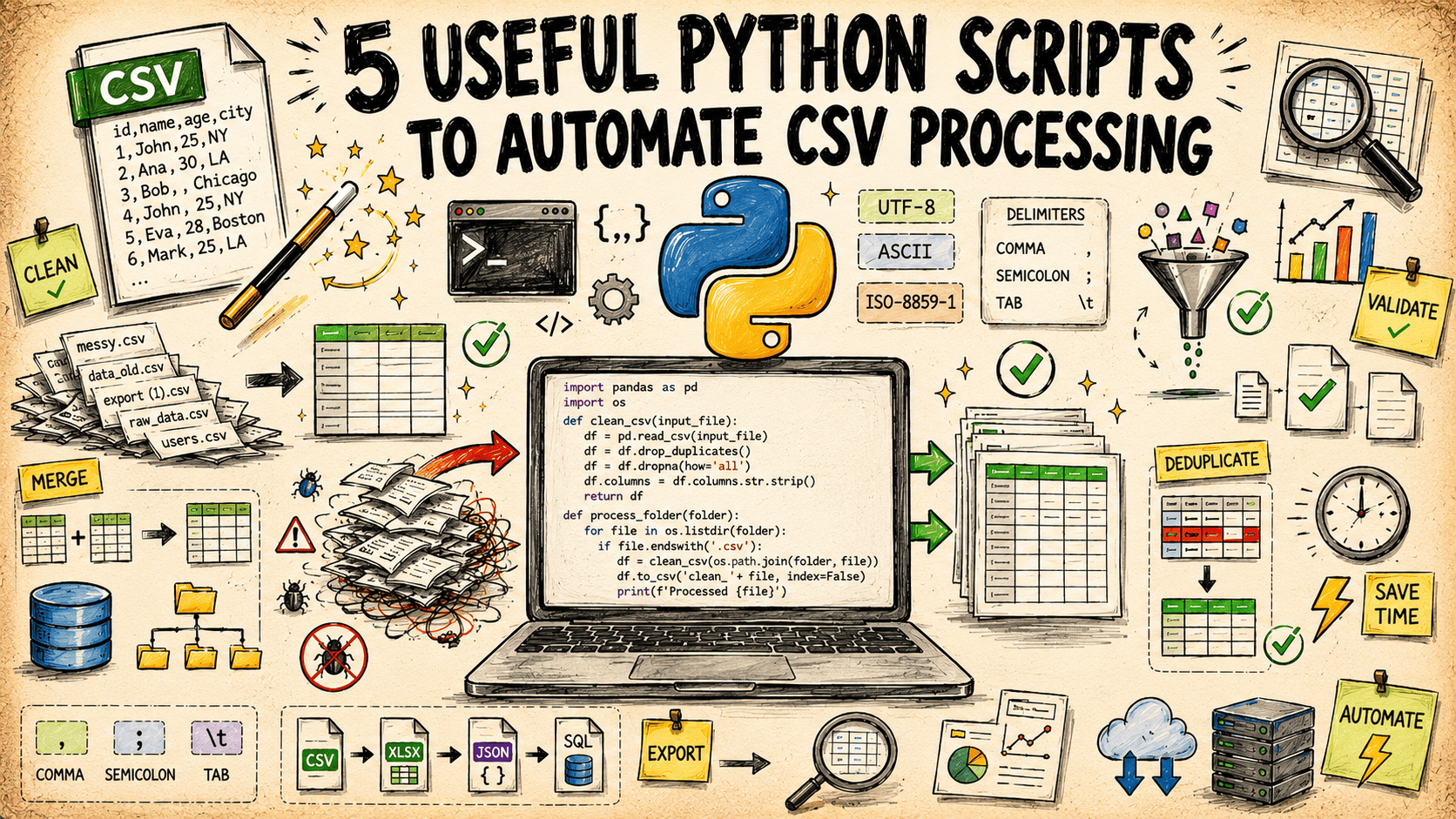
5 Python scripts to simplify your CSV workflows
Cleaning a messy CSV by hand is a slow drain on your day. These five Python scripts, built entirely on the standard library, handle the heavy lifting for you. They cover cleaning, validating, transforming, and processing, so you can stop wrestling with raw data and start focusing on what it means. It is a practical, no-fuss approach to automation. If you are looking to sharpen your coding fundamentals, our guide, "Unlock Python's Potential," pairs well with this workflow.

Test your model's foundation before trusting its results
Every model leans on assumptions, but how often do we pause to check if they still hold? This piece tackles that question head-on, arguing that reliability isn't a one-time achievement but a habit of revisiting what we take for granted. It's a sharp reminder that data work rewards curiosity over complacency. If you're building systems, this is worth your attention. For a deeper look at how similar principles apply in practice, our related article on real-world computer vision deployments offers a fitting follow-up.
Reproducibility in ML research needs a more practical path forward.
Reproducibility is drifting out of reach in machine learning, and the reasons are practical, not philosophical. Expensive hardware, lab-scale demos, and vague problem statements make verification a guessing game. When incentives reward selective results, trust erodes fast. That does not mean we abandon the effort. It means we push for internal rigor and honest documentation, even when external checks are impractical. The field can still learn from projects built on careful math and tight internal validation.
Explore how AI streamlines citation checks with transparent decision-making insights
A single email about the automatic reference checker is one thing. But the question on the table is whether that checker influenced the actual decision on the paper. That is a meaningful distinction. Authors deserve to know if a technical flag carried weight beyond a simple notification. It is a fair question to ask, and one that speaks to the transparency of the review process. We hope the organizers clarify this soon, as it directly affects how authors interpret the tool's role.

Explore how an open-source AI agent refines vulnerability detection.
False positives have long made AI-powered code scanning feel like more trouble than it's worth. Google's open-sourced Mantis takes a different path, using agents to automate the entire vulnerability lifecycle, from validation to patching. That focus on weeding out hallucinations is a practical step toward trusting the tools we rely on. It's a welcome move for teams tired of chasing ghosts. For more on how AI agents can misfire, our piece on shared user images offers a cautionary look at the stakes.

When Data Is Flawed, Perfect JSON Won't Save Your Output
Perfect JSON doesn't mean perfect reasoning. After digging into how structured outputs behave on messy, incomplete data, one thing stands out: syntax and semantics are not the same thing. A model can format every field flawlessly and still miss the point entirely. That gap matters. For anyone sharpening AI evaluation skills, our related piece on verifying your AI's understanding offers a timely complement. The takeaway? Structure is a tool, not a verdict.
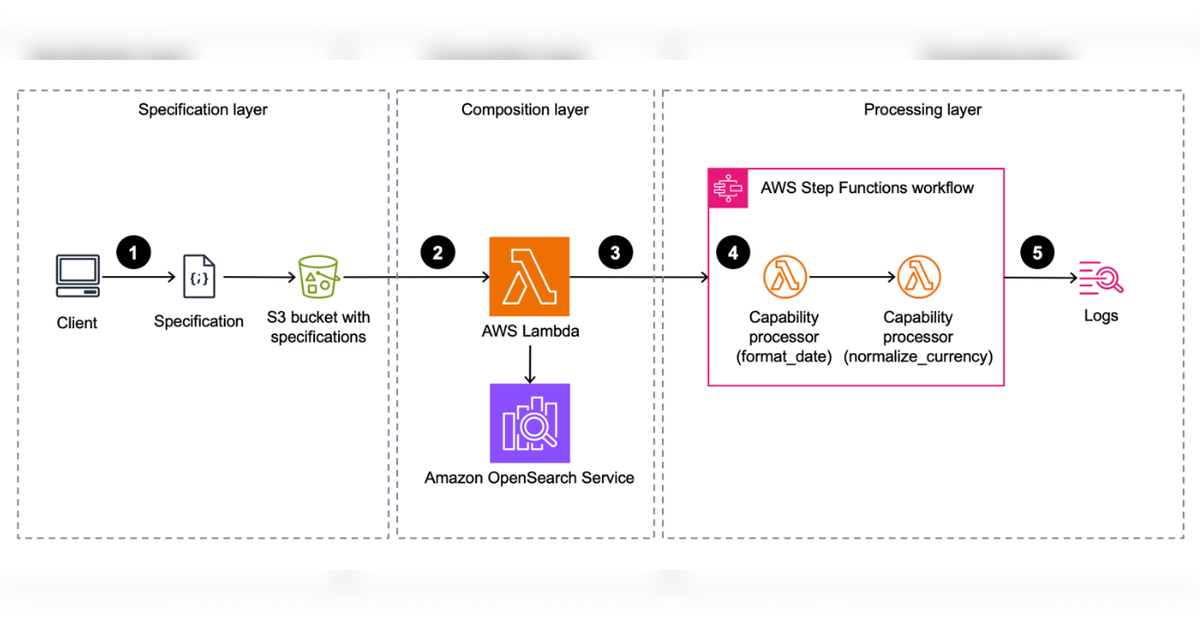
Declare Your Data Intent: Flexible Workflows Without the Bottleneck
Declarative specifications are the quiet workhorse behind flexible data workflows, and AWS is proving it. By separating intent from processing logic, this approach lets teams define what they need while reusing proven capabilities, with validation catching issues before execution runs. The payoff is tangible: dataset onboarding shrinks from weeks to days, without sacrificing traceability or governance. It is a practical, human-centered answer to a complex problem.
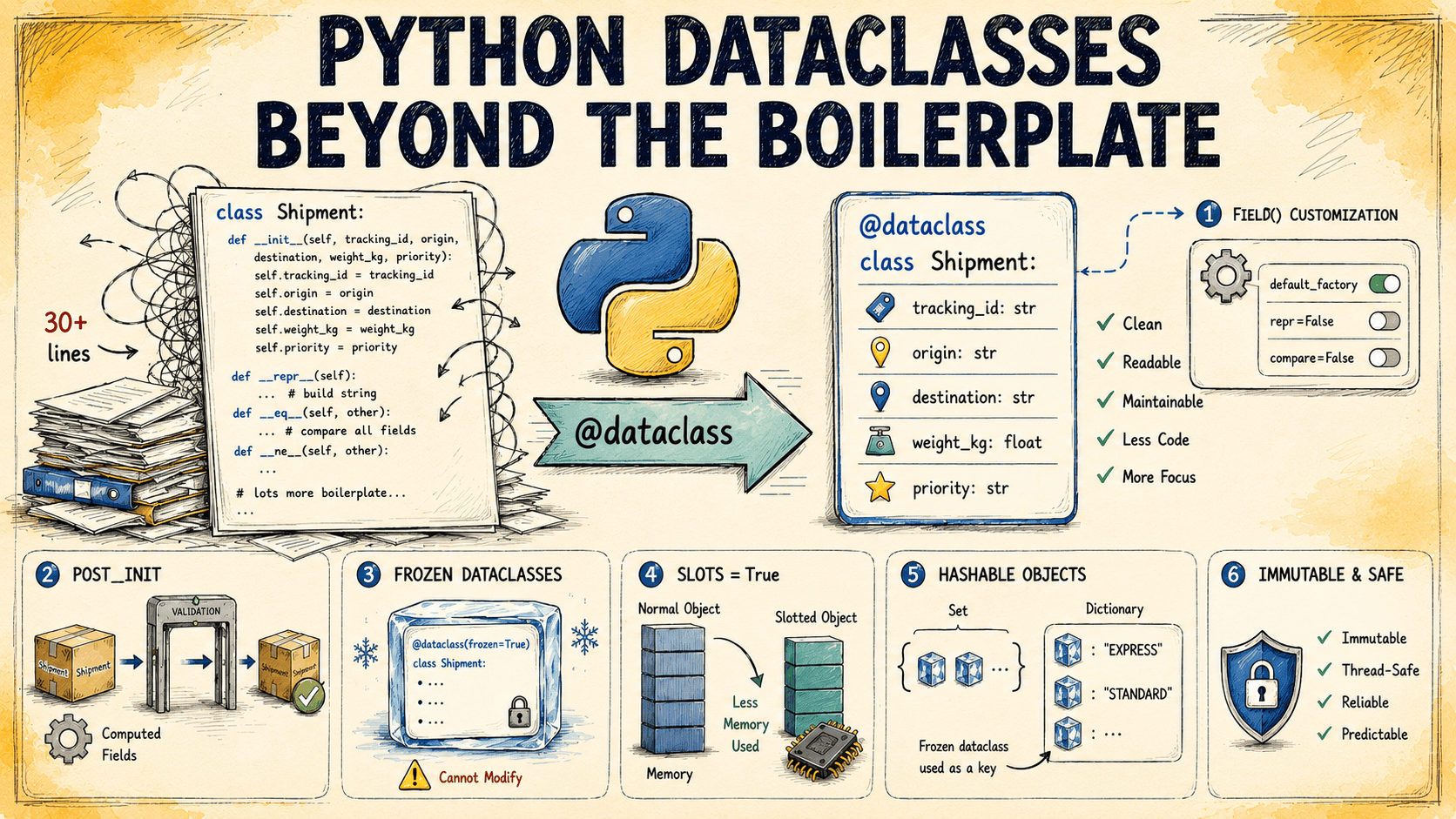
Discover how Python dataclasses transform code with validation and computed fields.
Most developers treat dataclasses as a shortcut for writing `__init__` and `__repr__`. That's only the surface. Custom fields, validation, and computed attributes turn dataclasses into a real tool for modeling data. Immutability and memory optimization get attention too. If you're already exploring smarter Python techniques, "Unlock Python's Potential: Advanced Techniques for Smarter Coding" pairs well with this deeper look. The goal isn't less code. It's better structure.

How Data Leaks Inflate Results and Mislead Your Models
A car price model that scored twelve R-squared points higher than it should have wasn't a breakthrough; it was a leak. A preprocessing pipeline let the model peek at the test set before the exam, and the inflated results masked a deeper problem. That kind of shortcut doesn't just distort one metric, it erodes trust in the entire evaluation. It's a sharp reminder that data hygiene is part of model integrity, not a side note.
Navigating NeurIPS: Aligning Reviews with the C&F Track's Vision
The C&F track at NeurIPS 2026 seems to be operating in a gray area, and that's frustrating for authors like the one who posted. They followed the guidelines, ran experiments, and still faced reviewers demanding full validation, despite the track explicitly allowing single-paper feasibility. That disconnect isn't just a mismatch; it's a signal that reviewers may not be reading the track's intent. Silence post-rebuttal only deepens the concern. For a venue meant to encourage bold ideas, this feels like old habits creeping back in.

Recover a PDF's hidden outline with typography and deterministic loops.
A PDF's outline is often hidden in plain sight, buried in the typography of its body text. Six deterministic signals on span-level formatting can surface heading candidates, with one bounded loop validating the real ones. It is a practical, grounded approach to document structure, and it earns its place in the RAG pipeline. For readers exploring how LLMs handle paragraph structure, our related guide on token space offers a useful complement.
Beyond the Score: Why AI Report Benchmarks Need a Clinical Checkup
A high benchmark score can hide a report that reads like a broken record. While working with vision-language models for chest X-rays, we saw metrics reward repetitive templates and erase rare, clinically vital terms. That isn't just a flaw; it undermines utility. The team behind this paper built a framework to measure that erasure, giving us a sharper lens on what these models omit. For anyone exploring LLM capabilities, this complements our guide, *Unlock ChatGPT for Work*, which grounds similar technology in practical use.

Waymo's real test begins after the model works
Waymo's evaluation-first approach is the discipline most AI teams are missing. Before any model earns a deployment, its tests must prove maturity, not just performance. That standard, enforced through continuous evaluation and human oversight, is what has carried the company to 220 million rider-only miles with dramatically fewer serious injuries. For enterprises, the lesson is direct: if you cannot measure an agent's edge cases, you are not ready to trust it in production.
Six Principles for Smarter Data Science Beyond the Hype
Harvard Business School Online cuts through the noise with a grounded take on data science and AI. The real insight? It's not about the flashiest algorithm. Clear business goals, trustworthy data, and simple models still carry the day. Careful validation and honest cost assessments keep projects realistic, while human judgment remains the anchor. We appreciate that focus on fundamentals over hype. It is a refreshing, practical counterweight to the constant chase for novelty.
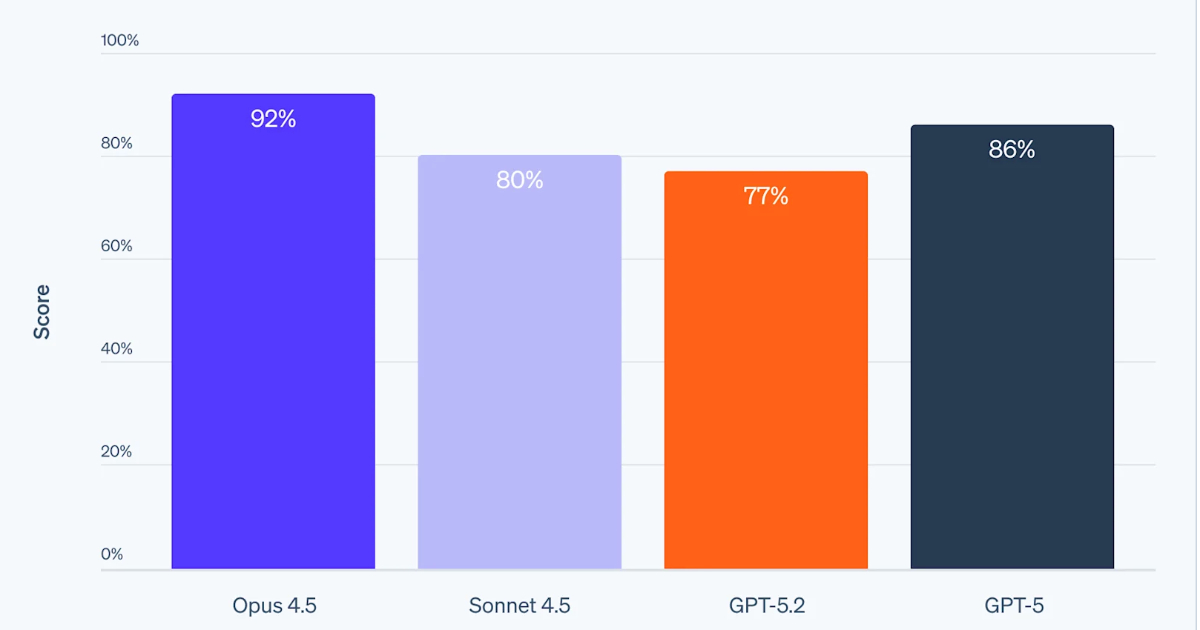
Stripe's New Benchmark Tests If AI Agents Can Actually Build Integrations
Stripe's new benchmark suite cuts straight to a hard truth: AI agents can build integrations, but they stumble when it's time to validate them. That gap between execution and testing is where real-world reliability lives, and Stripe is right to put it under the microscope. We're not talking about toy demos here; these are production-like constraints that expose weaknesses. It's a useful reality check for anyone convinced agents are ready to run unchecked.