A Complete Guide to Decoding LLM Model Names
Our take
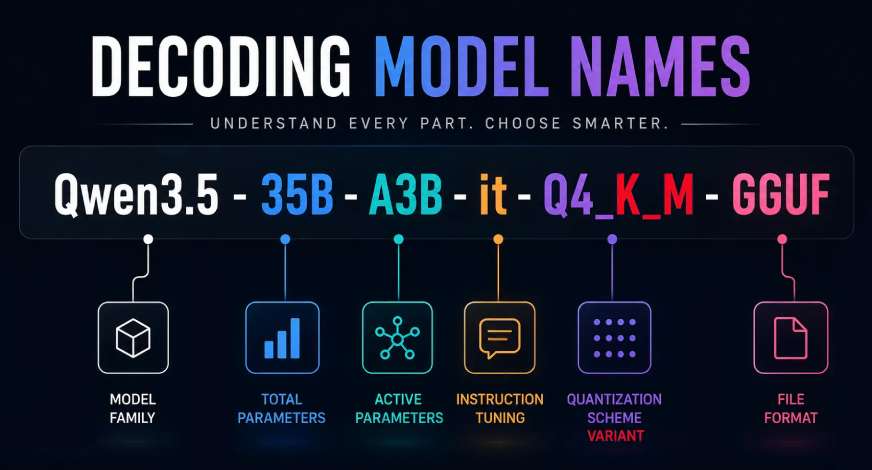
The proliferation of Large Language Models (LLMs) is rapidly transforming how we interact with data, and with that transformation comes a new layer of complexity: understanding the models themselves. The Analytics Vidhya piece, "A Complete Guide to Decoding LLM Model Names," tackles this head-on, demystifying the often-intimidating strings of characters that identify these models. It's a welcome guide for anyone venturing beyond pre-packaged API access and exploring the world of locally hosted LLMs – a world increasingly valuable for those prioritizing configurability and control, as highlighted in our own recent piece on [5 Best Local LLMs You Can Run on a Mac mini in 2026]. The ability to interpret these names isn’t just about technical curiosity; it’s about informed decision-making. Choosing the right LLM for a specific task requires understanding its size, architecture, and quantization—all information subtly encoded within that seemingly cryptic identifier. This knowledge empowers users to optimize for performance, cost, and suitability for their particular use case.
The shift towards local LLMs reflects a broader trend in the AI landscape. While proprietary models like OpenAI's Astra, showcased in [Open AI’s Astra model is on the way — and very good at breaking into computer systems], demonstrate impressive capabilities, the desire for greater control and transparency is driving adoption of open-source alternatives. Furthermore, the evolving role of software engineers, now focused on "designing the boundaries AI agents can't break," as discussed in [Software engineers' new job isn't writing code — it's designing the boundaries AI agents can't break], necessitates a deeper understanding of the underlying models. These engineers need to grasp the nuances of each LLM to effectively constrain and guide AI behavior, ensuring alignment with desired outcomes and mitigating potential risks. The Analytics Vidhya article provides a crucial foundational understanding for this increasingly important skillset.
The breakdown of LLM naming conventions—from size (the "B" designation indicating billions of parameters) to quantization levels (like "q2ks")—is particularly valuable. It highlights the trade-offs inherent in deploying these models. Smaller, quantized models may require less computational resources, but could also exhibit reduced accuracy or complexity in their responses. Understanding these trade-offs allows users to optimize their deployments for specific hardware constraints and performance requirements. This isn't merely an academic exercise; it’s a practical necessity for organizations seeking to integrate LLMs into their workflows efficiently and effectively. The ability to parse these names allows for a far more nuanced assessment than simply relying on generic performance benchmarks.
Ultimately, the ability to decode LLM model names is a stepping stone toward greater agency in the AI era. As the field continues to evolve, we'll see even more specialized models emerge, each with its own unique characteristics and capabilities. The foundational knowledge provided by guides like this, coupled with a growing understanding of AI safety and responsible deployment, will be critical for navigating this complex landscape. The question becomes: as these models become increasingly specialized and customized, will the naming conventions themselves continue to evolve in a way that remains accessible and informative, or will they become an even more impenetrable barrier to entry for non-experts?
If you have ever tried downloading a local LLM, you have probably seen model names that look like this: Qwen3.8-27B-A3B-It-2507-gguf-q2ks-mixed-AutoRound At first, it looks like meaningless technical shorthand. It isn’t! Every part of that name tells you something about the model: how large it is, how it is built, how much of it is used at a time, how […]
The post A Complete Guide to Decoding LLM Model Names appeared first on Analytics Vidhya.
Read on the original site
Open the publisher's page for the full experience