CERN Renounces RHEL in Favor of Debian for Its Accelerator Controls Infrastructure
Our take
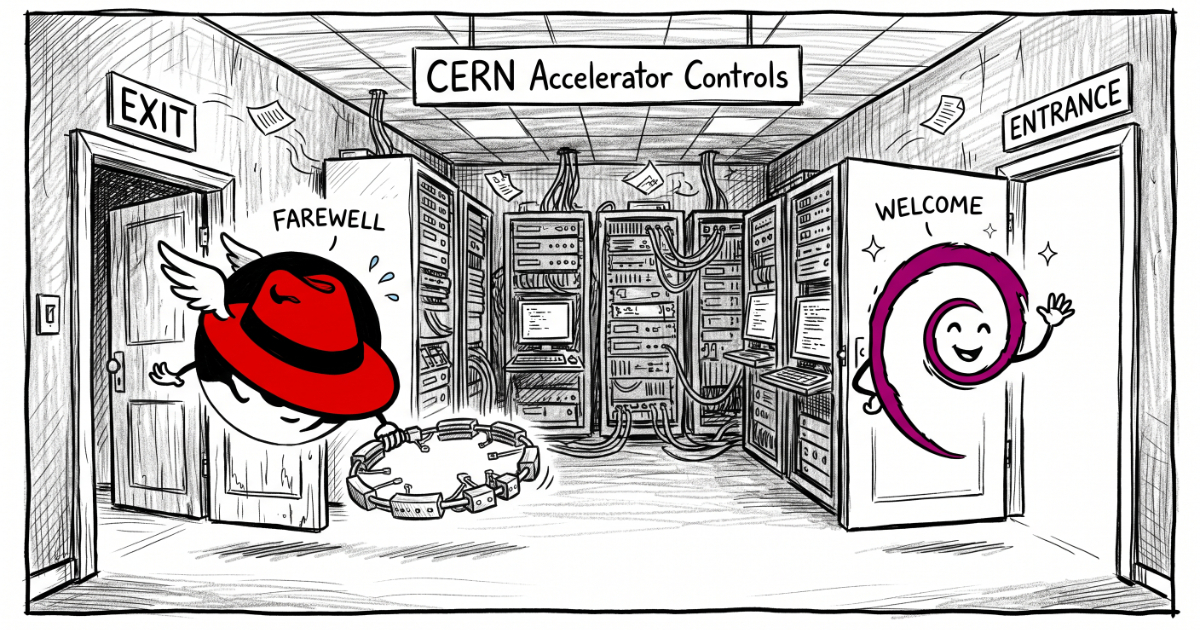
CERN’s recent announcement of a shift away from Red Hat Enterprise Linux (RHEL) for its accelerator control systems is a significant development, underscoring the challenges of maintaining legacy infrastructure in a rapidly evolving technological landscape. The decision, driven by Red Hat’s increasingly restrictive compiler mandates that threatened compatibility with CERN's specialized, often older, hardware, highlights a tension between vendor-led innovation and the specific needs of research institutions. This situation resonates with broader concerns about vendor lock-in and the importance of open-source alternatives. It’s a story of pragmatism born from necessity, a sentiment mirrored in the ongoing evolution of storage solutions, as seen in the emergence of FreeCORE: FreeCORE: TrueNAS Fork Maintaining Deeply Integrated Virtualization, Jails, and OpenZFS on FreeBSD, demonstrating a community-driven response to evolving software dependencies. Moreover, the intricacies of adapting AI to complex systems, as explored in Dynamical System Transfer Learning with Reduced Order Models, reveal the challenges of integrating modern tools with established, specialized hardware, a hurdle CERN is now directly confronting.
The move to Debian, a more flexible and community-driven distribution, represents a calculated risk for CERN. While the transition, spanning over two years and encompassing 2,200 control machines, is substantial, it offers greater control over the software environment and mitigates the risk of future compatibility issues. It’s crucial to note that CERN isn’t abandoning Red Hat entirely; other systems will continue to run on RHEL and AlmaLinux, indicating a strategic diversification rather than a wholesale rejection. This approach is particularly astute for an organization like CERN, where operational stability and the ability to maintain critical infrastructure are paramount. The underlying issue isn't necessarily a fault with RHEL itself, but the increasing constraints imposed by Red Hat's commercial model, which can clash with the unique demands of scientific research where long-term stability and hardware customization often outweigh the allure of the latest features. This decision is a powerful signal to other organizations reliant on specialized hardware and legacy systems; adaptability and control over your software stack are increasingly vital.
The broader implications extend beyond CERN. This event will likely fuel further scrutiny of vendor lock-in within the scientific computing community and beyond. It reinforces the value of open-source solutions, not just for their cost-effectiveness, but also for their inherent flexibility and resilience. Organizations are beginning to realize that relying solely on proprietary systems can create vulnerabilities and limit their ability to adapt to changing circumstances. The accelerator control systems are, in essence, mission-critical infrastructure, and CERN's experience serves as a cautionary tale and a practical demonstration of the benefits of choosing a more adaptable foundation. This isn't about dismissing commercial offerings, but rather about carefully evaluating the trade-offs between vendor support, innovation, and long-term control over one's computing environment. The long-term cost of dependency, in terms of both resources and flexibility, can far outweigh the initial convenience of a managed solution.
Looking ahead, it will be fascinating to observe how this transition impacts CERN's research capabilities and the broader adoption of Debian within the high-performance computing (HPC) space. Will other research institutions follow suit, reassessing their reliance on proprietary distributions? More importantly, will this case prompt a reevaluation of software licensing models and vendor strategies, leading to greater flexibility and openness within the technology ecosystem? The choice of Debian represents a forward-focused strategy, but the long-term consequences of this decision—and the responses it elicits from vendors—remain to be seen.
CERN engineers announced a shift from Red Hat-based distributions to Debian for its accelerator control systems. This decision stems from Red Hat's tightening compiler mandates, which threatened legacy hardware. The transition, focused on 2,200 specialized control machines, is set for completion in late 2026, while CERN's other systems will remain with Red Hat and AlmaLinux.
By Olimpiu PopRead on the original site
Open the publisher's page for the full experience