Netflix Adopts Cloud-Native Job Queueing System Kueue to Replace an In-House Solution
Our take
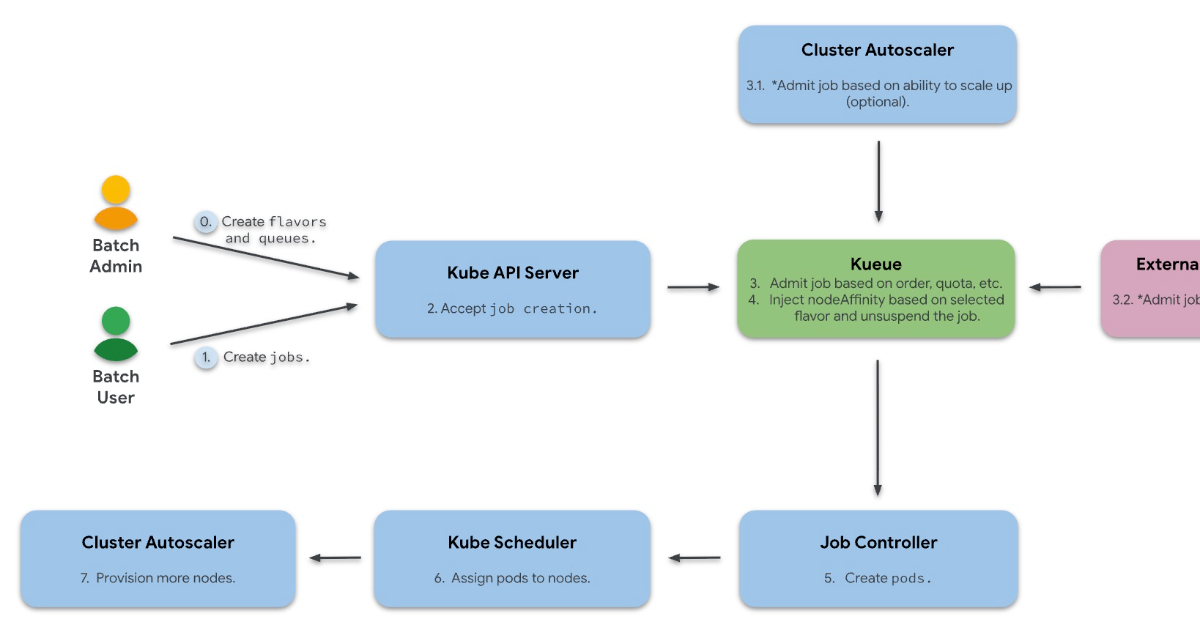
Netflix’s recent migration to Kueue, an open-source cloud-native job queueing system, is a compelling case study in the pragmatic evolution of large-scale infrastructure. The decision to move away from a bespoke, in-house solution highlights a growing trend: the recognition that building and maintaining proprietary systems, even for companies as sophisticated as Netflix, can be less efficient than leveraging robust, community-driven alternatives. This shift resonates with the broader industry conversation around infrastructure optimization, particularly as companies grapple with the complexities of AI and machine learning workloads. It's a move that speaks to a focus on core competencies rather than becoming a general-purpose infrastructure provider. The trend is visible elsewhere, as seen in Instacart’s development of Blueberry, an AI-powered assistant to help on-call engineers investigate incidents Instacart Builds Blueberry, an AI-Powered Assistant to Help On-Call Engineers Investigate Incidents, demonstrating a desire to automate and streamline operational tasks. The move also mirrors discussions around rethinking deployment units for AI agents on Kubernetes Pods as Workers, Not Agents: Rethinking the Deployment Unit for AI Agents on Kubernetes, where the focus is on optimizing resource utilization and scalability.
The key takeaway here isn't simply that Netflix adopted Kueue; it's *why* they adopted it. The article rightly points out that Kueue offered capabilities that would have been prohibitively expensive to develop in-house. This underscores a critical point often overlooked in discussions of cloud-native architecture: the economic realities of building versus buying. While control and customization are often cited as advantages of homegrown solutions, the cost of maintaining that control – in terms of engineering resources, ongoing development, and potential technical debt – can quickly outweigh the benefits. Netflix’s experience reinforces the idea that focusing on building differentiated features and leveraging existing, proven infrastructure components is a more sustainable and ultimately more impactful strategy. The fact that they were able to map their existing capabilities to Kueue’s functionality speaks to the system’s flexibility and adaptability, further solidifying its appeal.
This migration also has broader implications for the future of batch job processing. Traditional job queuing systems often struggle to scale effectively in the face of modern data volumes and processing demands. Kueue, designed specifically for cloud-native environments, addresses these challenges by leveraging Kubernetes for orchestration and scaling. This approach allows Netflix, and potentially other organizations facing similar workloads, to dynamically allocate resources based on demand, optimizing performance and cost efficiency. Furthermore, the open-source nature of Kueue fosters collaboration and innovation, allowing the community to contribute to its ongoing development and ensuring that it remains aligned with the evolving needs of the industry. The shift away from custom solutions towards community-driven tools like Kueue signals a maturing of the cloud-native landscape, where collaboration and standardization are increasingly valued.
Looking ahead, it will be interesting to observe how other large-scale organizations respond to Netflix's example. Will more companies reconsider their investments in bespoke infrastructure solutions in favor of leveraging open-source alternatives? The trend towards infrastructure-as-code and declarative configuration management suggests that the answer is likely yes. The challenge will be ensuring that these open-source solutions can truly meet the stringent requirements of enterprise-grade deployments, particularly in terms of security, reliability, and support. The broader question becomes: how can organizations best balance the benefits of customization with the efficiencies of standardization in an increasingly complex and rapidly evolving technological landscape?
Netflix migrated most of its batch workloads onto Kueue, an open-source cloud-native batch job execution system that has outgrown its homegrown solution over the years. The company mapped the capabilities previously created in-house to Kueue’s functionality and also benefited from new features that would have been costly to incorporate into its homegrown solution.
By Rafał GancarzRead on the original site
Open the publisher's page for the full experience