Netflix Moves Toward Open Source Flink Autoscaler for 30,000+ Streaming Jobs
Our take
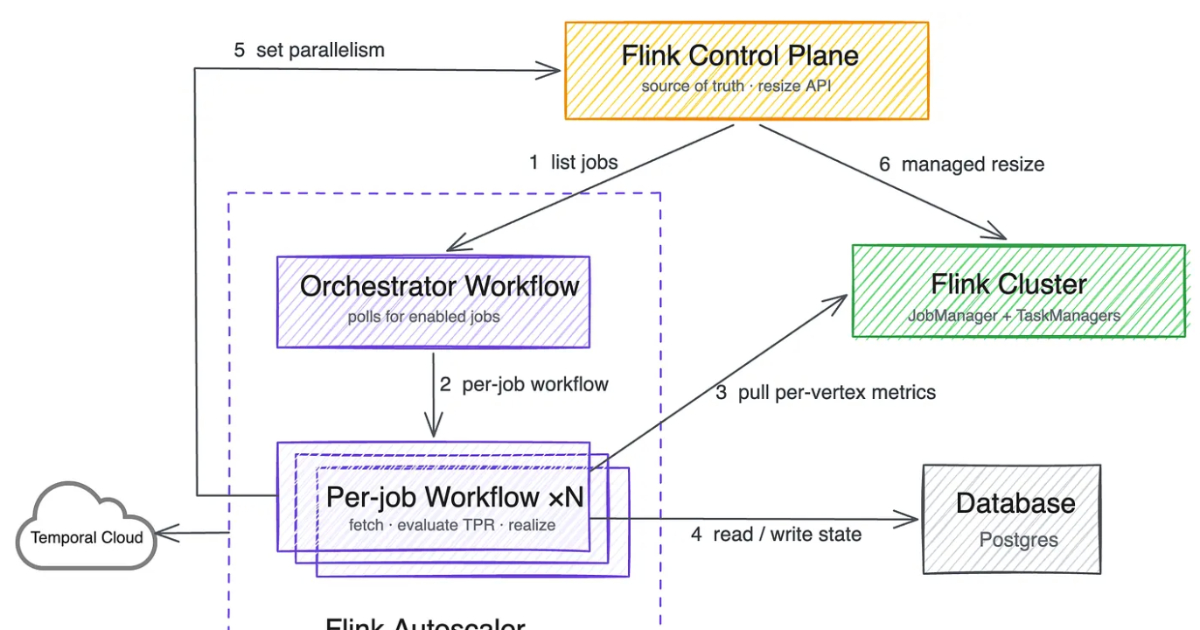
Netflix’s move to embrace the open-source Apache Flink Autoscaler for managing its sprawling ecosystem of streaming jobs—over 30,000 across multiple AWS regions—is a significant development that speaks volumes about the evolving landscape of data processing and infrastructure management. The sheer scale of Netflix's operations makes this a compelling case study, and the reported 58% reduction in compute expenditure, translating to $1.1 million annually for a single team, is a powerful validation of the approach. This shift highlights a broader trend away from proprietary, cluster-level autoscaling solutions towards more granular, operator-level control, particularly valuable for complex, stateful pipelines—the kind that underpin real-time streaming services. It echoes similar strategic shifts we've seen elsewhere; for instance, CERN’s recent decision to renounce RHEL in favor of Debian for its accelerator control systems CERN Renounces RHEL in Favor of Debian for Its Accelerator Controls Infrastructure underscores a desire for greater control and cost optimization through open-source alternatives, while Google's Beyond Zero initiative Beyond Zero: Google Publishes Successor to BeyondCorp demonstrates a commitment to adaptable security models in increasingly complex environments.
The limitations of Netflix’s previous cluster-level autoscaler, as detailed in the article, underscore the challenges of managing stateful streaming jobs. These pipelines often involve intricate dependencies and require precise resource allocation to maintain performance and data integrity. Operator-level autoscaling, which dynamically adjusts resources based on the needs of individual operators within a Flink application, offers a much finer degree of control and responsiveness. This is particularly crucial for services like Netflix, where even minor latency fluctuations can significantly impact user experience. The decision to open-source their learnings and contribute to the Apache Flink Autoscaler project is also noteworthy, demonstrating a commitment to the broader data processing community and fostering innovation within the open-source ecosystem. It's a move that aligns with the increasingly prevalent philosophy of collaborative development and shared knowledge, a trend also visible in Microsoft’s enhancements to Azure API Management Zone Redundancy Comes to API Management Standard v2, where they are expanding functionality across tiers.
The implications of this move extend beyond Netflix’s immediate cost savings. It signals a broader shift in how organizations are approaching real-time data processing. As data volumes continue to explode and the demand for real-time insights intensifies, the ability to efficiently manage and scale streaming applications becomes paramount. The Flink Autoscaler provides a powerful tool for achieving this, and Netflix's adoption and subsequent open-sourcing of the technology will likely accelerate its adoption across a wide range of industries. This is especially relevant for organizations dealing with high-velocity data streams, such as those in finance, e-commerce, and gaming, where responsiveness and cost-effectiveness are critical. The move highlights the value of embracing open-source solutions for tackling complex engineering challenges, rather than relying on proprietary tools that may not always offer the optimal level of flexibility and control.
Looking ahead, the success of Netflix’s Flink Autoscaler implementation will be closely watched by other organizations grappling with similar scaling challenges. A key question to observe is how the open-source community will contribute to and evolve the project, and whether it can truly become a de facto standard for managing Flink applications at scale. Furthermore, the broader trend of embracing operator-level autoscaling suggests a potential shift in the way we think about infrastructure management—moving away from monolithic, cluster-centric approaches towards more granular, application-aware solutions. This development positions Apache Flink, and the Autoscaler in particular, as a key enabler for the future of real-time data processing.
Netflix is moving toward the open-source Apache Flink Autoscaler for more than 30,000 streaming jobs across multiple AWS regions. The operator-level approach addresses limitations of Netflix’s cluster level autoscaler for complex, stateful pipelines. Netflix reports a 58% reduction in annualized Flink compute expenditure for one team, saving approximately $1.1 million annually.
By Leela KumiliRead on the original site
Open the publisher's page for the full experience