Top 5 Agentic Coding CLI Tools Developers Should Know in 2026
Our take
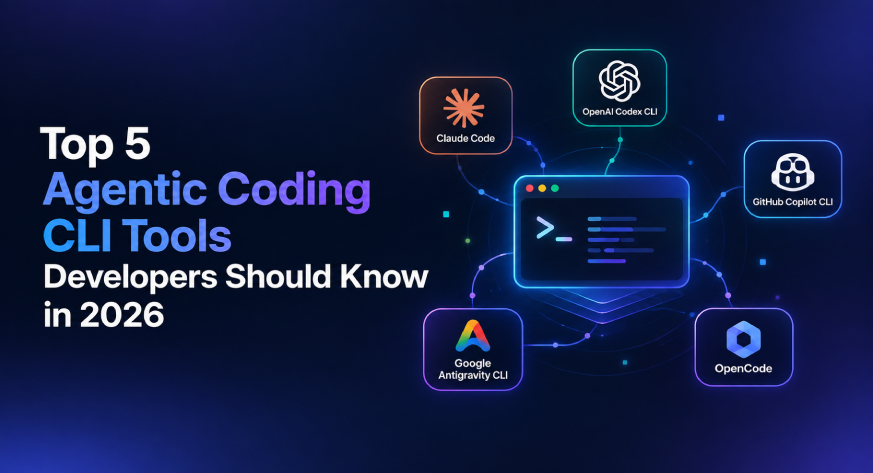
The rapid evolution of AI-powered coding tools, as highlighted in Analytics Vidhya’s recent piece on agentic coding CLIs, underscores a fundamental shift in how developers will interact with code. Just a short time ago, leveraging AI in the terminal primarily meant debugging assistance or simple code snippets. Now, the emergence of full agent runtimes within CLIs—capable of repository inspection, automated task planning, file modification, testing, and result verification—signals a move towards genuinely intelligent development environments. This isn't merely about automation; it's about shifting the developer’s role from manual execution to strategic oversight, freeing them from repetitive tasks to focus on higher-level design and problem-solving. The discussion around responsible AI development, as explored in “Is The US–China AI Arms Race Real? The Guy Who Worked Both Sides Says No,” provides a vital counterpoint – the increased power of these tools necessitates careful consideration of ethical implications and potential misuse. Similarly, the ongoing influence of major players like Nvidia, as demonstrated by Jensen Huang’s recent comments, "Nvidia CEO Jensen Huang tells Trump ‘we’re not going to let [an AI slowdown] happen’," further emphasizes the significant investment and momentum behind this technology.
The rise of agentic coding CLIs represents a significant acceleration of the AI-assisted development lifecycle. Tools like Claude Code and Codex CLI, and others gaining prominence, aren't just code generators; they're autonomous agents capable of understanding project context and executing complex workflows. This is a departure from traditional IDEs, which primarily offer static analysis and refactoring tools. The ability to inspect entire repositories, formulate plans, and autonomously implement changes – while maintaining quality through automated testing – represents a paradigm shift. Consider the implications for large-scale projects or teams managing legacy codebases; the potential for increased efficiency and reduced error rates is substantial. OpenAI’s acquisition of Glass Imaging, “OpenAI buys smartphone camera maker Glass Imaging for $300 million, report says,” while seemingly unrelated, speaks to the broader trend of AI companies expanding their capabilities and integrating AI into diverse domains, suggesting a future where AI's influence permeates every facet of the technology landscape.
The transition will undoubtedly present challenges. Developers will need to adapt to a new workflow where they’re not solely responsible for every line of code. Trusting AI agents to modify files and execute tests requires robust validation mechanisms and a deep understanding of the underlying algorithms. Furthermore, the security implications of granting autonomous agents access to code repositories are considerable and demand careful attention. The shift also raises questions about the evolving skillset required for developers; while coding proficiency remains essential, skills in prompt engineering, AI agent supervision, and workflow orchestration will become increasingly valuable. The ability to effectively communicate intent to these AI agents and critically evaluate their output will be crucial for maximizing their benefits.
Looking ahead, the convergence of agentic coding CLIs with other AI tools—such as large language models and code generation platforms—promises to unlock even greater levels of automation and productivity. We should anticipate a future where AI proactively identifies and resolves coding issues, optimizes code performance, and even contributes to architectural design. The key question now becomes: how will developers adapt to a world where AI is not just a tool, but a collaborative partner in the coding process, and what new skills will be necessary to thrive in this evolving landscape?
A year ago, terminal AI mostly meant asking a model to explain errors, generate commands, or edit small functions. In 2026, leading coding CLIs have become full agent runtimes that can inspect repositories, plan work, modify files, run tests, use external tools, and verify results. In this article, we compare five standouts agentic coding CLIs: Claude Code, Codex CLI, […]
The post Top 5 Agentic Coding CLI Tools Developers Should Know in 2026 appeared first on Analytics Vidhya.
Read on the original site
Open the publisher's page for the full experience