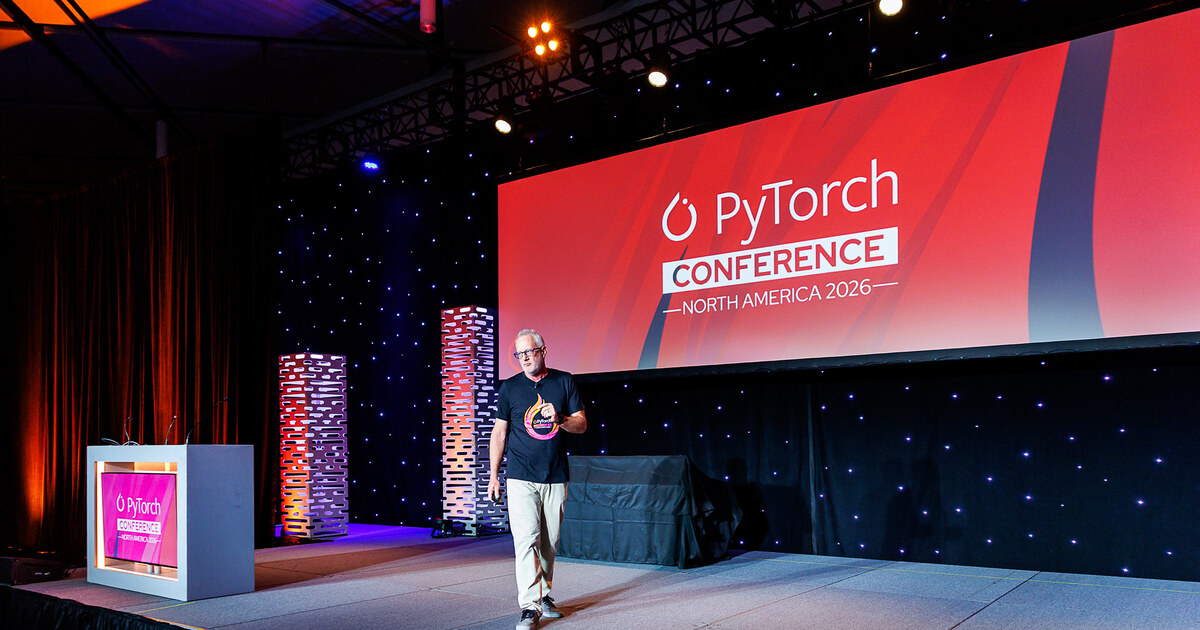
The open-sourcing of TorchTPU by Google and Meta at PyTorch Conference North America 2026 is a genuine step forward, but it is not the reset button some developers might hope for. Making a native PyTorch backend for Google's TPUs freely available removes a real friction point for teams who want to experiment with hardware beyond the Nvidia ecosystem. The fact that Meta plans to move larger LLM workloads onto TPUs using this backend signals serious institutional confidence. Yet the same week, AWS released its own equivalent, TorchNeuron for Trainium, which tells you everything about where this is headed: every cloud giant wants you writing PyTorch code that runs best on *their* silicon.
This is where the developer conversation gets interesting, and a little tense. The practical reality for our readers is that TorchTPU lowers the barrier to trying Google's hardware, but it does not solve the availability question. Developers at the conference openly asked whether they can actually get TPU access at scale, and that is the right question. Open-source code is meaningless if the hardware it targets remains a scarce resource behind a managed cloud portal. Compare this to the flexibility Google showed with Google's ML Drift Opens On-Device AI to Any GPU Environment, where the company released a cross-platform GPU compute engine that runs on any GPU environment. That was a genuine move toward portability. TorchTPU, by contrast, is a move toward lock-in, just dressed in open-source clothing.
We should also consider what this means for the tools developers use daily. Google recently demonstrated how AI can optimize its own developer toolkit overnight, as covered in A 40% Speed Gain: How AI Optimized a Developer Toolkit Overnight. That kind of compounding efficiency is exactly what a well-integrated backend like TorchTPU could enable on TPUs, but only if the hardware is accessible enough for those optimizations to matter to a broad audience. The tension here is not technical; it is structural. The code is open, but the compute is not. If your team cannot provision TPU pods reliably, the open-source backend is a curiosity, not a tool.
The most concrete takeaway for our readers is this: vendor lock-in has not disappeared; it has just moved up the stack. Instead of being locked into a proprietary framework, you are now being locked into a hardware ecosystem via a standard framework. TorchTPU makes PyTorch the universal language, but TPUs remain the exclusive runtime for that language's full performance. The question to watch is whether Google will match that code openness with hardware openness, or whether this remains a one-way door. Until TPU availability becomes as routine as spinning up a GPU instance, the practical advantage of TorchTPU belongs primarily to Meta and Google themselves.