Beyond Market Intelligence

Acme AI is the next-generation, AI-powered spreadsheet platform built to replace Excel and redefine how analysts, data scientists, and enterprise teams work with data. Read more

Page 33

🐈Data Science
Data Science

Public health academia to industry

Transitioning from public health academia to industry data science requires a strategic approach. Your experience with biostatistics, machine learning, and causal inference – particularly publications in journals like *JAMA Open* – establishes a strong foundation. While SQL proficiency and test-style probability questions are valuable, prioritize demonstrating practical application. Focus on building a portfolio showcasing data manipulation, model deployment, and impactful insights. Consider exploring resources like "A Marc Benioff-backed startup thinks AI can solve the AI deployment problem" for perspectives on current industry challenges and solutions.

🐈AI News & Strategy Daily | Nate B Jones
AI News & Strategy Daily | Nate B Jones

Leopold Aschenbrenner's Warning Signal Apple Completely Missed

Leopold Aschenbrenner, a respected AI safety researcher, recently highlighted a critical oversight in Apple’s Vision Pro spatial computing platform. His warning centers on the device’s potential to foster an over-reliance on AI-generated content, blurring the lines between reality and simulation. Aschenbrenner argues this poses a significant risk to critical thinking and societal understanding. Failing to address this now risks normalizing a future where discerning truth becomes increasingly challenging, demanding immediate attention from developers and users alike.
🐈Data Science
Data Science

Is everybody around you getting laid off right now?

Recent reports suggest widespread layoffs are impacting numerous industries, and you’re not alone in observing this trend. Many companies, including those we work with, are currently undergoing restructuring. While anecdotal evidence can be alarming, the unemployment rate hasn't reached 95%, but the current climate is undeniably challenging. If you’re seeking broader context on economic shifts, explore our related article, "Government and government-adjacent professionals: How much (if any) change have you felt in your job under the current administration?"
🐈Data Science
Data Science

Relevant tech stack for 2026/2027

As a data scientist transitioning to team leadership, future-proofing your tech stack is a smart move. By 2026/2027, expect a shift towards more robust data engineering practices and cloud-native solutions. Prioritize expanding beyond SQL and Python to include tools like Apache Spark for distributed processing and exploring cloud platforms like AWS or Azure for scalability. Familiarize yourself with orchestration tools like Airflow to automate workflows.
Java News Roundup: OpenJDK JEPs, Jakarta EE, GraalVM, TornadoVM, Micronaut, Quarkus, JobRunr, Maven
InfoQ

Java News Roundup: OpenJDK JEPs, Jakarta EE, GraalVM, TornadoVM, Micronaut, Quarkus, JobRunr, Maven

This week’s Java News Roundup, published July 27th, 2026, delivers critical updates across the ecosystem. Key highlights include targeted and proposed JEPs for OpenJDK JDK 28, alongside the general availability of GPULlama3.java 1.0. Developers should also note point releases for Micronaut, Quarkus, and JobRunr, alongside a JDKUpdater maintenance release and Maven 4.0’s sixth release candidate. Notably, the first milestone of Jakarta Agentic AI 1.0 signals exciting advancements in AI integration. For deeper insights into agent frameworks, explore our article, "Embabel Agent Framework Reaches
How to control reasoning effort and thinking-token budgets in LLMs
Data Science

How to control reasoning effort and thinking-token budgets in LLMs

## Optimizing LLM Performance: Controlling Reasoning Effort Efficiently managing reasoning effort and token budgets is critical for cost-effective and responsive Large Language Models (LLMs). /u/rhiever’s submission explores practical techniques for controlling these parameters, allowing developers to fine-tune model behavior and optimize resource utilization. This approach empowers users to balance performance with cost, ensuring predictable and scalable LLM applications. For a broader perspective on streamlining AI workflows, consider "Structured Evaluation Pipelines to Improve Your AI Workflows.
Sequoia’s Shaun Maguire leads $1B round for nuclear startup Valar Atomics
TechCrunch

Sequoia’s Shaun Maguire leads $1B round for nuclear startup Valar Atomics

Valar Atomics, a nuclear technology startup, has secured a significant $1 billion funding round, led by Sequoia’s Shaun Maguire, achieving a $6 billion valuation. This substantial investment follows a pivotal development agreement with Nvidia, signaling a convergence of AI and advanced energy solutions. Valar Atomics is pioneering a future-focused approach to nuclear fission, demonstrating the potential to transform energy production through innovative technology. This round empowers continued development and underscores the growing confidence in their transformative vision.
A Guide to Saving Token Usage with Multi-Agent AI
KDnuggets

A Guide to Saving Token Usage with Multi-Agent AI

Scaling multi-agent AI can unlock incredible potential, but escalating costs are a common concern. This guide outlines four key strategies to optimize token usage and ensure efficient scaling. Learn how to streamline your architecture without sacrificing performance, enabling you to explore increasingly complex AI applications. We’ll equip you with practical techniques to maximize your investment and drive tangible results. For a deeper dive into agent architecture and real-world API performance, see our article, "Does MiniMax Agent Actually Make Work Easier?".
A technical timeline of the July 2026 frontier-lab AI agent intrusion into Hugging Face
Data Science

A technical timeline of the July 2026 frontier-lab AI agent intrusion into Hugging Face

A detailed technical timeline documenting the July 2026 frontier-lab AI agent intrusion into Hugging Face has been submitted by /u/rhiever and is now available for review [link] [comments]. This comprehensive resource offers a critical examination of the event's progression, highlighting key vulnerabilities and potential mitigation strategies. Understanding this incident is paramount to strengthening AI security protocols. For further context on the challenges of expectation management in machine learning, explore our related article, "Why is it that stakeholders expect ML models to have 0% error rate?".
🐈Machine Learning
Machine Learning

Neurips 2026: does every metareview recommend accept/reject? [D]

Navigating NeurIPS decisions can be perplexing. A recent discussion reveals a surprising trend: some metareviews already include an accept/reject recommendation—often a rejection. Your team’s experience, with a metareview expressing cautious optimism despite reviewer disengagement, highlights this complexity. While a strong rebuttal is crucial, the lack of engagement raises questions about future prospects. As explored in "No rebuttals from NeurIPS authors," reviewer responsiveness remains a significant challenge. Consider carefully whether continued hope aligns with the current situation.
🐈Data Science
Data Science

How do you decide whether a data science problem really needs machine learning?

Deciding when to leverage machine learning versus a simpler analytical approach is a critical step in any data science project. Often, the allure of complex models overshadows the value of robust, interpretable methods. Factors like data volume, the complexity of relationships, and the need for explainability should guide your decision. If clear patterns emerge through traditional analysis, building a machine learning model may be unnecessary.
Samsung bans smart TV apps that share users’ internet connections with strangers
TechCrunch

Samsung bans smart TV apps that share users’ internet connections with strangers

Samsung has taken decisive action, banning smart TV apps that share users’ internet connections with third parties. Recent security research exposes a growing threat: residential proxy networks leveraging these apps to route traffic through unsuspecting homes. This practice compromises user privacy and security, highlighting the need for robust safeguards. Discover how Samsung is prioritizing user protection, and explore the escalating landscape of AI-driven security challenges—as detailed in our recent article on Horizon3's $2 billion valuation and the increasing demand for AI-powered cybersecurity.
🐈Machine Learning
Machine Learning

neurips 2026: ACs and reviewers have disappeared [D]

NeurIPS 2026 reviewers and Area Chairs have inexplicably vanished, leaving several submitters in a state of uncertainty. Early rebuttal submissions, made via the designated "Rebuttal" button before the official discussion period opened, appear to have triggered no notifications, a problem also experienced by reviewers. Despite attempts to utilize meta-comments, reminders, and direct PC contact, responses remain absent with only one day left in the review cycle. This situation, impacting potential oral and spotlight candidates, highlights a systemic issue.
🐈Machine Learning
Machine Learning

EMNLP vs AACL commitment: Meta 3.5, reviews 3/3/4, what to do?[D]

Navigating conference commitment decisions can be complex, especially as a first-time solo author. Given your strong reviews—averaging 3/3/4 with a 3.5 meta—both EMNLP and AACL present viable options. Currently, EMNLP generally holds a slightly higher prestige ranking. Considering the meta-review's emphasis on empirical rigor and practical value, alongside the noted concern about presentation, we estimate a reasonable chance for EMNLP Main, though Findings remains a possibility.
I have trained a model to predict my blood sugar [P]
Machine Learning

I have trained a model to predict my blood sugar [P]

A novel AI model for blood sugar prediction has been released, offering a future-focused approach to diabetes management. This encoder-only transformer, leveraging a BERT-style architecture, accurately forecasts blood glucose levels up to two hours ahead by analyzing past and future data (glucose, carbs, insulin), conditioned on announced meals and boluses. Four model sizes exist, ranging from a compact nano version (<40K parameters) to a 17-million-parameter large model. As discussed in "Conference Reviews: Asking Too Much?
🐈Machine Learning
Machine Learning

[D] Simple Questions Thread

Welcome to the Simple Questions Thread [D]! To maintain clarity and streamline support, please direct all your inquiries here instead of initiating new threads. This thread remains active until the date indicated in the title, so continue posting your questions and answers afterward. We appreciate everyone’s contributions to the previous thread. Curious about commitment submissions? See our recent article, "EMNLP Commitment Submission number [D]," for related insights.
The AI Was the Easy Part: What Is a Forward-Deployed Engineer in a Supply Chain?
Towards Data Science

The AI Was the Easy Part: What Is a Forward-Deployed Engineer in a Supply Chain?

The rise of AI often overshadows the human expertise driving its practical application. "The AI Was the Easy Part" explores a critical, often unseen role: the Forward-Deployed Engineer. We detail what truly defines this position—beyond the technical skills—through a real-world supply chain project. Discover how these engineers bridge the gap between sophisticated AI models and tangible business outcomes. For a deeper dive into the engineering layers underpinning AI applications, see our article, "Prompt, Context, Loop: The Three Engineering Layers Every RAG System Is Built On."
WhatsApp says it is is fixing an issue that disabled several accounts
TechCrunch

WhatsApp says it is is fixing an issue that disabled several accounts

WhatsApp users experienced unexpected account lockouts earlier today, a situation Meta is now actively resolving. The issue stemmed from a mistaken flagging process that placed numerous accounts "under review," disrupting communication for affected individuals. Meta confirms it’s working to restore access swiftly and anticipates a full resolution shortly. This incident highlights the complexities of managing user accounts at scale, a challenge explored in greater detail in our recent piece, "How precise are polls really, a Pew explainer on margin of error."
🐈Machine Learning
Machine Learning

No replies to rebuttals and comments even by AC [D]

A concerning trend has emerged: many submissions are experiencing a complete lack of response to submitted rebuttals, even from Area Chairs. This situation, where feedback isn't addressed during the designated discussion period, undermines the review process. While frustrating, it’s crucial to acknowledge this systemic issue. Our community is actively documenting these challenges – see, for example, "No rebuttals from Neurips authors [D]" for broader coverage. Explore alternative strategies for ensuring your work receives due consideration despite these obstacles.
Outernet turns your saved posts into real-world adventures
TechCrunch

Outernet turns your saved posts into real-world adventures

Stop letting online discoveries fade into digital archives. Outernet, founded by the creators of Pursuit – San Francisco’s renowned citywide scavenger hunt – transforms your saved places and events into tangible adventures. Our app intelligently nudges you to experience the world around you, bridging the gap between inspiration and action. Explore Outernet and reclaim your offline life. For further insights into how platforms are addressing online content quality, see our recent article, "LinkedIn adds a button to report AI-generated ‘slop’."
How precise are polls really, a Pew explainer on margin of error
Data Science

How precise are polls really, a Pew explainer on margin of error

Polls offer a snapshot of public opinion, but how precise are they really? Pew Research Center’s explainer clarifies the crucial concept of margin of error, revealing how it impacts the reliability of survey results. Understanding this statistical measure is essential for interpreting poll findings accurately and discerning meaningful trends from random variation. Explore the nuances of polling precision and learn how to critically evaluate data—a skill vital in today's information landscape. For further reflections on navigating complex data, see "Reflections on Airbnb."
HubSpot Redesigns JITA Authorization with Rule Engine Architecture
InfoQ

HubSpot Redesigns JITA Authorization with Rule Engine Architecture

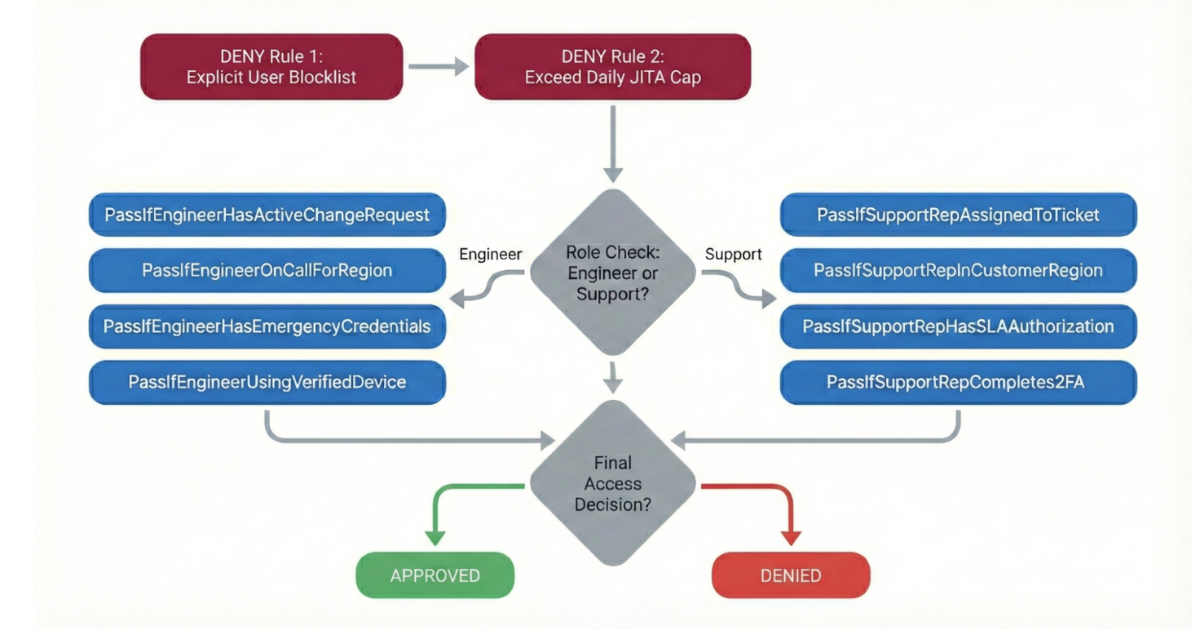
HubSpot has significantly enhanced its Just-In-Time Access (JITA) authorization system, transitioning to a rule engine architecture for improved efficiency and governance. This redesign evaluates access requests through a structured, directed acyclic graph of rules, providing clear decision metadata and observability. The new system replaces complex conditional logic, empowering administrators with streamlined workflows and enhanced control. For further insights into the evolving landscape of identity security, explore our coverage of Okta’s recent acquisition of Permiso.
Congress’s favorite AI tool? ChatGPT
TechCrunch

Congress’s favorite AI tool? ChatGPT

Capitol Hill is embracing AI, and the data confirms it: OpenAI's ChatGPT has emerged as Congress’s go-to tool. House spending records reveal widespread reliance on the chatbot for drafting memos, summarizing complex legislation, and streamlining constituent communications. This represents a significant shift in how congressional offices manage information and engage with the public. For those interested in optimizing AI workflows, explore "Structured Evaluation Pipelines to Improve Your AI Workflows" for deeper insights.
🐈Data Science
Data Science

Should you worry about staying at one job for more than 4-5 years?

The question of job tenure – specifically, whether staying put for 4-5 years is too long – is increasingly common. You're not alone in feeling a pull toward exploring new opportunities, even amidst a stable role and industry. While contentment and a strong callback rate are positives, consider the potential for specialization. As one user recently observed, "ChatGPT 5.6 is a dumber model. I love it," sometimes a shift in perspective—or role—can unlock unexpected growth.
🐈Machine Learning
Machine Learning

ARR August Cycle [D]

The ARR August Cycle [D] submission count currently sits below 500, prompting questions about its significance in identifying the intended venue, potentially EACL. While the count alone isn't definitive, understanding historical patterns across previous ARR cycles could offer valuable insight. It’s likely the lower number reflects ongoing submissions rather than a completed tally. Are others preparing submissions for this cycle, particularly with EACL 2027 as a target? Share your experiences and observations.
🐈Data Science
Data Science

Do Legacy Organizations/Government Have More AI Talent Than AI Problems?

Many organizations, particularly legacy institutions and government entities, possess significant AI talent but face a surprising bottleneck: a lack of foundational data maturity. Discussions often leap to advanced AI solutions like RAG and agent frameworks before addressing core issues—data accuracy, governance, and accessibility. Before pursuing autonomous agents, establishing reliable data pipelines and answering fundamental questions about data origins and ownership is critical. As explored in "Stop Graphing Everything," even seemingly advanced techniques benefit from a solid data foundation.
How to Build CLI Agents with Python & Ollama
Towards Data Science

How to Build CLI Agents with Python & Ollama

Unlock the power of local AI with this practical guide to building Command Line Interface (CLI) agents using Python and Ollama. This tutorial empowers you to create custom agents from scratch, entirely free of charge. Explore the fundamentals of agent design and implementation, leveraging the efficiency of local LLMs. For a deeper dive into the engineering layers underpinning these systems, see our article, "Prompt, Context, Loop: The Three Engineering Layers Every RAG System Is Built On." Discover a future-focused approach to data interaction and automation.
🐈Machine Learning
Machine Learning

Deep Dive on RL and OPD for Training LLMs [D]

Recent advancements in large language model (LLM) training, exemplified by models like Kimi and Qwen, increasingly leverage policy distillation and reinforcement learning from human feedback (RLHF) techniques. To demystify these powerful methods, we’ve published a deep dive exploring the underlying mathematics and code—connecting these algorithms to pretraining and supervised fine-tuning. Discover how RL and OPD are shaping the future of LLMs. Explore the full explanation here: [https://youtu.be/MaZWafi4gYY?is=8jLkAp_Fe86abUVP](https://youtu.be/MaZWafi4gYY?is=8j
🐈Machine Learning
Machine Learning

[D] Self-Promotion Thread

Showcase your innovative projects and ventures in our dedicated self-promotion thread! This space empowers you to share personal projects, startups, product placements, and collaboration needs directly with the community. Please clearly outline payment and pricing structures for any products or services offered. To maintain a valuable environment, refrain from using link shorteners or auto-subscribe links. As highlighted in "VC-backed startups commit more fraud, and researchers think they know why," transparency is key. Let’s foster a supportive space—direct questions about new posts here!
A short project analysing the radio
Data Science

A short project analysing the radio

Here's a concise introduction, crafted to align with the provided brand voice and incorporating a related article reference: This project explores a surprisingly rich data source: the humble radio! Driven by a desire to engage with a more traditional data science approach, I analyzed recordings from Sydney radio stations to uncover patterns in advertising. While lacking direct business value, the findings reveal fascinating insights into ad frequency, correlation, and even advertiser strategies.
🐈Data Science
Data Science

MS in Operations Research vs Data Science

Choosing between an MS in Operations Research (OR) and Data Science after a Data Science undergraduate degree presents a strategic career decision. While specialization in Data Science offers continued focus, an OR degree can broaden your problem-solving toolkit and potentially unlock unique opportunities, especially given your current Operations Research Analyst role. OR is demonstrably math-intensive; beyond your existing calculus, linear algebra, and statistics foundation, expect to delve into optimization, stochastic modeling, and simulation.
Why Reddit Data Scientists Keep Saying Not To Use Prophet
Data Science

Why Reddit Data Scientists Keep Saying Not To Use Prophet

A recurring sentiment within the Reddit data science community cautions against relying on Facebook’s Prophet for time series forecasting. This post explores why, presenting initial observations and a small experiment to understand the underlying concerns. While Prophet offers accessibility, the community often finds its limitations outweigh the benefits in more complex scenarios. For those seeking robust evaluation strategies to improve forecasting workflows, our article, "Structured Evaluation Pipelines to Improve Your AI Workflows," provides deeper insights.
🐈Data Science
Data Science

My job makes me happy and satisfied but doesn’t pay me enough. How to think about this situation?

Navigating a fulfilling yet financially constrained role requires a strategic perspective. You’ve cultivated a rare environment—stability, respect, and growth—a valuable asset often overlooked. While a $50K salary increase represents a tangible benefit, consider its long-term impact versus the potential disruption of leaving a positive culture. Prioritize a clear assessment: quantify the value of your current peace of mind, then objectively weigh that against the financial gains. This framework empowers a future-focused decision.
Does MiniMax Agent Actually Make Work Easier?
KDnuggets

Does MiniMax Agent Actually Make Work Easier?

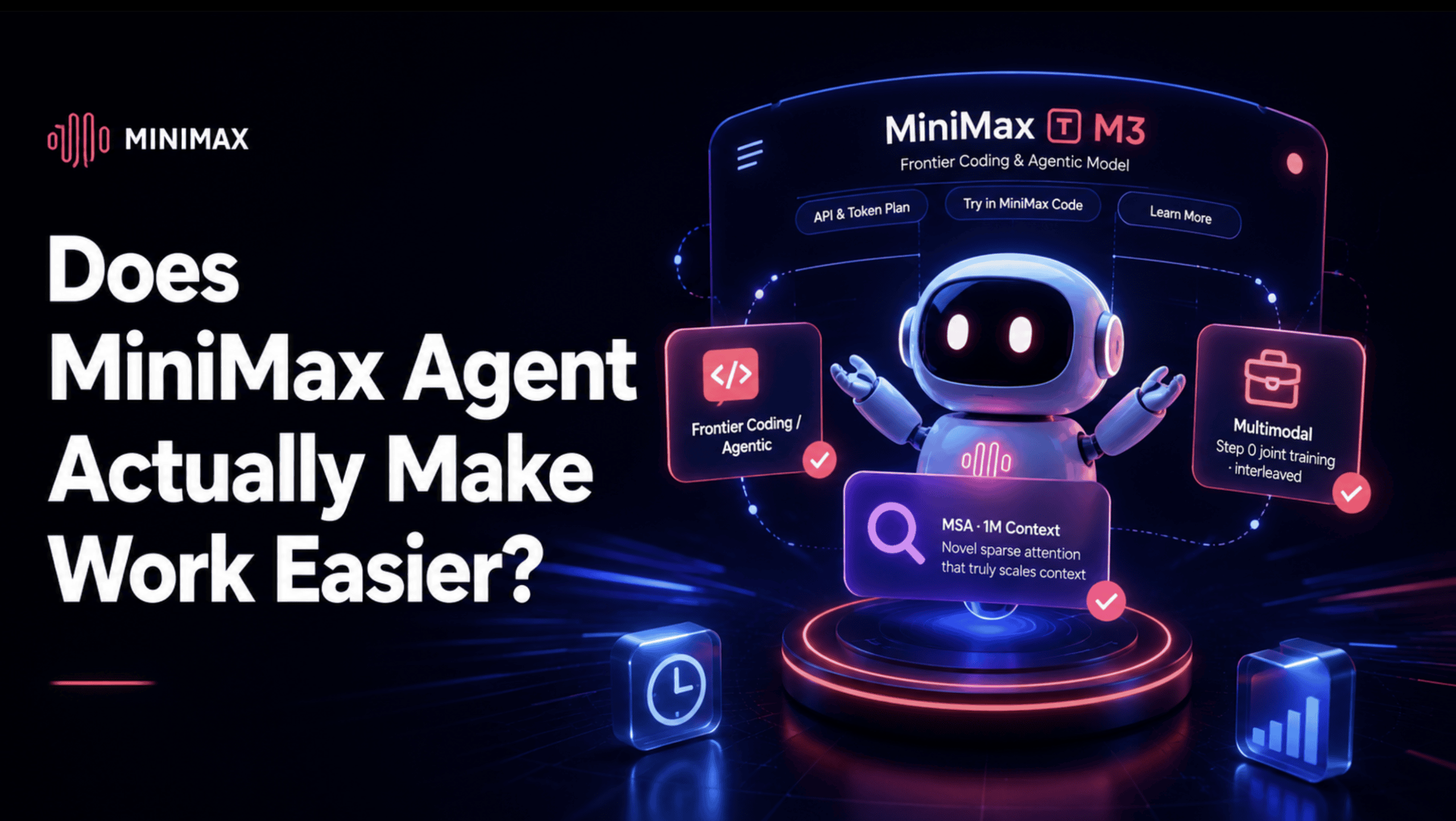
Does MiniMax Agent actually simplify workflows? This deep dive explores MiniMax’s architecture and demonstrates its performance through a real-world API task. Beyond the initial launch, we reveal key components of the MiniMax story, clarifying its capabilities and design. Discover how this AI-native approach transforms data management—moving beyond the limitations of traditional spreadsheets. For a broader understanding of the evolving AI agent landscape, see our analysis of the July 2026 Hugging Face intrusion.
Base Power raises another $1B to save the grid using backyard batteries
TechCrunch

Base Power raises another $1B to save the grid using backyard batteries

Base Power has secured a significant $1 billion investment to accelerate its mission of transforming grid resilience through distributed energy resources. The company’s innovative approach leverages residential batteries – essentially, “backyard batteries” – to create a more robust and responsive power network. This substantial funding will directly fuel increased production, enabling Base Power to empower homeowners and utilities alike with a future-focused solution for grid stability and energy independence. Explore how Base Power is reshaping the energy landscape.
🐈Machine Learning
Machine Learning

Looking for the right pipeline to convert academic textbook figures into interactive/editable assets [R]

🐈Machine Learning
Machine Learning

VLMs can score well on benchmarks, while silently erasing meaningful terms and including hallucinate bias [P]

HashiCorp Ships Public Beta of Vault Kubernetes Key Management
InfoQ

HashiCorp Ships Public Beta of Vault Kubernetes Key Management

HashiCorp has released a public beta of Vault Kubernetes key management, a significant advancement for secure data handling. This KMS v2-compatible plugin allows Kubernetes API servers to delegate envelope encryption to Vault Enterprise, effectively isolating critical key encryption keys from the cluster itself. This shift strengthens security posture by establishing a separately governed trust domain. Explore this innovative approach to Kubernetes security—a topic also addressed in our recent article detailing Terraform’s new tfpolicy framework.
Presentation: Architecting AI Systems for the Messy Reality of Enterprises: Why Agentic Compute is the Missing Layer
InfoQ

Presentation: Architecting AI Systems for the Messy Reality of Enterprises: Why Agentic Compute is the Missing Layer

Scaling enterprise AI agentic platforms demands a pragmatic approach to the messy realities of organizational data and workflows. Arun Joseph’s presentation, "Architecting AI Systems for the Messy Reality of Enterprises," reveals crucial insights gleaned from Deutsche Telekom’s LMOS platform. He outlines how to bridge organizational silos, consolidate tool sprawl, and evolve beyond basic chatbots toward operational intelligence—all through ephemeral agents and a standardized Agent Definition Language (ADL). For deeper understanding of the underlying data infrastructure, explore our "LanceDB Vector Database Guide."
Article: Enabling Evolutionary Architecture Through the Preservation of Change Locality
InfoQ

Article: Enabling Evolutionary Architecture Through the Preservation of Change Locality

Why do seemingly minor features trigger complex cross-team negotiations? This article, "Enabling Evolutionary Architecture Through the Preservation of Change Locality," explores how boundary drift erodes change locality, increasing cognitive load. Authors Michael Fischer, Nicholas Lawrence, and Monica Karekar present practical sociotechnical strategies—redistributing mechanics, exposing essential policy, and rehearsing exception paths—to restore domain boundaries and foster a truly evolutionary software architecture. For further insight into related technologies, see our article, "Embabel Agent Framework Reaches 1.0."
How Claude Help Me Build My $200k+ ML Resume
Towards Data Science

How Claude Help Me Build My $200k+ ML Resume

Securing a high-paying Machine Learning role demands a resume that clearly demonstrates expertise. Learn how to leverage Claude, a powerful AI assistant, to craft a compelling resume that commands attention and unlocks opportunities for salaries exceeding $200,000. This guide, featured on Towards Data Science, details a practical approach to using Claude for resume optimization, ensuring your skills and experience are presented with authority and precision. Discover a streamlined process for building a resume that truly reflects your value.
A Marc Benioff-backed startup thinks AI can solve the AI deployment problem
TechCrunch

A Marc Benioff-backed startup thinks AI can solve the AI deployment problem

June emerged from stealth today, backed by Marc Benioff and fueled by a $20 million pre-seed round, with a focused mission: to simplify AI deployment. Many organizations struggle to translate AI potential into practical results, and June aims to bridge that gap. The startup’s approach promises to make AI adoption more accessible and efficient, empowering teams to leverage its power without complex infrastructure hurdles. For a deeper dive into architecting AI systems for enterprise realities, explore Arun Joseph’s recent presentation on agentic compute.
Microsoft Agent Framework Harness and Hosted Agents Reach General Availability
InfoQ

Microsoft Agent Framework Harness and Hosted Agents Reach General Availability

Microsoft's Agent Framework achieves General Availability, marking a significant shift from SDK-based development to a governed runtime platform. Build 2026 introduced the Agent Harness alongside key connectors and orchestration patterns, now stabilized and ready for production use. Foundry Hosted Agents also reach GA, streamlining deployment. This evolution empowers developers to confidently build and run AI agents, moving beyond experimentation toward practical application. For Java and Kotlin developers exploring agent frameworks, the Embabel Agent Framework’s recent 1.0 release offers a valuable perspective.
Podcast: WebAssembly on the JVM: Feature Evolution, Performance, and the Transition to Endive
InfoQ

Podcast: WebAssembly on the JVM: Feature Evolution, Performance, and the Transition to Endive

Unlock the future of server-side computation with our latest podcast episode: "WebAssembly on the JVM: Feature Evolution, Performance, and the Transition to Endive." Andrea Peruffo expertly details WebAssembly's expansion beyond the browser, highlighting significant performance gains through JIT compilation and showcasing real-world applications—from edge computing to modular plugin systems. Discover how this technology is transforming data management and enabling innovative architectures. For deeper insight into optimizing complex systems, explore our article, "The 3× Token Bill We Didn’t See Coming."
Don't tell AI what to do in 2026. Do this instead #AI #aiagents #Codex #Fable5 #automation
AI News & Strategy Daily | Nate B Jones

Don't tell AI what to do in 2026. Do this instead #AI #aiagents #Codex #Fable5 #automation

The future of AI isn’t about dictating instructions to agents in 2026; it's about empowering them to learn and adapt. Instead of prescriptive commands, focus on defining desired outcomes and providing robust datasets. This shift unlocks true automation potential, moving beyond rigid workflows to intelligent problem-solving. Explore frameworks like Codex and Fable 5 to cultivate AI agents capable of independent reasoning and continuous improvement—a far more transformative approach than traditional prompting.
Embabel Agent Framework Reaches 1.0
InfoQ

Embabel Agent Framework Reaches 1.0

Embabel Agent Framework has officially reached version 1.0, establishing a robust foundation for AI agent development within the Java ecosystem. This framework empowers Java and Kotlin developers to define agents as typed domain objects, leveraging the established Spring AI infrastructure. Embabel’s design combines flexible planning with predefined state machines, supporting multiple model providers for adaptable agent workflows.
Microsoft Releases TypeScript 7.0 with a Native Go Compiler, Delivering 10x Faster Builds
InfoQ

Microsoft Releases TypeScript 7.0 with a Native Go Compiler, Delivering 10x Faster Builds

TypeScript 7.0 arrives, dramatically accelerating development workflows with a native compiler—demonstrating build speed improvements of 8x to 12x across real-world projects. Microsoft’s release prioritizes performance, though a stable programmatic API will debut in the upcoming 7.1 version. A compatibility package ensures a smooth transition for existing tooling, reaffirming TypeScript’s commitment to open-source innovation. Explore this update to empower your data journey and discover a significantly faster development experience.
Sam Altman and AI’s decel debate
TechCrunch

Sam Altman and AI’s decel debate

The conversation around AI's rapid advancement has taken a notable turn. OpenAI CEO Sam Altman recently urged the industry to consider slowing the pace of AI development, sparking debate about responsible innovation. On the latest episode of Equity, we delve into the reasoning behind this call for measured progress. This discussion arrives amidst a surge of AI-powered applications – as illustrated by the recent explorations into AI agents detailed in “I Replaced a 15-Minute Booking Process with a LangGraph AI Agent.
Stop graphing everything: When GraphRAG actually beats vector RAG
VentureBeat

Stop graphing everything: When GraphRAG actually beats vector RAG

If you've navigated the complexities of Retrieval-Augmented Generation (RAG) in recent years, you’ve likely encountered a familiar challenge: standard chunking struggles with questions requiring synthesis across multiple data points. GraphRAG offers a compelling solution, building a knowledge graph to connect entities and relationships within your corpus. Recent evidence, spanning four independent studies, reveals a substantial advantage – particularly for global sense-making and multi-hop retrieval, yielding up to a +19.6 point gain in Recall@5.
The global memory shortage hits the MacBook Air
TechCrunch

The global memory shortage hits the MacBook Air

The global memory shortage is impacting availability of the consistently popular MacBook Air. While demand remains high, constrained supply of memory chips is creating delays for customers. This situation underscores the broader challenges in the semiconductor industry and highlights the importance of adaptable supply chain strategies. Explore how these limitations may affect your purchasing timeline and discover alternative configurations as Apple navigates this evolving landscape. We remain committed to providing updates and ensuring access to the MacBook Air as soon as possible.