Top 5 Claude Skills for Marketing
Our take
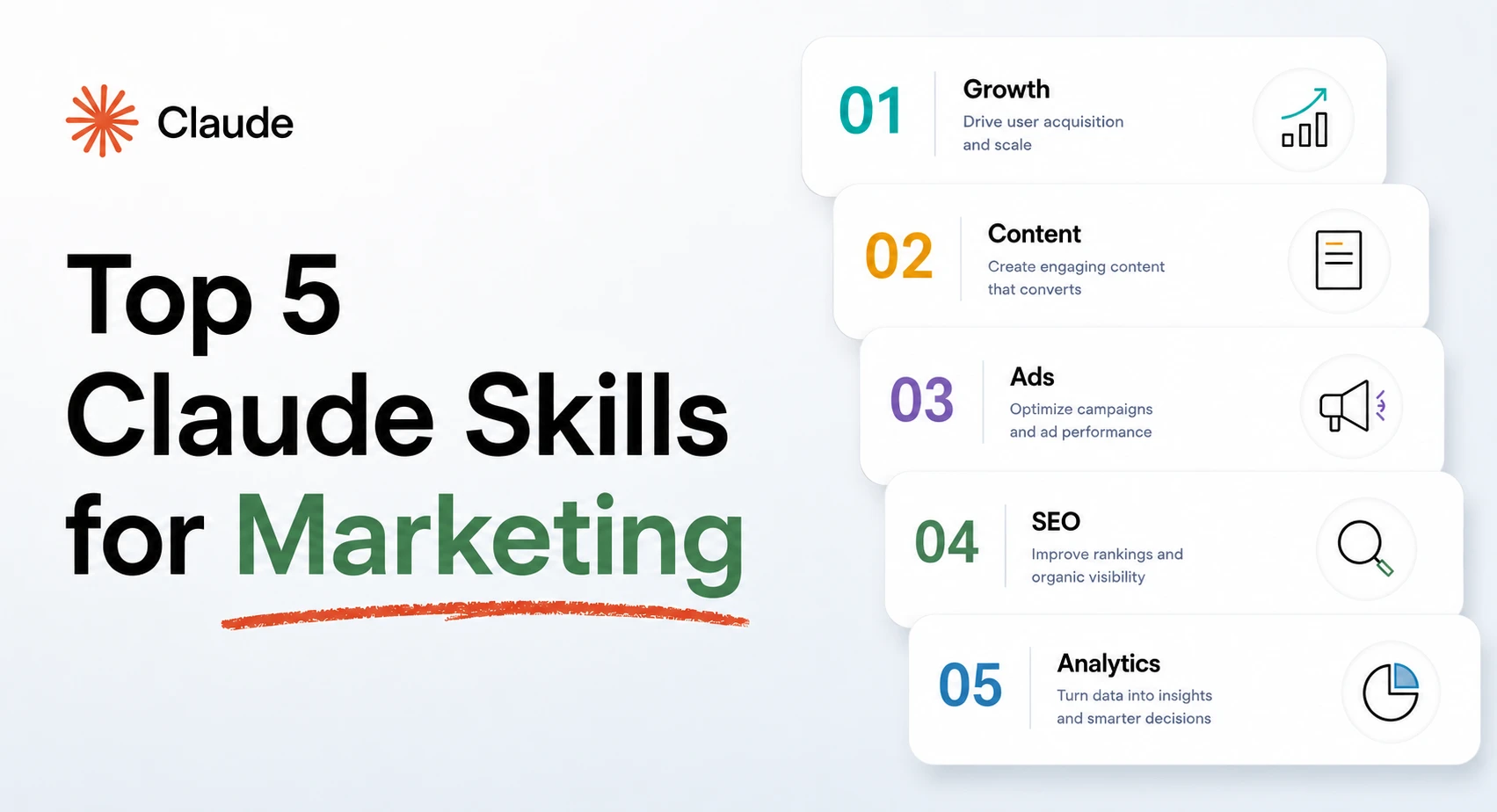
The recent Analytics Vidhya piece highlighting Claude’s marketing capabilities underscores a critical reality in the burgeoning AI-assisted workflow space: generative AI tools are powerful assistants, not replacements. While the ability to conjure ad copy or draft emails from a prompt is undeniably useful, as the article rightly points out, it’s merely a single, albeit valuable, step in a much larger, more complex marketing process. The work still demands strategic research, careful positioning, meticulous channel planning, rigorous quality control, and comprehensive reporting – tasks that even the most sophisticated AI currently struggles to fully automate. This echoes observations from elsewhere, such as the recent news of OpenAI acquiring presentation startup NextSlide OpenAI acquires presentation startup NextSlide, demonstrating a continued focus on integrating AI into specific creative workflows rather than a wholesale disruption of them. The challenge, as the article also notes, lies in navigating the deluge of information – sifting through general-purpose AI libraries to find those specifically tailored to marketing needs.
The broader significance here isn’t about dismissing Claude’s potential, but about recalibrating expectations. We’re moving beyond the initial hype around AI “taking over” creative roles and towards a more nuanced understanding of its function as a force multiplier. Consider the work being done to build production-ready web interfaces for AI agents, such as the development of a Streamlit UI for a LangGraph AI Agent Building a Streamlit UI for My LangGraph AI Agent. These efforts illustrate the emerging need for structured frameworks and specialized tools to effectively harness the power of AI within established workflows. Simply generating text, regardless of its quality, is insufficient. Data teams are also exploring ways to build trustworthy AI agents, exemplified by initiatives focusing on semantic governance in platforms like Snowflake Building Trustworthy Snowflake AI Agents with Semantic Governance, highlighting the growing awareness of responsible AI implementation and the need for guardrails.
This shift represents a significant opportunity for those building AI-native spreadsheet solutions. By focusing on the *processes* around content creation – the research, the analysis, the strategic planning – rather than simply the output itself, we can create tools that genuinely empower marketers and data professionals. The value lies not in replacing human creativity, but in amplifying it, streamlining tedious tasks, and providing deeper insights that inform better decision-making. A truly transformative solution will integrate AI capabilities seamlessly into the existing workflow, providing context, automation, and validation at every stage, rather than presenting a disconnected "magic" button. It's about building systems that understand the nuances of marketing, not just the mechanics of language generation.
Looking ahead, the key question will be how effectively we can bridge the gap between generative AI's raw creative potential and the structured requirements of professional marketing. Will we see the rise of specialized AI agents trained on marketing best practices and industry data? Or will the future lie in more sophisticated integrations of existing generative models within broader workflow management platforms? The evolution of these tools and the frameworks that support them will undoubtedly shape the future of marketing, demanding a continued focus on accessible, actionable intelligence and a pragmatic approach to AI adoption.
Claude can write an ad or email from a prompt. This is usually done manually. Useful, but hardly a coherent system. The work still needs research, positioning, channel planning, quality checks, and reporting. Claude’s marketing skills add to those missing processes. However, search results mix dedicated marketing repositories with huge general-purpose libraries. For a fair […]
The post Top 5 Claude Skills for Marketing appeared first on Analytics Vidhya.
Read on the original site
Open the publisher's page for the full experience