How Many Labeled Examples Does a Text Classifier Actually Need? I Measured It.
Our take
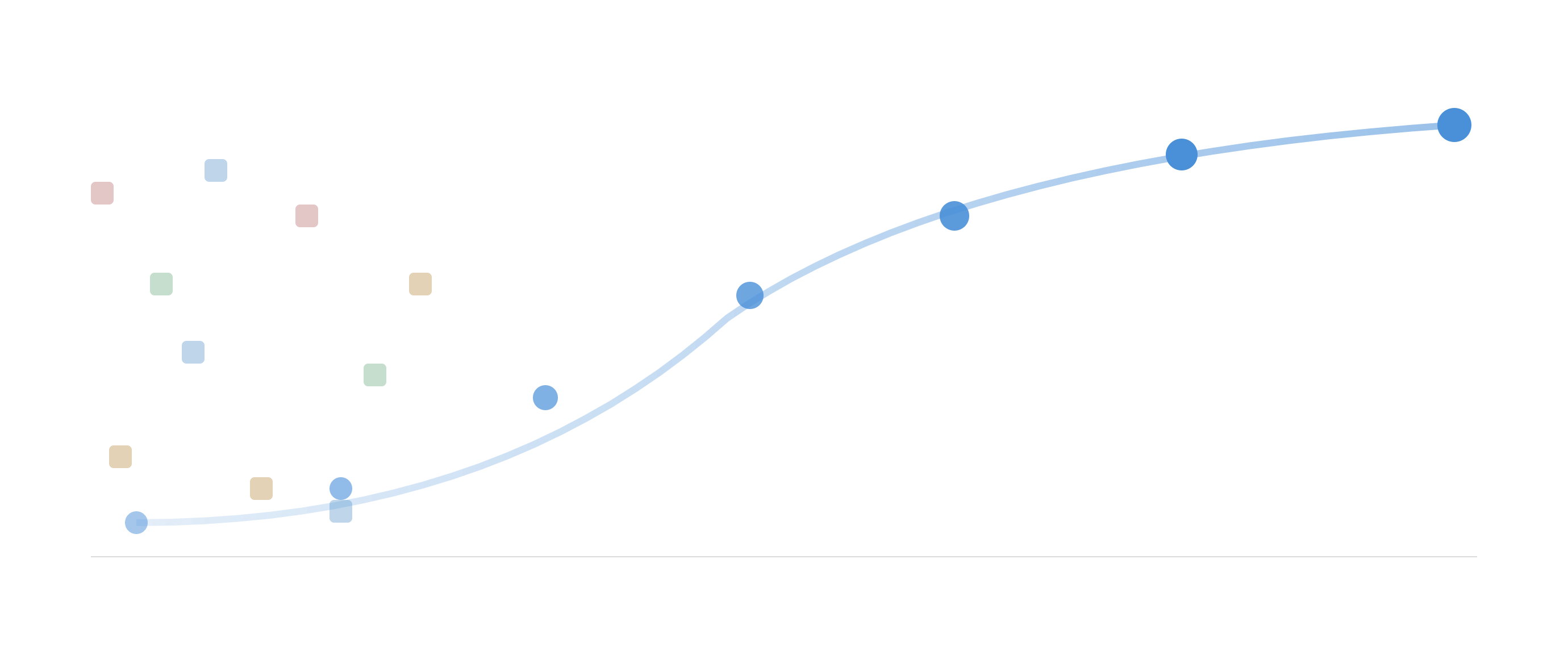
The recent article on Towards Data Science, "How Many Labeled Examples Does a Text Classifier Actually Need? I Measured It," serves as a crucial reminder in an era dominated by large language models (LLMs). It's tempting to immediately reach for an LLM API for any text classification task, but this piece rightly prompts us to pause and evaluate the potential of more established, and often more cost-effective, approaches. The author’s empirical investigation into traditional text classifiers demonstrates that, with even modest amounts of labeled data, these baselines can achieve surprisingly strong performance. This aligns with ongoing discussions around efficient resource utilization in machine learning, a theme explored in articles like [Microsoft Releases .NET 11 RC1 with Go-Live Support, C# 15 and F# 11 as Default Language Versions], highlighting the importance of optimizing existing tools before seeking out entirely new solutions. Furthermore, the focus on careful experimentation and benchmarking, as seen in [How to automatically find the batch size when using Accelerate with FSDP2?], reinforces the need for rigorous evaluation across different model architectures and configurations.
The significance of this finding extends beyond simply saving on API costs. It speaks to a broader shift in perspective within the AI community – a move away from the assumption that the "biggest" model is always the "best" solution. While LLMs offer impressive capabilities, they also introduce complexities around deployment, latency, and cost. Often, a well-tuned traditional classifier, leveraging techniques like TF-IDF or even simpler methods, can deliver acceptable accuracy with significantly lower overhead. The article’s methodical approach to measuring performance gains with increasing data provides concrete evidence to support this assertion, which is particularly valuable for teams operating with limited resources or facing real-time constraints. The emphasis on understanding the incremental value of additional labeled data is a practical takeaway that resonates with the iterative development processes often employed in machine learning projects, as also highlighted in [Duplicating baseline benchmarks].
The rise of LLMs has undoubtedly accelerated progress in natural language processing, but it hasn't rendered existing techniques obsolete. In fact, it has underscored the importance of a nuanced understanding of model trade-offs. This article’s findings encourage a more pragmatic approach to problem-solving, advocating for a thorough assessment of baseline models before committing to the substantial investment required for LLM-based solutions. This isn't to say that LLMs shouldn't be explored—they absolutely have their place—but it is a powerful argument for a more considered decision-making process. It's a call for data scientists to champion a culture of experimentation and to rigorously validate the benefits of advanced models against simpler, more established alternatives.
Looking ahead, the interplay between traditional machine learning techniques and the power of LLMs presents exciting opportunities. We might see a future where these approaches are combined, leveraging LLMs for feature engineering or data augmentation to enhance the performance of traditional classifiers. The key will be to strategically deploy each technology where it excels, maximizing efficiency and minimizing unnecessary complexity. The question now is: will this renewed focus on baseline performance lead to a broader re-evaluation of the entire AI development lifecycle, prompting a more holistic approach to model selection and optimization?
Before reaching for an LLM API on every classification problem, it's worth knowing what a decades-old baseline can already do with the labeled data you have — and exactly how much more data buys you.
The post How Many Labeled Examples Does a Text Classifier Actually Need? I Measured It. appeared first on Towards Data Science.
Read on the original site
Open the publisher's page for the full experience