Constraining Output Space for SLM Narrow Automation Optimization
Our take
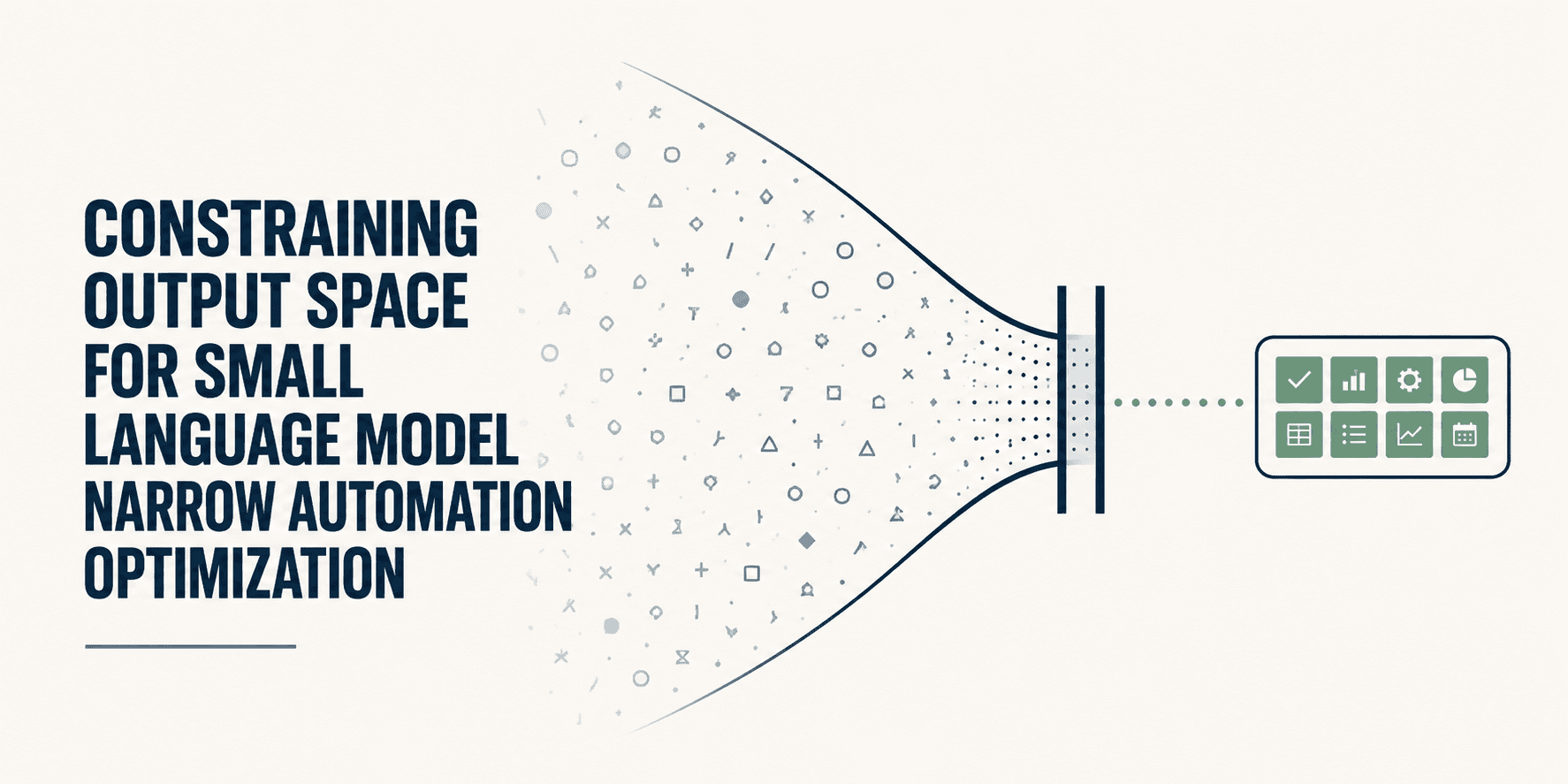
The ongoing evolution of Large Language Models (LLMs) presents both tremendous opportunity and persistent challenges. While the potential for automation across numerous workflows is undeniable, reliably extracting structured data from LLM-generated text often proves to be a bottleneck. The article "Constraining Output Space for SLM Narrow Automation Optimization" signals a welcome shift in approach, moving away from complex and often brittle parsing techniques and towards a more proactive strategy: shaping the LLM’s output to fit a predefined structure. This is a particularly insightful direction, aligning with broader efforts to enhance the predictability and control of AI systems. Understanding the nuances of these optimization strategies is crucial, particularly as we navigate the implications outlined in "New EU Guidelines For AI Labelling," where responsible AI development necessitates increased transparency and control over model behavior. The need for this control is further highlighted by how Artificial Intelligence Disrupts Engineering Progression, as we grapple with the changing skillsets and workflows AI necessitates.
The core concept of constraining output space—essentially guiding the LLM to produce data in a specific format (like JSON, CSV, or a predefined schema) rather than free-form text—offers a significant advantage. Parsing unstructured text is inherently error-prone; even subtle variations in phrasing can break a parser. By contrast, constraining the output shifts the burden to the LLM itself, prompting it to learn the desired structure during training or fine-tuning. This approach isn't entirely new, of course; prompt engineering frequently involves specifying output formats. However, the article’s focus on *optimization* suggests a deeper dive into techniques for systematically refining this constraint, potentially through reinforcement learning or other advanced methods. It’s a move towards more robust and reliable automation pipelines, a critical need as organizations increasingly integrate LLMs into mission-critical processes. The underlying principle resonates with the ideas explored in "The Loss Does Not See the Basis, But Adam Does [R]," suggesting that carefully shaping the training process—in this case, the output space—can lead to more stable and predictable model behavior.
The broader significance of this development extends beyond simply improving automation efficiency. It reflects a growing understanding within the AI community that control and predictability are paramount. The initial enthusiasm surrounding the sheer generative power of LLMs is giving way to a more pragmatic focus on *usable* AI. Organizations are realizing that unchecked generation can lead to unpredictable results, hallucinations, and compliance risks. Constraining output space is a tangible step towards addressing these concerns, offering a pathway to build more dependable and trustworthy AI systems. It’s a move away from treating LLMs as black boxes and towards a more engineered approach, where developers actively shape the model’s behavior to align with specific requirements. This shift is vital for fostering wider adoption of LLMs in regulated industries and for ensuring that AI systems are deployed responsibly.
Looking ahead, the optimization of output space constraints promises to be a fertile area of research and development. We can anticipate increasingly sophisticated techniques for automatically generating and refining these constraints, potentially leveraging meta-learning or other advanced approaches. The question now becomes: how can we best equip developers with the tools and methodologies to effectively shape the output of LLMs, ensuring both accuracy and adherence to evolving regulatory landscapes? Furthermore, what are the limits to this approach? Can we truly constrain LLMs enough to guarantee predictable behavior across a wide range of tasks, or will we continue to face challenges in managing the inherent complexity of these models? The answers to these questions will be crucial in shaping the future of AI-powered automation.
Read on the original site
Open the publisher's page for the full experience