GM redesigned its engineering workflows around AI agents — and tripled its merged pull requests
Our take
General Motors’ recent strides in autonomous vehicle development, as detailed by VP Rashed Haq at VB Transform 2026, offer a compelling case study in the practical application of AI agents beyond simple code generation. The revelation that GM engineers spend a mere 15% of their time directly writing code underscores a fundamental truth about modern software engineering: the process extends far beyond the keyboard. It’s a complex ecosystem of data analysis, experimentation, and iterative refinement. As we explore the rise of innovative AI tools for data analysis [5 Best AI Tools for Data Analysis You Should Try in 2026], the GM example highlights that the true power lies not in replacing developers but in augmenting their capabilities across the entire workflow. Furthermore, the challenges of deploying and managing AI models are evident in the broader discussions around meta-reviewer responses within the AI research community [How exactly does the NeurIPS meta reviewer response work? [D]].
What's truly remarkable about GM’s approach is its deliberate redesign of engineering workflows *around* these agents, rather than simply tacking on an AI coding assistant. Haq’s analogy of “doing it by loop” reveals a methodical strategy of identifying critical bottlenecks – simulation, road testing, and post-deployment monitoring – and systematically automating them. This isn’t about slapping an AI onto an existing process; it’s about fundamentally rethinking how work gets done. The use of Model Context Protocol (MCP) servers to grant agents access to internal tools and data, coupled with version-controlled "skills," clearly demonstrates a commitment to creating a robust and manageable AI infrastructure. The increased velocity of feature releases and reduced defects, resulting in roughly three times as many merged pull requests, are tangible proof of this strategy’s effectiveness. And with the growth of companies like Fish Audio, focusing on AI voice models [Fish Audio raises $52M seed to build AI voice models for creators and enterprises], it’s clear that AI is rapidly transforming various aspects of creative and technical workflows.
The human element remains crucial, and GM’s emphasis on engineer accountability and review processes is noteworthy. The agents are not operating in a vacuum; engineers retain oversight and responsibility for the outputs, ensuring quality and preventing unintended consequences. The company’s deployment of dedicated engineers to support the broader engineering teams further emphasizes this human-centered approach. This safeguards against the potential pitfalls of over-reliance on AI and ensures that the technology remains a tool to empower, rather than replace, human expertise. This careful orchestration suggests a maturity in AI adoption that goes beyond the hype often associated with “revolutionary” technologies. GM isn't seeking a “game-changer” – they’re building a sustainable competitive advantage through pragmatic, iterative improvements.
Looking ahead, GM’s success with agentic AI offers a valuable blueprint for other organizations grappling with the complexities of modern software development. The key takeaway isn't just the potential for increased productivity but the importance of holistic workflow redesign. The question now is: how readily can these principles be applied across different industries and organizational structures, and what new challenges will emerge as AI agents become increasingly integrated into the fabric of our work?
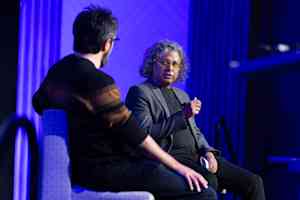
Software engineers at General Motors' (GM's) autonomous driving division spend only 15% of their time writing code, according to Rashed Haq, GM's VP of autonomous vehicles, in a recent onstage interview at VB Transform 2026.
GM is now using AI agents to accelerate much of the other 85%—including analyzing vehicle data, triaging problems, running experiments and testing potential fixes.
The result, Haq said, is roughly three times as many merged pull requests across GM’s autonomous vehicle engineering organization, faster releases and fewer defects escaping into later stages of development.
Haq said GM achieved those gains by redesigning complete engineering workflows around agents — not merely adding an AI coding assistant.
“If you give somebody just a chatbot which can do coding, there’s still a lot of inefficiency built into that process,” Haq said during a main-stage fireside chat at the luxurious Hotel Nia in Menlo Park, California.
Engineers spent most of their time outside the code editor before agentic AI
GM’s 15% figure may sound strikingly low, but research conducted before the rise of generative and agentic AI reached a similar conclusion.
A 2019 Microsoft study based on responses from 5,971 professional developers found that they spent an average of 96 minutes writing code on good workdays and 66 minutes on bad ones. That equals roughly 20% and 14% of an eight-hour day, respectively. A 2018 Stripe survey found that the average developer spent more than 17 hours each week on maintenance work such as debugging and refactoring.
There is no single industry benchmark: the Microsoft researchers noted that earlier studies placed coding anywhere from 9% to 61% of developers’ time, depending on how researchers defined and measured the work. But the findings reinforce Haq’s central argument. Long before agents arrived, writing code represented only one part of software engineering. Accelerating that step alone leaves much of the development process untouched.
“Doing it by loop became really important,” Haq said.
GM divided its autonomous vehicle work into several loops: developing and testing software in simulation, testing vehicles on public roads and monitoring vehicles after they reach customers. It then looked for the longest bottleneck in each loop, automated it and repeated the process.
GM gave agents access to internal tools and data
GM connected agents to internal tools and petabytes of company data through customized Model Context Protocol (MCP) servers. It also created version-controlled “skills,” or instruction documents that tell agents how to perform specific tasks.
One high-value application involves telemetry collected from vehicles on public roads. Agents can analyze that data, conduct an initial triage and create issues for engineers to investigate. Through MCP connections, they can also call the underlying tools used by WebViz, GM’s system for visualizing vehicle telemetry, rather than relying on the same graphical interface a person sees.
The findings still need to make sense to engineers. “The output has to be human readable,” Haq said. An agent might identify a potential problem, locate the affected component, search historical data for similar incidents and provide examples supporting its conclusion.
GM bases an agent’s permissions on those of the engineer using it.
“If an engineer was going to do this task and they need access to these things, then their agent needs access to those things,” Haq said. “The engineer still is accountable for the output of the agent.”
The company also uses background agents to run machine-learning experiments in parallel. An engineer defines an experiment and its parameters, then agents execute tests and collect the results.
Three times the pull requests — with fewer escaped defects
GM treated its internal agent platform as a product and assigned four deployed engineers to work directly with engineering teams. They helped employees identify useful workflows, spread successful practices and adopt the tools.
Haq said the resulting increase in merged pull requests represents more than higher code volume. “The velocity at which we’re releasing new features” increased, he said, while releases produced “fewer test escapes, bug escapes” and other problems.
People remain responsible at critical control points. Haq said GM established structured and unstructured tests and performance measurements before accelerating the wider workflow. Engineers review those measurements and determine whether each test still captures its intended goal before work advances toward production.
Haq said GM initially expected a more modest productivity gain. “I think our only surprise was how much we could do,” he said.
GM's approach didn't start with handing every developer a code generator. It started with mapping the full path from problem discovery to a verified fix in each loop — simulation, road testing, post-deployment monitoring — then giving agents controlled access to the tools and data needed to shorten the longest bottleneck at each stage.
Read on the original site
Open the publisher's page for the full experience