Harper Argues Against the Multi-System Stack and Releases 5.2
Our take
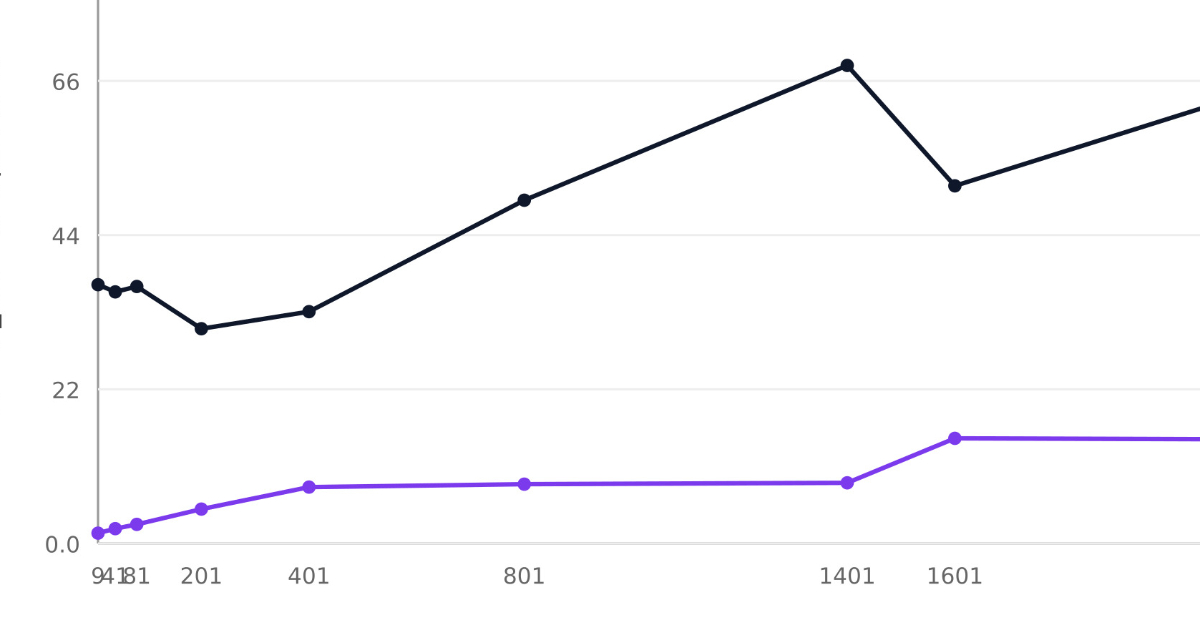
Harper’s recent arguments against the increasingly common multi-system stack, coupled with the release of version 5.2, highlight a growing tension in modern application development. The proliferation of specialized services – databases, authentication providers, serverless functions, and more – while offering individual benefits, introduces complexity and latency that can significantly impact performance, particularly for personalized data workloads. This approach, exemplified by the Vercel-based stack Harper benchmarks against, often leads to a fragmented architecture where data hops between services, creating bottlenecks and increasing operational overhead. We’ve seen similar discussions around optimizing developer workflows, as evidenced in articles like [Next.js 16.3: Instant Navigations, Up to 90% Less Dev Memory and Faster Builds], which demonstrate the drive for greater efficiency within single frameworks. The challenge lies in balancing the flexibility of microservices with the need for streamlined performance, and Harper’s proposition – a unified runtime – offers a compelling alternative. It’s also worth considering the practical realities of smaller teams, as illustrated by the question posed in [Simple data collection form?], where simplicity and ease of management often outweigh the theoretical advantages of a highly distributed architecture.
The core of Harper’s argument rests on the premise that co-locating application code and data within a single runtime eliminates the overhead associated with network requests and data serialization. Their benchmark results, demonstrating significantly better performance on live, personalized-data workloads compared to a Vercel stack, provide tangible evidence supporting this claim. While Vercel excels in areas like static site generation and front-end deployments, Harper’s focus on dynamic, data-intensive applications reveals a different set of priorities. It’s a reminder that the “best” architecture isn't a universal solution, but rather a choice tailored to the specific demands of the application. The newly released version 5.2, featuring a record cache and increased throughput per node, further strengthens Harper's position by directly addressing common performance bottlenecks. These improvements showcase a commitment to iterative refinement and a focus on delivering tangible value to users.
The broader significance of Harper's approach extends beyond just performance gains. It speaks to a potential shift away from the prevailing trend of hyper-specialization and towards a more integrated approach to application development. While the multi-system stack has enabled unprecedented levels of modularity and scalability, it has also introduced a new level of operational complexity that many teams struggle to manage. Harper’s single-runtime architecture offers a simpler, more cohesive alternative, potentially reducing development time, improving reliability, and lowering operational costs. The ability to perform complex calculations within a single environment, as suggested by the user’s request in [Add up bills in date range using only the day], further underscores the practical appeal of a more unified system. It’s a compelling argument for rethinking the fundamental building blocks of modern applications and prioritizing efficiency alongside flexibility.
Looking ahead, it will be interesting to see how Harper's approach is adopted by the wider developer community. The trend towards specialized services isn't likely to disappear entirely, but Harper's success could inspire a renewed focus on integrated solutions that prioritize performance and operational simplicity. The question remains: can a single-runtime architecture truly deliver on its promise of enhanced performance and reduced complexity, or will the benefits of modularity ultimately outweigh the costs? The ongoing evolution of database platforms and application architectures will undoubtedly shape the future of software development, and Harper is clearly positioning itself as a key player in this transformation.
The database platform Harper advocates for a single-runtime architecture that keeps application code and data together, with its benchmark against a Vercel-based stack reporting significantly better performance on live, personalized-data workloads. Harper recently released version 5.2, with a new record cache and more throughput per node.
By Renato LosioRead on the original site
Open the publisher's page for the full experience