How to Make Linear Regression Survive Outliers
Our take
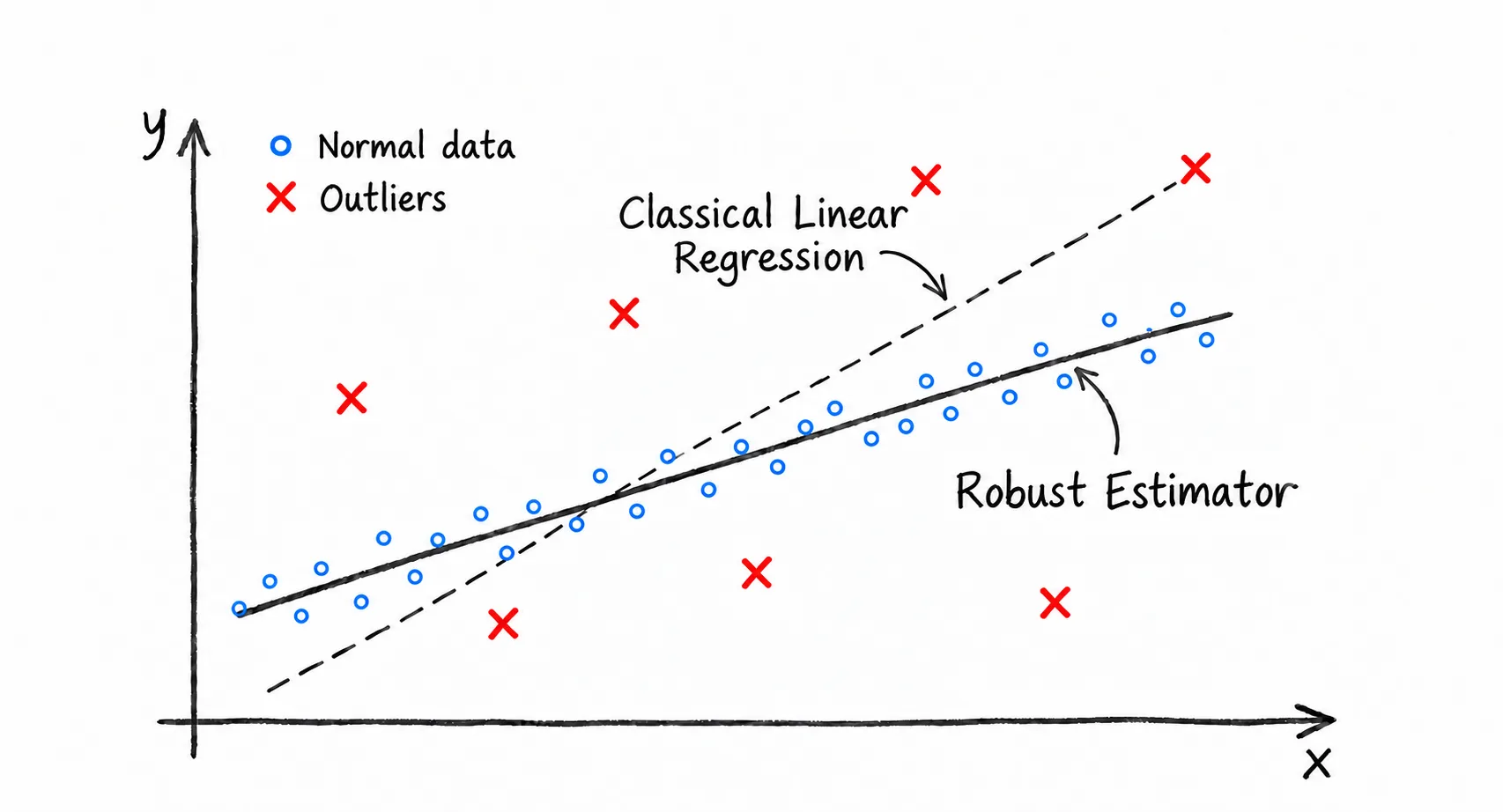
The ongoing challenge of outlier management in statistical modeling remains a surprisingly persistent hurdle, and the recent Towards Data Science piece, "How to Make Linear Regression Survive Outliers," offers a valuable deep dive into both established and emerging solutions. Linear regression, a cornerstone of data analysis, is notoriously sensitive to extreme values, which can disproportionately influence model parameters and skew results. The article’s robust estimation series, comparing classical and modern techniques through theory, code, and experimentation, is a welcome contribution, particularly as organizations increasingly rely on spreadsheet-like tools to manage and analyze data. We’ve seen firsthand the limitations of traditional spreadsheets in handling these edge cases, and the need for more sophisticated, yet accessible, methods is clear. This resonates with the broader discussion around AI-powered data tools; as seen in our own exploration of integrating Chat GPT function for Excel Chat GPT function for Excel, the ability to handle data complexities is paramount to unlocking true value.
The article’s emphasis on comparing classical robust estimators (like M-estimators) with modern approaches (such as those based on deep learning) is particularly insightful. While classical methods have long provided a degree of resilience against outliers, their performance can still degrade under heavy contamination. Newer techniques often leverage the power of AI to identify and downweight outliers more effectively, but also introduce complexities in terms of interpretability and computational cost. The practical demonstration through code and experiments is crucial, allowing practitioners to assess the suitability of different estimators for their specific datasets and use cases. It’s important to note that the choice of estimator isn’t a one-size-fits-all solution; understanding the underlying data distribution and the nature of the outliers is essential for optimal performance. This is further underscored by the realities of scaling AI projects, as illustrated by "The N Squared Pizza Problem" The N Squared Pizza Problem, where resource constraints and performance bottlenecks can easily derail even promising initiatives.
Beyond the technical details, the article’s relevance stems from the broader shift towards data-driven decision-making. As organizations accumulate larger and more diverse datasets, the likelihood of encountering outliers increases. Ignoring these outliers or attempting to simply remove them can lead to biased models and flawed conclusions. The ability to robustly estimate parameters in the presence of outliers is therefore a critical skill for data scientists and analysts across various industries. Furthermore, the discussion highlights a key challenge in the AI landscape: the need to balance innovation with practicality. While cutting-edge techniques can offer impressive performance gains, they must also be accessible, interpretable, and computationally feasible for widespread adoption. The graveyard of AI projects The AI graveyard: a running list of projects and startups that didn’t make it serves as a stark reminder of the potential pitfalls of chasing novelty at the expense of usability and robustness.
Looking ahead, the integration of robust estimation techniques into more user-friendly data platforms will be a key area of development. The ability to automatically detect and mitigate the impact of outliers, without requiring deep statistical expertise, will empower a wider range of users to leverage the power of data analysis. We anticipate seeing more tools that seamlessly incorporate robust estimators, allowing users to focus on extracting insights rather than wrestling with technical complexities. A crucial question remains: how can we ensure that these tools are transparent and explainable, allowing users to understand *why* certain data points are being downweighted and how this impacts the final model? The future of data management hinges on our ability to build systems that are not only powerful but also trustworthy and accessible to all.
Robust Estimation Series: comparing classical and modern robust estimators through theory, code, and experiments
The post How to Make Linear Regression Survive Outliers appeared first on Towards Data Science.
Read on the original site
Open the publisher's page for the full experience