How to Remove Claude Watermarks from Text, Code, and Files
Our take
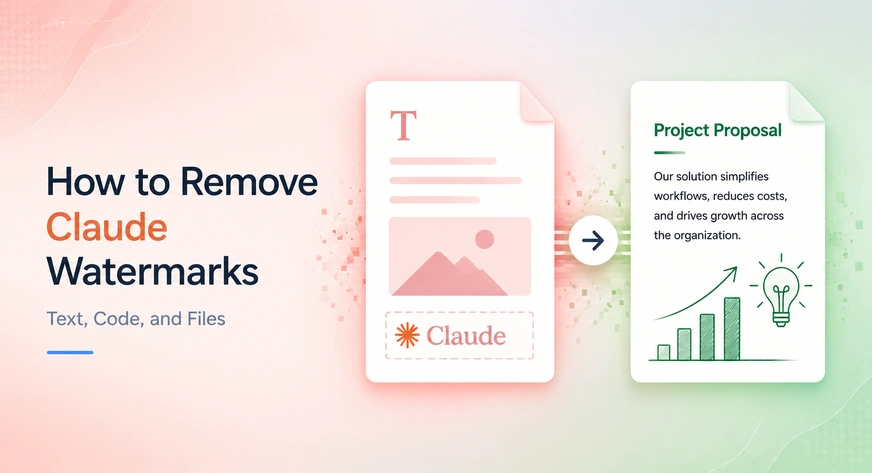
The emergence of watermarking in AI-generated content, as detailed in the Analytics Vidhya piece on removing Claude watermarks, signals a significant shift in the landscape of AI transparency and accountability. Anthropic’s approach—embedded watermarks for text, C2PA metadata for files, and a more nuanced strategy for code—reflects a growing awareness of the need to distinguish between human and machine-generated outputs. This isn’t merely a technical curiosity; it’s a response to increasing concerns about misinformation, intellectual property rights, and the potential for AI to be used for malicious purposes. The ability to detect, and now apparently circumvent, these watermarks highlights a fundamental tension: the desire for transparency versus the ingenuity of those seeking to obscure the source of content. The recent surge in interest surrounding agent systems, as explored in [Building Enterprise Agent Systems that People can Trust, Verify and Improve], underscores the broader need for robust verification mechanisms as AI increasingly permeates professional workflows.
The methods discussed for removing Claude's watermarks, while presented within a technical context, have wider implications. The article’s exploration of code’s unique position—where the structure inherently limits watermark placement—is particularly insightful. It suggests that different content formats may require tailored detection and mitigation strategies. The speed with which techniques for bypassing these safeguards are emerging also demonstrates the ongoing arms race between AI developers and those seeking to manipulate or disguise AI-generated content. Consider, for example, the rapid growth Perplexity experienced in India thanks to a free AI offer, as documented in [Perplexity’s free AI offer left it with millions more users in India]. This highlights the accessibility and appeal of AI tools, further amplifying the need for robust verification mechanisms. The valuation jump for Etched, noted in [Etched’s valuation doubles to $21B in a month], demonstrates the market’s recognition of the importance of AI provenance and verification, and points toward a future where these capabilities become increasingly valuable.
The introduction of watermarking, while a step in the right direction, is unlikely to be a foolproof solution. The very act of publishing methods to remove these marks demonstrates the inherent limitations of any technical safeguard. It’s crucial to recognize that watermarking is just one layer of a much more complex challenge. A holistic approach will require a combination of technical solutions – more sophisticated watermarking techniques, improved detection algorithms – and broader societal measures, including media literacy initiatives and ethical guidelines for AI development and deployment. The focus shouldn’t solely be on detection, but also on incentivizing responsible AI usage and fostering a culture of transparency. The challenge isn’t just about proving something *is* AI-generated; it’s about establishing trust and accountability in the AI ecosystem.
Ultimately, the conversation around Claude’s watermarks and their circumvention underscores a fundamental truth: AI is evolving rapidly, and our approaches to managing its impact must evolve alongside it. The race to develop increasingly sophisticated detection and removal techniques will likely continue, demanding a constant reassessment of our strategies. The question becomes not *if* watermarks can be removed, but rather what mechanisms—technical, legal, and societal—will be needed to ensure the responsible use of AI-generated content in an increasingly complex world. What new paradigms of trust and verification will emerge to navigate this evolving landscape?
Claude now marks AI-generated content. But it does not mark everything the same way. Anthropic currently uses embedded watermarks for text and signed C2PA provenance metadata for supported files. Code sits somewhere in between: it is still text, but its structure gives the watermark fewer places to work. I went into detail about Claude’s watermarks […]
The post How to Remove Claude Watermarks from Text, Code, and Files appeared first on Analytics Vidhya.
Read on the original site
Open the publisher's page for the full experience